
Old School. Biblically Independent.
By Kayleigh Donaldson | Miscellaneous | March 19, 2026
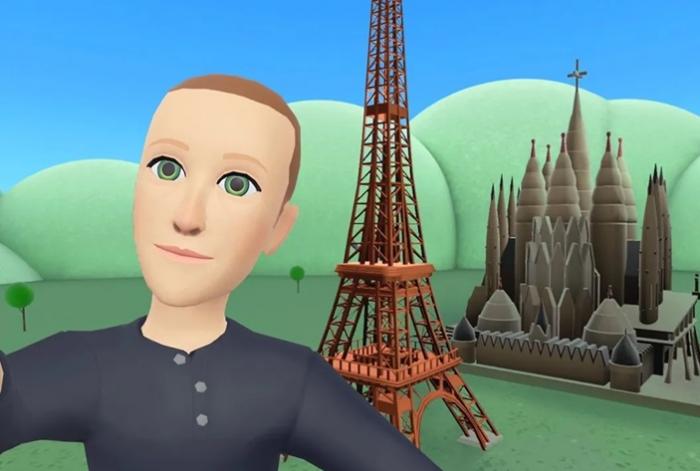
This week, it was reported that Meta, the company behind Facebook, would be shutting down Horizon Worlds, a virtual reality social network with VR headset use. After June 15th, the platform will only be available on a standalone mobile app. This didn't make a ton of headlines but it signals one of Facebook's biggest failures in a proud history of them. Mark Zuckerberg had promised that the so-called metaverse was the future and that one day we'd all have to be on it lest we fall behind with the times. Indeed, when Meta changed its name from Facebook in 2021, it was intended to help launch the new era of the internet. "Our hope is that within the next decade, the metaverse will reach a billion people, host hundreds of billions of dollars of digital commerce, and support jobs for millions of creators and developers," Zuckerberg wrote at the time when announcing the change. By the time its closure was announced, it was reported that Zuckerberg's metaverse had only 900 or so regular users.
It's always a good day when Zuckerberg's life is ruined, and in this instance, the schadenfreude is particularly satisfying. He is one of the most corrosive forces in the online world and it's become increasingly clear over the past 15 years or so that he had one semi-okay idea in college that he probably stole from someone else and has been coasting on total jackassery since. The metaverse wasn't Zuckerberg's idea but his all-in investment in a highly flawed theory in the face of reality was yet another reminder of his well-funded arrogance. And now, the metaverse as a whole seems to be crumbling. We wouldn't blame you if you had no idea what was going on.
I'm tempted to just share Dan Olson's excellent and damningly comprehensive video essay on Decentraland and leave it at that, but I shall endeavour to go on. Suffice to say that Mark Zuckerberg's black hole of an investment was a terrible idea from the beginning and the only people who seemed interested in it are the same snake oil salesman trying to force generative AI into every aspect of our lives. The downfall of this nonsensical idea was 100% inevitable.
The idea of a metaverse -- a catch-all term for online virtual worlds where people interact with one another in a 3D space -- has been around for decades, largely popularized through sci-fi narratives like Snow Crash and The Matrix. Games like Second Life and World of Warcraft pioneered the form, with users creating their own communities and social mores in these spaces. After VR headwear became more accessible to the masses, companies like Microsoft and Facebook started to invest heavily in their own metaverses. In 2019, Facebook launched a social VR world called Facebook Horizon, which they renamed Meta Platforms two years later. Zuckerberg said that Meta was going all in on this new venture. Sorry, NFTs.
During this time, other 3D virtual worlds sprung up, many built around cryptocurrency and blockchain technology. Decentraland, launched in 2020, promised to be not only a radical new online space for users but one with tangible financial value. You could buy and sell plots of land and advertising. Soon, brands began appearing in Decentraland, like Atari, Nestle, and Samsung. There was a Metaverse Fashion Week. Paris Hilton hosted a DJ set. Slews of headlines sprung up claiming that people were paying hundreds of thousands of dollars for virtual land and that users would one day navigate these spaces the same way they would traverse the real world. Why go to the store to buy a pizza when you could slip on your VR headset, go to Decentraland, 'walk' to the pizza place there, and order one to be delivered to your real location?
Metaverse evangelists were insistent that these online spaces would not only be the future but they'd be better than real life. They claimed it was the forefront of education, a way for kids to be more engaged with school while harnessing the tools they'd need for their lives as adult office drones. It was going to be the best way to make money. It would usher in a new era of tolerance where users could be free of prejudice and discrimination.
— Richard Meredith (@rtm223.me) March 18, 2026 at 4:39 PM
The problems with these reinventions of the wheel were clear from the get-go. Few people had the at-home technology needed to sustain regular access to even the jankiest metaverses. Virtual crime, from gambling to child grooming, was reported across multiple platforms. Very few people seemed to be active on these platforms and the ones who were didn't have particularly altruistic goals in mind. Brands that did enter the Metaverse had no idea how to engage with it and soon exited or let their virtual worlds sit unused. And it was all just extremely boring.
Tech companies are notorious for trying to reinvent basic and popular concepts into something stupider and claiming it's a disruptive step into a bright new future. These are the people who made Juicero think Elon Musk's underground tunnels scheme is a great idea. But even by their brain-melt lack of self-awareness, some of their notions about the Metaverse were baffling. Why would anyone want to recreate the mundane experience of, say, walking through town to do your shopping in a game, step by step? The simplicity of online shopping is its appeal. Amazon would be completely unusable if you had to search an endless array of virtual shelves for the thing you want. Indeed, sites have tried stuff like this in the early 2000s and it didn't take long for developers to understand that plain text and a few pictures is the most efficient option. Matters were made all the more hilarious by the sheer ineptitude of the technology. None of these spaces seemed to evolve beyond Playstation 1 graphics.
There's this prevailing idea that the internet will one day be so hyper-realistic that we'll prefer it to real life. It's either the stuff of utopia or dystopia depending on who you ask. There's a reason it's so popular in sci-fi novels like Ready Player One. In our current era, we're not even close to having the means to pull it off. Wearing VR headsets for longer than an hour results in vomiting or dizziness. Most people just want to log on and get the information they seek as quickly as possible. It's just easier to DM a friend than set up a virtual coffee date you have to navigate as though it were a tangible space. Why would anyone invest in these spaces when the technology couldn't even manage to make avatars with movable legs?
easily the funniest metaverse moment
— onion person (@junlper.beer) March 18, 2026 at 6:55 PM
[image or embed]
Trying to be absolutely everything to every potential user made the Metaverse a confused mish-mash of half-formed ideas that nobody seemed particularly attached to. It couldn't be a commerce site and a social network and a video game and an educational platform and a cultural benchmark. Even Zuckerberg didn't seem sure of what it was meant to be, telling Meta workers to just imagine they're in the future when in need of guidance for its development.
The internet has become actively worse over the past few years, thanks to a lethal combination of fake news, corporate monopolies, pandering to right-wing governments, and the flop-sweaty implementation of AI on every conceivable platform. If the ceaseless crypto ads and gambling mechanisms don't get you, the bigotry and rage-bait will. The metaverse was never going to improve things. If it had worked on even a basic level, it would have quickly become consumed by wall-to-wall advertising, addiction-fuelling algorithms, and a user hierarchy that bolstered the worst people imaginable.
Meta burned tens of billions of dollars in trying to make this garbage idea happen, and all it got them was a few good memes and the biggest slice of humble pie they'll never have the self-awareness to taste. Of course, Zuckerberg and company will be fine because they're obscenely monied and you can't cancel billionaires. He'll find new ways to ruin the internet even further, but at least the death of the Metaverse offers us another reminder that he, and tech bros of his ilk, are abject losers who have no idea what they're doing.


