
Old School. Biblically Independent.
By Kayleigh Donaldson | Miscellaneous | September 4, 2026
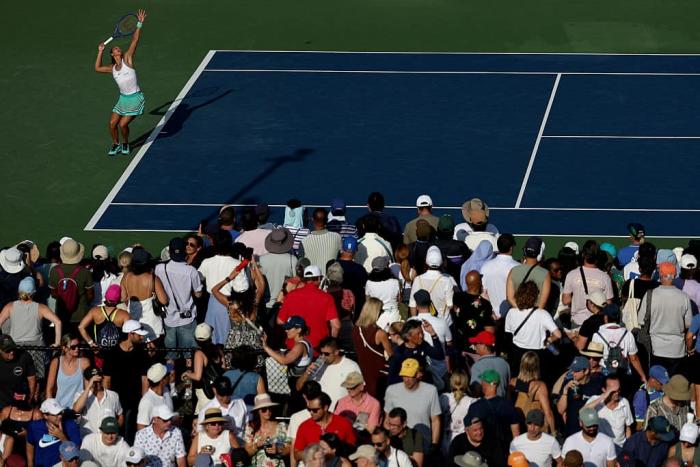
The US Open, one of the most high-profile and prestigious tennis tournaments in the world, is currently dealing with a few influencer problems. Video went viral of games being halted due to people in the stands filming themselves with bright lights or talking loudly for the cameras. This led, of course, to a flurry of clickbait and some deeply cruel social media responses declaring that influencers ruin everything. Oh, they're only there to be seen. They don't even like tennis. Why are they taking space away from people who deserve it? You know the whole rigmarole. It's not exactly unjustified, but hoo boy, things got racist and sexist very quickly online after those videos were posted.
According to Reuters, around 100 content creators were given credentials to attend the event, where tickets for a day one ground pass are around $360. The US Open has been, well, open in its desire to court certain audiences, and to sell the event as a four-quadrant spectacle. They want this legendary sporting tournament to be cool to people who otherwise wouldn't give a toss about tennis, and so in come the influencers, content creators, and models. If you love the game, it must suck, but let's be honest, this is the least of the sporting world's problems.
I think we're all familiar with the tedium of going to an event of some kind--a concert, a game, a movie, a meal at a nice restaurant--and being disturbed by someone making #content. It's depressingly common to be in a third space where the rules of decorum have long been ignored in favour of this distracting and obnoxious behaviour. The casual violations of our social norms are infuriating at best, and they're also just weird. It's odd to go to a concert and be blinded by the person next to you as they film themselves with a ring-light on full blast. Certainly, having it become a distraction to the players is a major mistake. One wonders if these brands fully understood the problems they'd create by having these mini parties take place during a sport that notoriously requires quiet. The contrast it revealed, between the die-hard tennis fans who knew the rules and those who wanted to take selfies, didn't help the influencer sphere's case.
But it's not just the influencers, however you define that increasingly nebulous concept. The audience they represent--aspirational, monied, "the right crowd"--is the one that the US Open is most concerned with catering to. Look at this year's event, which served to highlight the cost of living gap that's created a chasm between the average person and a handful of elites: on top of those obscene ticket prices (made worse on the resale market), there are the $23 cocktails, the $40 lobster roles, and the $100 caviar-topped chicken nuggets. Hospitality seats can cost you over $2,300. Speaking of hospitality seats, Around 3,500 moderately priced loge seats are being removed from the Arthur Ashe stadium in favour of increasing courtside seats. As The Guardian noted, "in effect, thousands of mid-priced seats are becoming expensive ones." Craig Tiley, the U.S. Tennis Association's new chief executive, said he wanted the US Open to "become the tennis Disneyland." The one-time self-styled people's slam is now just another playground for the uber-rich.
The US Open is but the latest sports event to become a mini conglomerate of brand activations, overpriced hospitality lounges, and elite gathering space. The World Cup faced similar problems this year, and many committed sports fans are finding themselves priced out of the games they used to attend regularly. Season ticket prices are skyrocketing across the board. The press focus on celebrity attendees has grown more prominent. In many places, there is no such thing as a cheap seat anymore. Sport has always been shaped by class and money, but the extent to which those things have become the defining factors for the form's future is impossible to ignore. It's tough to position sport as a communal joy when the teams are all owned by billionaires or corrupt regimes, and their desired customer is a brand buying up the boxes for bored shareholders.
The bigger evil in the sporting world is, of course, the proliferation of gambling. The US Open has a partnership with Kalshi, the prediction market scam that somehow found a way to make gambling even more evil. Player Jessica Pegula noted during a post-game press conference, "Players can't do anything with a betting-type sponsorship, but tournaments profit from a lot of that stuff [...] We get a lot of hate for it on social media. So, it's tough when you see that, and then they're a big sponsor behind the court or on TV." Teaming up with Kalshi right as New York legislators are filing lawsuits against the company over alleged violation of the state's sports betting laws makes it pretty clear that the US Open doesn't give a damn about its players, fans, or history. Gambling is not about "fan connection," no matter how Tiley tries to spin it.
Influencer culture is an easy punching bag that conceals that wider issue of how corporate greed is trying to take everything the average person enjoys and make it worse. The ideal customer in this system is one who cares more about showing off their high-spending abilities than their love of the game. The US Open has made it clear who it wants to invite to the party and why. It's an endless cycle of betting, bragging, and showboating, and that can make them a lot more money than simply allowing fans to have access to something they admire. You can only wring so many dollars out of the general public in a recession, even when you work overtime to turn a solid portion of them into gambling addicts. The women with the ring cameras aren't the villains here: as always, the billionaires are the real problem.


