Old School. Biblically Independent.
By Kayleigh Donaldson | Miscellaneous | July 31, 2026
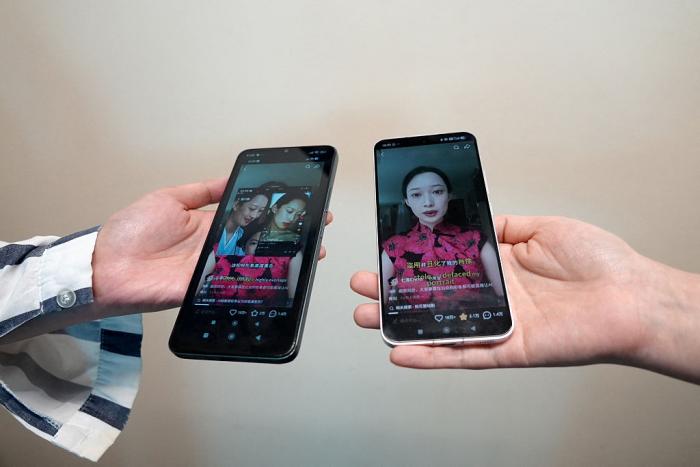
When you find yourself sliding into an endless cycle of upward swiping and doom-scrolling, it’s easy to feel as though you’re seeing the same thing over and over again. The faces look similar, the vocal inflections identical, and the promises and products inescapable. Algorithmically forced content prefers homogeny over all else, the agenda powered by an addictive pattern of instant dopamine hits with next to no long-term impact beyond aching withdrawals. We all know it sucks, but somehow, it’s getting worse. AI has left us overwhelmed with a never-ending stream of slop, most of which can be clocked in a couple of seconds, but now the plagiarism machine is growing more sophisticated and hyper-real with its output. AI influencers have entered the timeline.
A recent article from Vulture detailed just how much of the internet has become a cavalcade of undisclosed adverts. I’ve certainly noticed the changes on my own timelines. The non-chronological nightmare of every social media feed has shunted my friends’ content aside in favour of ads for the same handful of products and a few interchangeable influencers who seemingly exist only to sell that stuff. Amazon affiliate links clog up bio pages. TikTok and Instagram shops keep trying to make me buy Temu-level tat. Some creators hold up products to the ring light with the conspicuousness of a Sham-wow salesperson. And now, many of those creators aren’t even real.
The Guardian noted in June that “brands promoting their products online are quietly deploying AI-generated influencers on social media […] turning to AI-generated content that purports to show genuine customer experiences while giving no obvious indication that the people featured are not real.” Most of them certainly look pretty damn realistic, replicating the familiar mould of influencer aesthetics and branding that has become synonymous with the position: usually skinny white women in minimalist locations using buzz phrases and hashtags to plug “must-have” products and apps that changed their life or left them literally shaking. Some showed “women” in other locations or events, such as “their” weddings. They all look monied and aspirational, as the influencer type demands.
Clarissa Mansbridge, a former celebrity manager who now creates AI influencer images for brands, told The Guardian, “I’m going to say about 40% to 60% of the content out there from some of the big brands is actually being made through AI, but a lot of the creators are under NDAs,” She said that the takeover of AI in the space was a reponse to how “human influencers killed the market for themselves” by demanding too much money for their labour. Brands want the authenticity of a real person who’s built up a loyal fanbase but they don’t want to pay for it. One wonders why they think any normal customer would want to buy something advertised by a non-existent concept.
The dead internet theory, while rooted in some squirrelly ideas, cannot help but feel more relevant than ever with crap like this. What a nightmarish cavalcade of jackassery: fake people selling you products that are probably fake, all in a space that is increasingly dominated by AI-generated content. The speed with which this junk has proliferated online spaces is terrifying. And for what? Well, money, of course. We could just end it here because, honestly, it’s not all that deep. Companies want more money and they want to spend as little as possible in accruing record profits. That always means cutting the below-the-line workers, which in this case means the influencers they turned to at cut rates in lieu of a traditional marketing plan.
Influencers are easy to rag on, and I don’t plan to stop doing it any time soon, but they are merely a symptom of a larger problem. The capitalistic thrall of the gig economy, forcing everyone into an endless cycle of hustling and self-commodification and dressing it up as a modern kind of financial liberation. I don’t know a single person in my generation who hasn’t had to deal with it in some form or another, whether it’s the push to monetise one’s hobbies or the Amazon affiliate links in everyone’s social media bios. Sure, there have been some inspiring rags-to-riches tales among the overcrowded flock but it’s a phenomenon that’s also turned all of us into potential salesmen in every aspect of our lives. Frankly, it’s weird to see someone cool on Instagram with a fun niche and watch them evolve into another anodyne shill for the same six companies.
Still, replacing them with AI is not the solution. Replacing a bad thing with a worse one is how we got here in the first place. I still don’t know a single person who wants stuff like this, and yet, every day I see AI becoming normalized in various sectors: the ugly AI-generated images and texts on menus and business flyers throughout town; the obvious AI music in the background of a TikTok; the pile of colouring books and jigsaw puzzles with ugly AI “art” filling up shops (I saw this one over the weekend and I’m still mad about it.) The goal isn’t to make people love AI slop: it’s to have them not mind it, to tolerate it in increments until it’s everywhere.
As with all AI slop, these faux-influencers expose a hard truth about the internet: people don’t want to be robots, and they don’t desire every interaction to be reduced to a cycle of regurgitated faces and phrases. If a real human wasn’t conducive to selling some random company’s crap then they wouldn’t be so easer to steal someone’s face and personality to make it happen. You can make them say or do whatever you want. That this is a cycle happening with images of women just hammers home the proud robbing of autonomy that is built into the nature of AI. It’s, unfortunately, unsurprising that so many of the faces of AI-generated shlock are designed to look like very young women, and many others are white male-led brands appropriating Black women’s faces and voices. The big criticism human influencers face is that they’re easily bought off by the right company for a good price. AI doesn’t exactly refute that. It just assumes that we are too dumb or ignorant to care about so shameless a lie.


