Old School. Biblically Independent.
By Kayleigh Donaldson | Miscellaneous | July 15, 2026
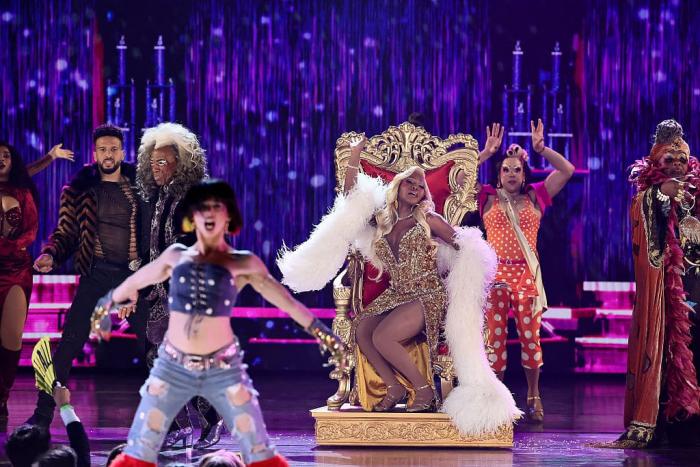
Cats: The Jellicle Ball is, by pretty much every standard, a success. The idea of reviving Cats, Andrew Lloyd Webber’s most divisive musical, in a post-butthole cut world seemed disastrous. But this production, which blended the story with the ballroom scene of LGBTQ+ culture, was almost immediately praised as revolutionary by the critics when it premiered Off-Broadway. Even people who hated Cats loved Cats: The Jellicle Ball. It, shock horror, made Andrew Lloyd Webber cool. The Broadway transfer was rapturously received, earned several Tony Award nominations and wins, and was grossing $1 million a week. And now it’s set to close after just five months. It did everything right, but it’s now a flop.
It’s not alone, alas. The state of Broadway is dire in 2026. The 2025-6 season has seen shows dimming the lights left and right, including ones that were otherwise doing well with audiences. Death Becomes Her, one of 2024’s biggest hits, closed this June. Beaches barely lasted a month. Kristin Chenoweth couldn’t make The Queen of Versailles last longer than six weeks, plus previews. The Guardian reported that, since the COVID-19 pandemic, “46 musicals have opened on Broadway per a New York Times report last year, with a total cost of about $800m to bring to the stage.”
The New York Times noted that only three musicals that opened after COVID restrictions were lifted have reported profits: two were jukebox musicals with familiar songs (MJ and & Juliet) and an indie hit that transferred from the West End (Six.) Everything else? Flop. Once upon a time, a show was considered a commercial disappointment if it only ran for two years. Now, getting to two months is the challenge.
Broadway has never been the safest investment but it wasn’t the freefall of doom that it has now become. You could make your money back after a couple of years then ride easy on tourist visits. Musicals that broke out could run for a good while and become New York staples, like Wicked or The Phantom of the Opera. Visitors also got bang for their buck: falling chandeliers! Turntables! Helicopters! A lot has changed since then. We could talk about audiences’ tastes evolving or how IP has become more dominant, much as it has in Hollywood. But there really is only one explanation for Broadway’s current predicament: money. Everything costs so much and nobody has the funds to pay for it all.
“The painful truth is that, with things as they are, bringing almost any new show to Broadway makes little financial sense,” said Andrew Lloyd Webber, a man who knows a thing or two about getting rich via the theatre. “The costs are immense. Creators, writers and directors are often forced to accept minimal royalties simply to get work staged.” He also noted that many shows “now survive on a fixed weekly fee rather than sharing properly in the success of the work they helped to create.” Cats: The Jellicle Ball reportedly cost $18 million to stage.
The biggest cost is getting the theatre itself. Three companies own almost every theatre on Broadway: ATG, the Nederlanders, and the Shubert Organisation. They collect not just a percentage of box office and ticket fees, but rent on the venue itself. Regardless of how well the show is doing, they get their fee. These are billion-dollar companies that are hardly hurting for cash. Most leases also include a clause that will kill a show stone dead if its grosses drop below an agreed-upon number for two weeks running. The landlord can basically say the show has to leave and do so on their schedule, regardless of the circumstances. In this flaky business, the landlords always do well.
Compare that to everyone else involved with keeping a show running. You need to pay your actors, your crew, your front of house people, the marketing team, and your investors. $1 million a week was not enough to make Cats: The Jellicle Ball a hit. Think about that. I’ve already seen some people try to blame the unions for the flop, saying they have too much control and ask for too much. This is an anti-labour argument that should be shot into the Heavyside Layer. Actors in New York are barely holding on as it is. You could be in a hit show and still struggle to find an affordable place to live. Musicians in the orchestra pit are scrambling to find semi-steady gigs. The workers who bring the show to life are the ones who cannot afford to survive, even when things are going well.
And if you’re just a fan who wants to enjoy a show, you’re probably thinking, “Wait, if things are going so poorly, why are ticket prices always going up?” $100 used to be an unthinkably high cost for the best seats in the house. Now, that’s the bare minimum for the cheap sections. It’s not uncommon to hear about people paying upwards of $1,000 for a show. local New Yorkers make up a more crucial percentage of Broadway attendees than they typically get credit for, and they just can’t afford to go to more than a couple of shows a year, if they’re supremely lucky. And eve with those eye-watering prices, it’s not enough for shows to recoup their investments. Frankly, to do that, ticket prices would need to double, at least. That would kill the spirit of Broadway stone dead.
The established Broadway musicals that have run for decades remain profitable. So do limited run plays starring big-name actors that revive the same handful of American standards over and over again. It doesn’t leave much room for emerging actors, untested playwrights, or challenging narratives that don’t directly appeal to tourists. This is an unsustainable model and it will only get worse without serious intervention. It will require, in my opinion, government investment in the arts on a scale that hasn’t been seen in decades. It will also require the monopoly of theatre owners to either be broken up or agree to radical new leases that support the talent over lining their own pockets. Theatre is for everyone and it deserves a brighter future than one where only nepo babies and Scott Rudin are in charge.


