Old School. Biblically Independent.
By Kayleigh Donaldson | Celebrity | April 29, 2026
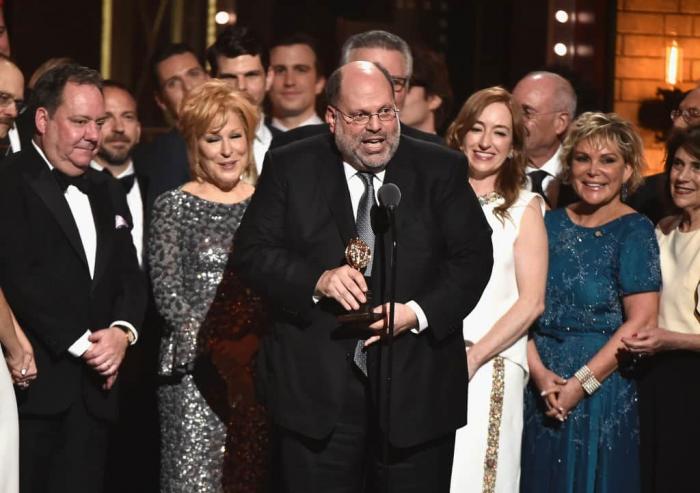
The latest Broadway revival of Death of a Salesman has opened to rapturous reviews. The beloved Arthur Miller play has long been an icon of American theatre, and performing in it is almost a rite of passage for any given generation’s biggest stage talents. So, the prospect of seeing Nathan Lane and Laurie Metcalf, two of the most celebrated Broadway actors of their era, take on the Lomans is a very big deal for many. Alas, it also comes with one major caveat: the presence of producer Scott Rudin.
In 2021, Rudin, an Oscar and Tony-winning producer of film, TV, and theatre, was accused by numerous employees of abusive behaviour, both verbal and physical. Former staffers discussed being forced to sign NDAs to conceal the mistreatment they experienced. After this report, which brought to the forefront something that had been whispered about for many years, Rudin’s name was dropped from various projects. He released a statement apologising for “the pain my behavior caused to individuals, directly and indirectly” and said he would “step back” from active work on the many projects that bore his name. Now, he’s back, and it seems that he’s going to be back on stage at this year’s Tony Awards. After a few years out of the spotlight, he’s soared back to the top of the pile with zero struggle. I wish I was surprised.
Rudin was never known as a nice or chill guy. His reputation was built on the foundations of his notorious cruelty and bullying. If you knew anything about Scott Rudin, you knew that he was a nightmare to work with and treated everyone like dirt. It was one of the biggest open secrets in both Hollywood and Broadway that Rudin was belligerent, verbally abusive, and prone to violent tantrums that caused a lot of collateral damage. Working for Rudin was compared to being in a warzone, an endless cycle of torment and being fired and rehired amid his furious rants. Many of his former staff came forward to discuss the lasting psychological damage their one-time boss inflicted on them. One former assistant was hospitalized after Rudin smashed a computer monitor on their hand. The reason? Because they allegedly failed to get Rudin first class tickets on a sold-out flight.
Smartly, Rudin is not out here giving tons of interviews, so it’s fallen upon the actors working with him to answer the tough questions. Laurie Metcalf was profiled by Michael Schulman for The New Yorker and he savvily held her feet to the fire. She fumbled over her answers, insisting that Rudin had done the work to rehabilitate himself. This line was hard too swallow given that, in the same interview, the legendary Chicago theatre company Stepppenwolf declined the opportunity to work with him because Rudin “never made us feel that he had done the work.” Metcalf went so far as to threaten to quit Steppenwolf unless it relinquished the rights to a play she wanted to work on with Rudin. They agreed and Metcalf go to go to Broadway with that play (it was a commercial disappointment and closed eight weeks early.)
Restorative justice is crucial. It’s a good thing for society to find routes to healing for offenders in the long-term, especially since we know how hard it is for former prisoners to reintegrate into regular life after serving their time. People can change, and we can give them the grace to make that happen. But why is it that the sweaty rush to pave the way for rich bullies’ comebacks are built on ensuring that nobody involved ever truly changes? The past several years following the first wave of #MeToo-related justice have seen a transparently agenda-driven push to empower the accused at the expense of their victims and to keep the money train rolling. Plenty of people knew Scott Rudin was a monster but didn’t care as long as they weren’t the ones being hospitalised. Now, they’re eager to insist he’s changed because it’ll make them getting a Tony nomination easier. This isn’t restorative justice: it’s flagrant narcissism.
I understand that Laurie Metcalf’s career is heavily intertwined with Rudin’s work and she probably feels some loyalty towards him, but it is a seriously bad look to threaten to abandon your long-time colleagues at Steppenwolf, the company you cofounded, because they questioned the admitted abuser’s self-pitying claims of rehabilitation. Wouldn’t it have been potentially messy and dangerous for them to say yes and have him end up throwing another object at some poor assistant’s face? That New Yorker piece noted that Metcalf didn’t feel the need to check in on Rudin’s new workers, or even remember their names.
The other issue here is that we’ve been through this before. History is littered with stories about how Scott Rudin is a “changed man”, so much calmer and more easy-going than he used to be, and isn’t it hilarious that he was such a crass and deafening monster to those poor underpaid minions he tormented over incorrect coffee orders? It became a sick joke, like a rite of passage for people wanting to claw their way into the industry. You had to “prove” you were tough enough to withstand the macho brutes of the biz, all while they earned positive press for entering their “zen” eras. Harvey Weinstein pulled this crap too, and look at how that ended.
One of the reasons so-called cancel culture doesn’t apply to the rich is that they have all the doors open to them at every opportunity, and the moment the potential to make money enters the scene, they’re welcomed back with a big smile and pat PR buzz-phrases about having worked on themselves to get over their demons. You do not need to be a bully or a staple-throwing brute to succeed in entertainment, and yet Rudin reshaped the narrative around that for decades to justify his cruelty towards those without the power or money to speak out. In the end, it looks like his only “punishment” will be having to wait a few extra years to win another Tony. He hasn’t changed, but neither has the industry. This is how they like it.


