
Old School. Biblically Independent.
By Dustin Rowles | Film | June 23, 2026
Granted, it speaks to the relative dearth of even decent romantic comedies this decade, but outside of Palm Springs, I am hard-pressed to think of a 2020s rom-com I enjoyed as much as Voicemails for Isabelle. Between The Threesome (a delightful indie), the sweet Something from Tiffany’s, the genuinely great Set It Up, and now Isabelle, Zoey Deutch has officially evolved into the Meg Ryan of the streaming age.
Deutch can elevate the absolute hell out of a mediocre script, and in Leah McKendrick’s Voicemails for Isabelle, she actually has some real heft to work with. She is terrific: She channels the loose-limbed goofiness of prime Kate Hudson, a tolerable smidge of Zooey Deschanel’s manic-pixie energy, and a heavy dose of Meg Ryan’s radiant girl-next-door charm. She’s basically Dakota Johnson without the detached, sleepy unctuousness. Look, I know she’s a nepo baby, but she genuinely exudes her mother’s (Lea Thompson) warm onscreen presence and her father’s (Howard Deutch) sharp comedic sensibilities. She is a certified rom-com pro and Glen Powell should be sending her annual residuals for helping to launch his career.
Voicemails for Isabelle does traffic in a typical high-concept gimmick, but there’s some actual emotional weight built into the premise that carries it through the genre’s predictable beats. Deutch plays Jill, an aspiring baker in San Francisco with an intensely close relationship with her little sister, Isabelle, a cystic fibrosis patient living back home in Austin. McKendrick does a stellar job of establishing their bond early on — they trade snappy, believable banter over the phone constantly — before Isabelle tragically succumbs to her condition. (Side note: Never discount the lethal ability of The Cinematic Orchestra’s “To Build A Home” to completely devastate an audience).
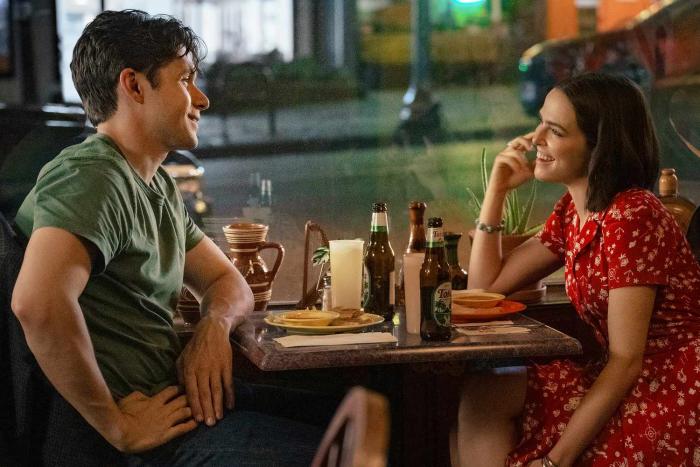
A grieving Jill returns to San Francisco, but because the loss is too massive to process, she continues to leave voicemails recounting the various humiliations of her professional and dating life. Naturally, a guy named Wes (Nick Robinson, doing his reliable Love, Simon and Maid charm offensive) has inherited the dead number. He listens to a voicemail or two, realizing Jill has the wrong guy, but before long, he’s completely smitten based purely on the chaotic magic of her messages.
And then Wes does exactly what romantic comedy protagonists do: He goes full stalker-lite. He travels to San Francisco and uses the inside intel gleaned from Jill’s voicemails to engineer the “perfect” meet-cute. Everything falls into place beautifully until, of course, the third-act clock strikes and she discovers he weaponized her grief to date her.
It’s formulaic, sure, but the formula works when the ingredients are this high-quality. Deutch and Robinson have impeccable chemistry, and the emotional gravity of Isabelle’s death provides a necessary, bittersweet undertone. Plus, the best-friend roles are top-tier: Harry Shum Jr. and McKendrick herself play Wes’s married friends, effectively serving as the audience’s proxy by constantly reminding him how unhinged his plan is. There’s also plenty of great workplace comedy courtesy of Jill’s boss, a ridiculous, Gordon Ramsay-esque chef play with absolute relish by Nick Offerman (so good). The film isn’t shy about its nods to the genre’s ancestors, either, and if you’re going to steal from the best, you can’t do much better than You’ve Got Mail. Bonus points for a Robyn song that absolutely seals the deal.
It feels slightly depressing to admit that Hollywood doesn’t make fun, lightweight, formulaic romantic comedies like they used to, but Voicemails for Isabelle captures exactly what we actually want from the genre: Magnetic chemistry, actual jokes, a gorgeous couple, hilarious best friends, and a genuine emotional through-line. Voicemails for Isabelle is one of the very few modern rom-coms that I not only thoroughly enjoyed, but would actively watch again.


