Old School. Biblically Independent.
By Dustin Rowles | TV | January 4, 2026
I love a good Nordic thriller because who doesn’t like bleak mysteries set amid a brutally cold winter? But honestly, Land of Sin — despite starring the phenomenal Krista Kosonen (Beforeigners) — was too bleak, even for me (learning that Kosonen appeared in the most recent season of Foundation is the first time I’ve even considered returning to that series). Land of Sin is also muddled and, for a thriller, not particularly thrilling.
It’s also a convoluted five-episode series, but once you strip away all the red herrings, it’s a fairly simple plot with a morally shaded ending. Here is your spoiler ending explained for those of you who may have (deservedly) bailed early.
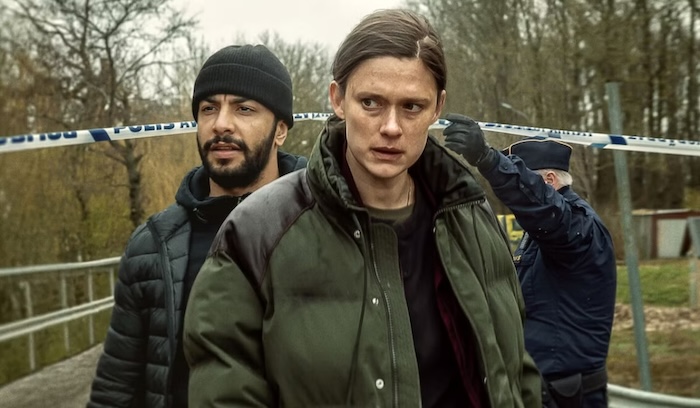
Detective Dani (Krista Kosonen) from Malmö is assigned to the murder case of a teenager, Silas, along with her new partner, Malik (Mohammed Nour Oklah). It’s set in a small-knit community on the Bjäre peninsula, and while the locals are tight-knit, they’re also deeply suspicious of the police. Dani is not just a police officer but part of the community — in fact, she was Silas’s foster parent, and her biological son, Oliver, was essentially Silas’s best friend. They also ran in a bad circle (every circle in this community, it seems, is bad), and Dani’s relationship with Oliver was strained because of it. That strain intensifies when Dani later has to arrest her own son after he becomes the prime suspect in Silas’s murder.
He didn’t do it. The big red herring that dominates the first part of the series involves a blacksmith whom Silas had been blackmailing with unseemly videos. The blacksmith didn’t kill Silas, but he did take his own life. That red herring, however, reveals that Silas and Oliver were involved in deeply troubling business and were in debt to a local criminal, Kåre (also known as the Fox).
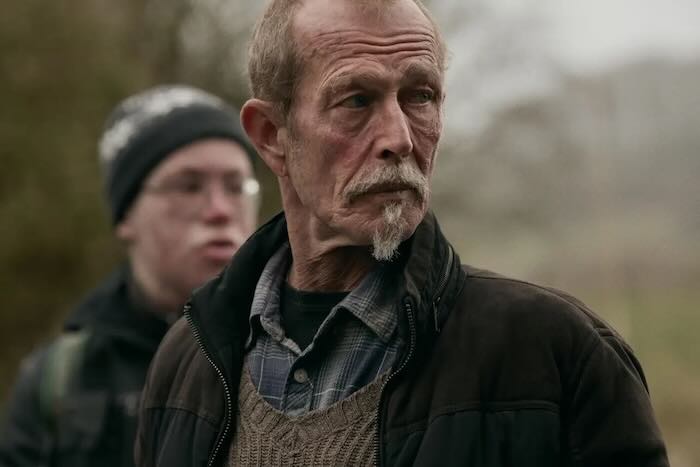
The community patriarch, Eis (Peter Gantman), is also trying to figure out who killed Silas, out of loyalty to Silas’s father, who dies of cancer midway through the series. Eis is not interested in having Silas’s killer arrested; he wants to take justice into his own hands. Eventually, he kills Kåre, only to discover that it wasn’t Kåre who killed Silas, either.
It was Eis’s own son, Jon. And it all comes down to a piece of land: Synden (or Land of Sin). The family that owns the land effectively controls the community, as the landowner receives EU agricultural and environmental grants. Eis and his wife, Katty, maintained control of the land, and Silas — because of his blackmail schemes — posed an existential threat. Katty pressures her son Jon to neutralize Silas as a threat, and during a confrontation, Jon accidentally kills him. He doesn’t do it out of malice; he does it under immense pressure from his mother.
Katty then briefly tries to pin the murder on her younger son, Harald, who has a severe learning disability and is easily manipulated into falsely confessing. Jon refuses to let his brother take the fall, and he and Harald attempt to flee from Dani and Malik. Eis eventually learns that his wife pressured Jon into killing Silas and tried to scapegoat Harald, so Eis falsely confesses to the murder himself in order to protect his sons, his family, and the land. Silas’s brother, Adam, hears the confession and kills Eis.
In the end, Dani understands the truth — that Jon is the real killer — but accepts the outcome rather than expose him and destroy yet another life. She is a cop, but she’s also part of the community. She understands that justice here is more complicated than simply arresting the actual killer. Oliver is released from custody and begrudgingly accepts Dani’s apology for having him arrested and they make peace with one another. The end.


