
Old School. Biblically Independent.
By Kayleigh Donaldson | TV | August 19, 2025
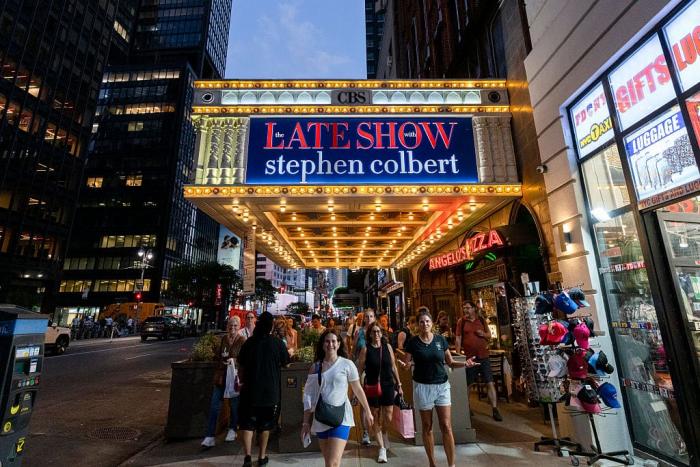
2026 will see the end of The Late Show, CBS’s longest-running late-night talk show. The cancellation of this mainstay, which has been around since 1993 and is currently still the highest-rated in its time slot, has inspired much discourse regarding the network’s desire to appease Donald Trump in anticipation of the Paramount-Skydance merger. The President has certainly spent too much of his precious time on this Earth being mad at Stephen Colbert. CBS denied that the decision to end the series was related to this controversial deal, and sources insisted that mounting costs were to blame. Insiders claimed that the show was costing them $40 million a year (Jimmy Kimmel thinks this is nonsense, by the way.)
We’ve no way to verify that eye-watering number, nor does anyone fully believe that CBS dropped a historic show with zero thought for the political implications around it. It is, however, undeniable that late-night TV is not what it once was, and talk of its death has grown louder over the past five years. The current and former hosts of the format seem sure that its extinction is inevitable. Conan O’Brien said it was ending, and so did Jimmy Kimmel, who currently hosts his own late-night series on ABC.
Things have changed. CBS replaced The Late Late Show with a comedy panel show, After Midnight, then cancelled that with no follow-up. Seth Meyers’ series on NBC is noticeably leaner in presentation. Conan left TBS for podcasting. The lion’s share of the post-Jon Stewart flush of Daily Showinspired satirical shows are long gone. John Mulaney is experimenting with the form on Netflix, but for a niche audience. Bravo has Andy Cohen, and HBO has John Oliver and that one loser. Late night hasn’t disappeared, but you can see the shift.
We all know the major reasons why late-night is in decline as a cultural force. Network TV is not the king of entertainment. We have way more options across far more platforms. Audiences are more diverse and less drawn to the same sea of white male faces (the lack of change on that front has surely been a major nail in the format’s coffin?) We used to be more eager to embrace these father-like figures of authority that late-night encouraged. Think of how fervently the monologues were once covered and how we turned to people like Jon Stewart for clarity and guidance. And jokes, of course. I don’t know if that desire has necessarily dissipated, as the current political hellfire of 2025 and all its accompanying podcasts can attest to. But as a late-night default mode, it feels out of step.
Late-night TV was seen as one of the first casualties of the social media age. Why wait up past midnight to see Jimmy Fallon interview BTS when you could watch it on YouTube the next day? So, a lot of these series remoulded themselves into an endless cycle of viral moments. Fallon was king of this for a long time, engaging his guests in children’s party games and skits that were designed less as part of a show than as something you could package into a four-minute clip. It worked for a long time, but the hunt for virality may have been something of a cursed monkey’s paw deal. It inspired a legion of online creators to try it out with more interesting results. Chicken Shop Date works because it’s funny, loose, and weird in ways that most late-night interviews aren’t. Hot Ones has a hilarious torture gimmick that Ellen DeGeneres would have adored, but its host, Sean Evans, also digs deep with his questions in ways that the subjects clearly approve of.
I question whether the monoculture is entirely absent from our current landscape. There are glimmers of it present in moments like the glory of Barbenheimer or the omnipresence of the Eras Tour. The entertainment industry is certainly eager to continue acting as though there are only four network channels and watercoolers for workers to gather around each Monday morning. The tentpole blockbusters have only grown more expensive, thus demanding a level of worldwide attention that is no longer in plentiful supply. But our gaze has grown more expansive too, looking past borders towards more international fare, from K-pop to Ne Zha 2 to Bad Bunny.
And, alas, there are podcasts, a gift/curse of the modern age that has become a dishearteningly crucial tool in the political hijacking of pop culture. They’re not all evil, obviously, but they’ve soaked up a lot of space and irrevocably shifted the needle. You could argue that this format has taken over many of the old requirements of late-night, like deep-dive interviews.
It’s through these other formats that hosts like Colbert, Meyers, and (not) Fallon will continue to thrive once the hammer falls on late-night. But it’ll be a messy end, one that will kill off hundreds of jobs below the line. Maybe it’ll save money in the short term, but the degradation of long-term insight and creativity in the name of chasing an impossible zeitgeist won’t end well for network television. What do they plan to replace it with? More reruns? Video podcasts? Something with the cultural footprint of a gnat, I imagine.


