
Old School. Biblically Independent.
By Dustin Rowles | TV | April 21, 2026
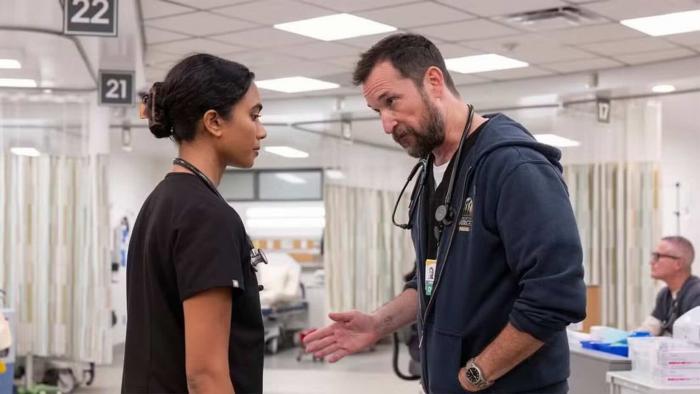
There has been a lot of discussion about race issues on The Pitt, the HBO Max series regarded as one of the best on television, after two women of color — Supriya Ganesh and Tracy Ifeachor — were written out of the show. That includes a lengthy piece even on this site. It reminds me of the early discourse surrounding another popular ensemble series, The Walking Dead.
Folks may not remember this — because a lot of readers may want to forget The Walking Dead altogether — but that series came under serious scrutiny for the way it treated its characters of color. It killed off Black characters early and often, and in those first seasons, it didn’t have a particularly diverse cast to begin with. Remember T-Dog? Yeah, I barely remember him either, but he was created specifically for the series in what TK described as a “token Black character” who was killed off early. The producers listened to that criticism. The cast evolved into one of the most diverse on television — at one point, there were more characters of color than white characters — and Angela Kang’s eventual elevation to showrunner only deepened that commitment.
But The Pitt is a different case. The Pitt does not have a diversity problem. There have been 12 series regulars so far, and half of them are people of color. And the writers’ room — take out the two creators, R. Scott Gemmill and Noah Wyle — looks like this:

So if it’s not a diversity issue, why has losing two women of color rubbed so many viewers the wrong way? Re-reading old pieces by TK and Joanna Robinson about The Walking Dead, the parallel snapped into focus. The criticism isn’t about diversity. It’s about expendability.
The problem isn’t in the casting, and — given that writers’ room — it’s probably not about intent either. It’s a craft problem. The show obviously can’t write out Dr. Robby; this is Noah Wyle’s show. But why is it easier to write out Dr. Collins and Dr. Mohan than fan favorites like Dr. Whittaker, Dr. Mel, and Dr. Langdon? Because the latter group was given more compelling storylines, more dimension, more reason to stick around.
In isolation, the exits make sense. It’s reasonable that Dr. Collins would leave Pittsburgh and start fresh after suffering a miscarriage. It’s reasonable that Dr. Mohan — too slow for the pace of an ER — would transition to geriatric care. But you couldn’t write out Dr. Langdon and his addiction storyline because there’s too much story left to tell. The writers made him irreplaceable. They didn’t extend the same consideration to Collins and Mohan. That’s the problem — and it’s a problem the writers created, which means it’s a problem the writers can fix.
That’s actually the more hopeful read here. This isn’t a show that doesn’t care about representation. It’s a show that hasn’t yet made its characters of color as indispensable as its white ones. The math will eventually demand a correction anyway — if the cast stays this diverse, some white characters will have to be written out too. But the real fix isn’t numerical. It’s making sure that the next time a character of color exits The Pitt, audiences aren’t angry because of who that character is. They should be angry because of how much they loved them.


