
Old School. Biblically Independent.
By Kayleigh Donaldson | TV | March 31, 2026
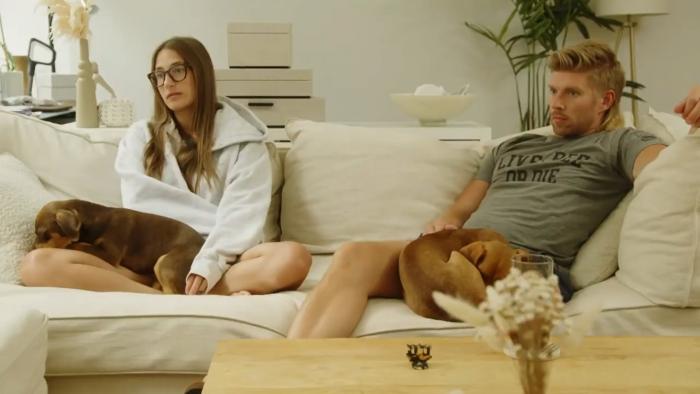
Summer House is a Bravo reality TV series about a group of “friends” spending the season in the Hamptons. It’s been on the air for 10 seasons and has inspired two spin-off shows. While it doesn’t have the same level of mainstream awareness that its many Real Housewives contemporaries has, it has its fans and many of its cast members have gone onto other shows, like Love Island. Throughout the series, viewers watched the courtship, marriage, and eventual split of Kyle and Amanda. Their relationship was always tumultuous, with every agonizing detail shown for the cameras. Viewers were vocal about it being a bad match from the get-go, but it remained one of the key hooks of Summer House. Now, they’re getting divorced and things have gotten even nastier. In one episode, Kyle called Amanda, the mother of his child, a “f***ing dumb b**ch.”
It’s rare to see this kind of genuine contempt on reality TV, but Kyle and Amanda truly despite one another in a way that is tough to fake and hard to watch. While I’ve seen many Summer House devotees enjoy the perversity of this concept, I’ve also seen plenty fans admit that they can’t deal with this level of real hatred. It’s not fun to watch anymore. It’s crossed the line from messy to painful, and even Andy Cohen is having trouble spinning this into business as usual (and that man hates humanity.)
The recent drama surrounding Taylor Frankie Paul and The Bachelorette has been but one of many recent instances of modern reality TV’s identity issues. Audiences are more aware of how the strings are pulled in the creation of constructed reality, and the players in front of and behind the camera know the name of the game. We haven’t entirely moved on from the days of naïve participants being set up to fail for laughs, but there’s been a clear evolution from the origins of the genre that has taken away some of that initial sting. As I wrote in my piece last week about Paul and the contestant problem of reality TV in 2026, there are benefits to having stars that are trained in the ways of the genre and are provided with the necessary tools to craft the right kind of messy fun for audiences.
People like reality shows in this vein because they promise messiness. It’s satisfying to see other people be dramatic and uncouth in ways we’d never dare to be in polite society. This is a proud pantomime of truth, one not devoid of realness but a self-conscious elevation of its most absurd elements to the point of camp. It’s throwing drinks in people’s faces, flipping tables, coming up with the most devastating quip for that person you’ve always hated. Crucially, it’s the moulding of narrative over that which intrinsically rejects it. Reality TV makes heroes and villains out of those messy people, dividing them neatly into types and streamlining the entire process of being.
That requires willing participants across the board: a production company adept at crafting the desired stories; a cast - and their adjacent family and friends - eager to be honest in the most entertaining ways; and an audience aware of the rules. Remove one detail or disrupt the balance and this precarious house of cards will tumble. But human error is a thing, and our emotions cannot easily be regulated for those convenient arcs. The real housewives and bachelorettes and residents of summer houses may be playing versions of themselves, but they’re still being themselves to a degree. That’s the hook, that glimmer of real amid the call sheets and producer whispers. And audiences can tell when it slips into something too truthful. It’s usually the moments that aren’t fun to watch.
In 2015, Real Housewives of Orange County star Vicki Gunvalson’s mother died. She found out about this during a 4th of July party that was being filmed for the series. The cameras stayed on her as she fell to the floor in sobs, on the phone to her sister who broke the devastating news. It’s hard to watch, a traumatic moment in a woman’s life that never should have been put on TV. Gunvalson has expressed anger that show producers didn’t pull her aside to tell her the news rather than making it a plot point. Was this a sight that Real Housewives fans craved? Were they crying out for this sort of pain amid the usual fare of low-stakes bitchery and designer handbags? Or did Andy Cohen and Bravo think this would add a glimmer of prestige to their trash offerings? It’s an ethos that shares a lot of common ground with much of modern true crime: suffering can be an easy root to seriousness.
But if the mess is all constructed, does it retain its appeal to reality TV fans? Make things too evidently artificial and it all becomes redundant. You might as well just watch a soap opera or any number of binge-watch favourites available on Netflix. The tightrope walk of precarity is part of the hook, after all. This particular strain of the genre is not driven by an audience desire to see these people do well and be kind to one another. If people start acting too normally, or can’t gin up enough fake-drama to inspire, then it’s boring. It has to feel real on some level. The tears have to flow.
This balance is tough to maintain, especially over several seasons. Your key players either get bored of the charade, or aren’t committed enough to sustain it, or they’re too unreliable and risk upsetting the equilibrium. So, it’s no wonder when producers keep the camera on the more unhinged participants, even if the chaotic downfall seems inevitable and it will eventually succumb to that unwatchable nastiness they’ve fought so hard to avoid. Taylor Frankie Paul was reality TV catnip but was also always going to become too toxic for the medium to sustain. That Disney and its various subsidiaries thought they could keep their heads in the sand about this unignorable fact is a testament to the wilful ignorance required to maintain the illusion.
It’s not just Paul, of course. A number of former Love Island contestants have died by suicide after struggling with the audience backlash their time on the series inspired. The Bachelor/ette franchises have a history of elevating cast members with accusations of domestic abuse, stalking, and racism to their names. A contestant on America’s Next Top Model was slut-shamed by the show and audiences after a man plied her into sex while she was drunk to the point of being unable to consent.
In 2023, an episode of Below Deck Down Under showed a crew member attempting to get into bed with a drunk woman and force himself upon her. Producers mercifully stepped in and the offender was fired, but, as Linda Holmes of NPR noted, “Below Deck has always had, to me, a particularly fraught relationship with being not merely drunk, but blackout drunk.” One former cast member of the franchise admitted that producers had told them, “You’re gonna drink and you’re gonna stay up until four in the morning, and you’re going to like it!” The show had no problem standing to the side and filming when people were so intoxicated that they got into physical fights. This is a format where the creators light a ton of matches then seem surprised when the fire gets out of control.
One wonders if allowing reality TV stars to unionize would help to stave off some of the problems, or at least offer a cushion from the inevitable blow. But it’s also a wider, more existential issue that networks and producers have spent a lot of time ignoring. Audiences haven’t been eager to confront it either. It’s not supposed to be that deep. And yet here we are, watching show after show plunge into the deep end in a way that is both unsettling and unviable. It won’t kill the genre. Reality TV is now a juggernaut and crucial foundation of modern entertainment that supports a multi-pronged enterprise in the era of media monopolies and forever-online society. Andy Cohen cannot be stopped. Will our willingness to engage in a kind of unfun messiness simply increase if we see enough of it? Certainly, there are enough TikTok pages dedicated to police body cam footage and showing off dead bodies to suggest that’s the case. Real human misery always sells.


