
Old School. Biblically Independent.
By Kayleigh Donaldson | TV | March 26, 2026
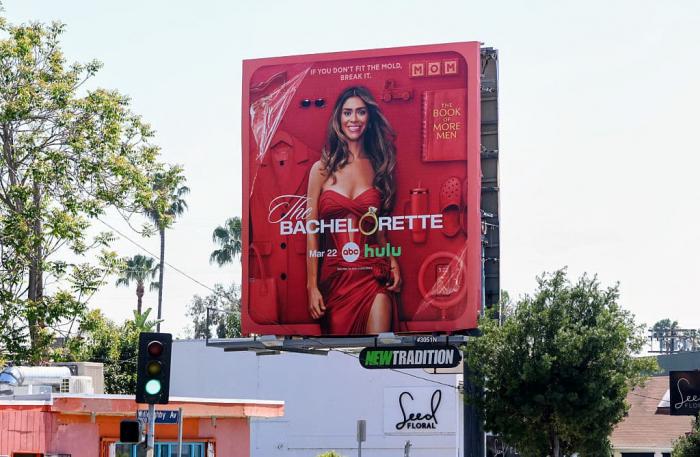
Nobody thought it was a good idea to have Taylor Frankie Paul as the next Bachelorette. Fans of The Secret Lives of Mormon Wives, the headline-grabbing reality series Paul is a cast member on, repeatedly noted that she would be an absolute nightmare on ABC’s flagship dating show. But the network wanted drama and she seemed guaranteed to bring it. Then TMZ published footage of Paul assaulting and throwing metal chairs at her ex-husband, Dakota Mortensen.
In the video, one of the chairs can be seen landing on their daughter. Paul and Mortensen’s relationship has played out publicly on TV for years. The 2023 incident and subsequent arrest were part of season one’s arc. Paul later pleaded guilty to one count of aggravated assault and is serving a three-year probation sentence. ABC knew all about this when they chose her to headline one of their biggest money makers. But seeing that video, the painful and embarrassing evidence of her violence towards her spouse, made it impossible for ABC to keep her on the show. So, an entire season of The Bachelorette is now in the vault. As of the time of me writing this piece, authorities in Utah are reportedly investigating allegations of a third domestic violence incident involving Paul and Mortensen.
ABC didn’t choose a clearly troubled woman with a toxic marriage and police charges to her name out of some altruistic desire to help Paul get her life together. They wanted someone who would enact all of the viral moments that keep the Bachelor/ette franchise on the air. Having a reality TV star with genre experience but the obvious element of unpredictability was catnip to producers. This is a series, after all, with a proud tradition of spinning controversy into ratings. Paul’s involvement was sold in headlines as the only way to ‘save’ the show from recent ratings decline. They wanted a mess, and they got it. But it’s not on their show so it doesn’t count.
Paul’s bachelorette cancellation feels like the apotheosis of reality TV’s problems in the modern age. The format has completely engulfed entertainment, evolving from a social experiment to scolded trash to a strange kind of hyper-aware self-promotional art-piece. It’s often been joked that reality TV is the domain of the unhinged, and that only those with serious issues are welcomed onto it by executives. Certainly, it’s hard to avoid how, historically, this is a genre that has thrived from a certain kind of cruelty directed towards its participants. It’s Simon Cowell bullying people with bad voices who were set up by producers to believe they were the next American Idol. It’s wannabe models being fatshamed by Tyra Banks. It’s vulnerable women with low self-esteem receiving tons of plastic surgery, some of which they didn’t want, then being made to look vain for it. The notion is that anyone who wants to be on TV for whatever purpose must be punished for their audacity, and therein lies the entertainment value.
That attitude evolved somewhat in the 2010s and beyond, as audience awareness of reality TV grew. We had a viewership that knew how the sausage was made and they were happy to indulge. ‘Scripted reality’ became the name of the game, with the Bravo-verse specializing in semi-augmented dramas with a base of highly game participants who knew the tropes they were embodying. Real Housewives took on their roles, like any good actor, and let the narratives be shaped for them. It wasn’t all fake, with just enough real emotion shining through to keep things interesting. Still, it provided a kind of safety net for viewer and star alike. If you play the b*tch and everyone knows you’re playing the b*tch, it makes things a hell of a lot less risky.
But these are still real people, and reality is a powerful force that can’t always be beaten into a convenient arc. The reason the Scandoval story from Vanderpump Rules became such a big deal, being covered by every major outlet with breathless detail, was because it broke the rules. It suddenly got too real and you could see that on every cast member’s face. On the flipside, we had the Real Housewives of Salt Lake City story, wherein one of the women, Monica Garcia, was exposed as an online troll who posted defamatory and private information about her cast members. The finale episode, which exposed her, made for impeccable TV, but it also broke the rules in another way: it showed what happened when a fan of the show came in and screwed with the system. Too much self-awareness cannot last in this genre, and Garcia was soon out of the show.
Paul doesn’t fit comfortably into either box here. In a recent profile by New York Magazine titled ‘The Messiest Woman on Television’ (that had to be rapidly rewritten before publication due to evolving events), Paul comes across as a deeply broken woman. She seems close to a breakdown from months of filming and is unprepared for the attention of television exposure, yet doesn’t know how to process her feelings unless a camera is on her. One assumes ABC, which also broke a ton of its own rules to let Paul onto The Bachelorette, thought viewers would find her compelling rather than repellent, or at least be morbidly curious about her rabbit hole descent into madness for long enough before the ick set in. It’s almost old-school in its lackadaisical attitude towards talent safety, a move from 2002 reality TV rather than that of 2026.
We’re in the era of the genre where most of its core demographic is well-versed in its madness and that is felt on-screen when they turn up as contestants. They know that appearing on, say, Survivor requires them to follow some rules, but they’ve also watched hundreds of hours of their predecessors shaping, breaking, and remoulding them. These are people who know what makes for good TV, but can’t always pull it off when the occasion calls for it. They also know that these shows are building blocks for very modern careers. You don’t go onto Love Island or The Bachelorette to find a partner: you do it to gain a foundation to launch a podcast, get some brand deals, and hopefully a long-term career in the industry. It’s no surprise that most of the men lining up to pretend to like Taylor Frankie Paul were influencers. Why else would you sign up for this indignity?
Maybe it’s for the best that the status quo for a reality TV contestant is a fan turned influencer. They aren’t immune from hurt but they aren’t as vulnerable to being toyed with by production teams as the first generation of participants. The exception, of course, being those with pre-existing issues and an insatiable hunger for attention, such as Paul. That she was ever allowed to be on TV, with everyone behind the scenes aware of both the video and further allegations, is outright professional malpractice. But it was also inevitable. When you set up this system of exploitation turned pantomime that thrives from a combination of malleable contestants and showboating fame-seekers, you end up with Taylor Frankie Paul.


