Old School. Biblically Independent.
By Kayleigh Donaldson | TV | May 22, 2026
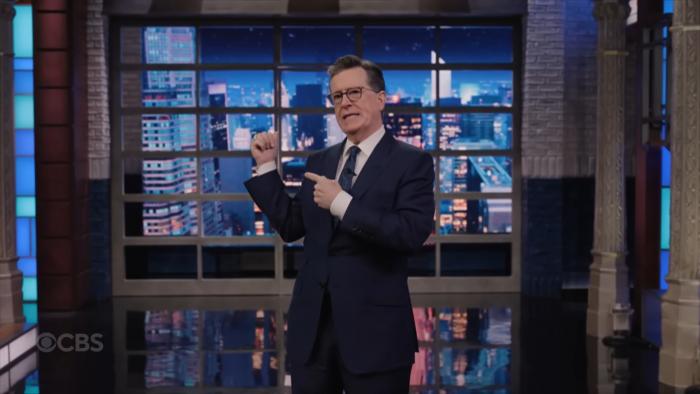
And with that, The Late Show is over. One of the true institutions of American television came to an end, with Stephen Colbert receiving a grand send-off worthy of his legacy. This is not how it was supposed to be. We will never be able to talk about Colbert’s tenure without talking about the obvious censorship he faced, thanks to a combination of Trumpian narcissism and corporate cowardice. An otherwise disappointing but somewhat expected shift in modern entertainment will forever be accompanied by an asterisk, a reminder that late-night became the unwitting battleground of a loser President’s temper tantrums. Late-night has its own issues to deal with, but now they’re embroiled in a political and existential crisis.
While nobody believes CBS-Paramount’s claims that the end of The Late Show was strictly a financial decision, it is true that series like this are pricey. It’s a comedy talk series on the air four nights a week with a large writers’ room, a live band, a big studio audience, and a theatre with all of the required crew to maintain it. There is a reason the other shows have stripped back on those classic qualities, like the music and grand sets. Jimmy Kimmel has said on several occasions that late-night is on the way out. Seth Meyers doesn’t even wear a tie anymore, guys! The lack of a monoculture has hit network TV hard over the past 15 years, and late-night felt the squeeze. Fewer and fewer people were staying up to watch it live, and the YouTube numbers weren’t equal to what old-school ad revenue can bring in. The watercooler moment of TV is largely dead, and the exceptions weren’t in this format. That may be what does in the late-night talk show, or at least it offers a convenient and not untrue justification for its death.
We lose a lot with the decline of the monoculture. There are obvious benefits to a wider array of entertainment that has the freedom to explore more niche ideas and themes, although in the post-Peak TV era, we’re nowhere near the level of options we were once promised. And there is power in the notion of the one thing we can all agree on, the one show that can create community. Perhaps such things are too idealistic in the dreaded “culture wars” nightmare, where literally any minor infraction or presence of a non-white person can send the leader of the free world into a spiral of perennially online ranting.
That’s the other thing that will hinder late-night: the weird notion that it’s the leftist haven of the #Resistance. Colbert was never radical. Neither was Jimmy Kimmel. But the weaponizing of pop culture via a right-wing hate machine, a force that has redefined art for the past decade and beyond, redefined their standard pushback against abject cruelty and hypocrisy as treason. In a normal world, it would have been completely objectionable for the President and FCC to wage a petty war of censorship against them (wasn’t comedy supposed to be legal again under Trump?) But this timeline is nothing if not consistent in its lunacies. I wonder how Colbert felt about it, given that he’d spent years on Comedy Central being a liberal voice for ‘sanity’ alongside Jon Stewart. That’s a weighty responsibility to bear, and all of a sudden he was being asked to do it again, this time with far more dangerous stakes. In lieu of an effective political opposition, it seemed like Colbert and comrades felt obligated to take on the labour. And that just made the losers angrier and more desperate to silence.
It’s not just Colbert and Kimmel, obviously. The studios have giddily embraced the opportunity to roll back the pitiful diversity efforts they briefly implemented when they were embarrassed into doing so (and late-night still managed to remain almost exclusively white and male to the end.) Comedy roasts are dominated by hate-rally headliners. Your podcast options are anti-vaxx numbskulls or talentless suck-ups, and they’re all shilling for gambling apps and Amazon. Spotify is ‘proudly’ launching AI-generated podcasts for its listeners who desire a third, even more depressing, choice. CBS decided to replace Colbert with a hacky comedy show that’s paying for the timeslot shows their desired business route forward, the slightly glammed-up version of selling advertising space on roadside billboards (Comics Unleashed, by the way, is the most leashed comedy series you can imagine. It’s so bland and inoffensive that it makes you yearn for the days of jokes about airline food.) In the era of flop-sweaty cost-cutting measures that never impact the CEOs or billionaire owners, the ultimate aim is to make as many unionized workers as possible unemployed. Stay tuned and all those time slots will eventually be occupied by filmed podcasts.
It doesn’t feel like a fair swap, does it? The slopification of pop culture, the desired status quo of those in power, demands that audiences accept less and less in exchange for more and more time and money. Decades of talk-show legend gets binned for, what, AI-generated dead celebrities and TikTok dances? And how long before the President takes issue with those for no dang reason?
Colbert should have been allowed to end The Late Show on his own terms. Moving on from an era of entertainment isn’t a bad thing. We evolve and grow. But it does seem unfair that Colbert hasn’t been able to leave something behind. It’s just a hole now, one of many that’s rendered the roads ahead unusable. The structures of entertainment are being torn down piece by piece for tax write-offs and monopolistic evil. Fewer and fewer opportunities are available for those who want to be the next Colbert. Those who are carving out spaces in online spaces are not free from the threat of censorship from those same billionaires. It never should have been the job of Stephen Colbert or his fellow men in suits behind desks to speak slivers of truth to power. That it got to this point is a sore reminder that, no matter how much you sacrifice, it will never be enough to appease a bully.


