
Old School. Biblically Independent.
By Dustin Rowles | News | September 26, 2025
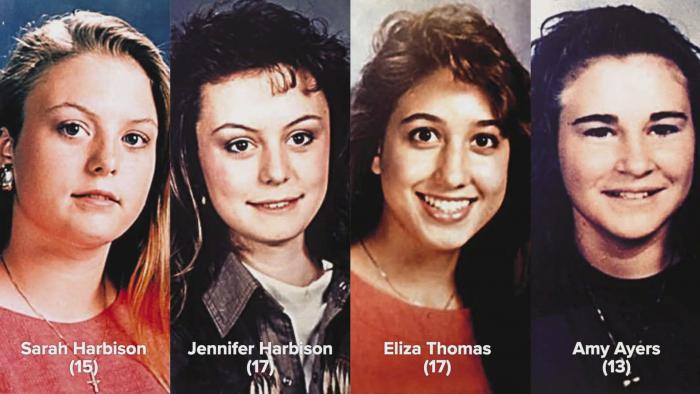
The deaths of four teenagers — Amy Ayers (13), Eliza Thomas (17), Jennifer Harbison (17), and Sarah Harbison (15) — in an Austin, Texas yogurt shop in 1991 have finally been solved. The killings were the subject of a recent HBO documentary series, The Yogurt Shop Murders, which explored the grief of family members and the wider community. Four suspects were identified years after the murders, and two — Robert Springsteen and Michael Scott — eventually confessed after enduring prolonged interrogation tactics.
The two served nearly a decade in prison, but a court eventually overturned their convictions. The only evidence against them was the testimony of the other, and neither was given the opportunity to cross-examine their accuser. The confessions were clearly coerced.
That’s all the more evident now that Robert Eugene Brashers has been identified as the killer. In the documentary, police claimed that advances in DNA technology would eventually lead to the real perpetrator. That’s exactly what happened: new testing linked a gun casing found at the scene to the same gun Brashers used when he took his own life in a 1999 standoff with police over an unrelated crime. In 2018, years after his death, a genealogy expert also tied Brashers to three other murders and several rapes.
Those crimes were in addition to the ones for which he was actually convicted, including attempted murder in 1985 and grand theft auto in 1992. He was released from prison in 1989 and has now been identified in six deaths committed between that release and another prison sentence in 1992. After being released again in 1998, he killed once more before taking his life in 1999.
While it’s obviously good news that police have identified the actual killer, I hope Robert Springsteen and Michael Scott — who were wrongfully convicted based on coerced confessions — get some justice in this, too. Hopefully, the city of Austin and the families of the four teenagers can gain some long-overdue closure.


