
Old School. Biblically Independent.
By Dustin Rowles | TV | August 8, 2025
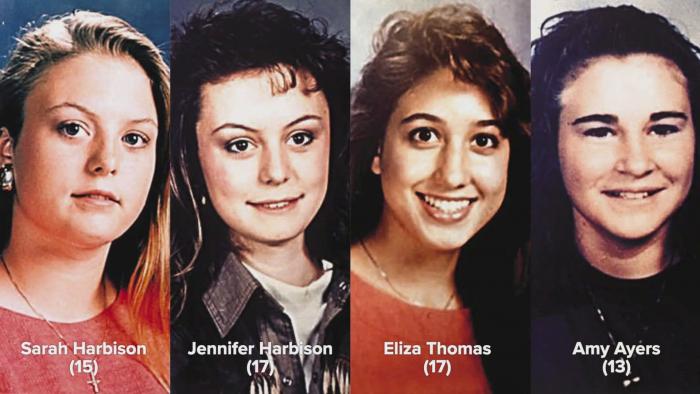
The first episode of HBO Max’s Yogurt Shop Murders aired last week. It is a docuseries very specifically about the trauma of those murders on the families, friends, and the community. It’s about helping the city of Austin find closure and healing.
It’s not really about who killed Amy Ayers (13), Eliza Thomas (17), Jennifer Harbison (17), and Sarah Harbison (15) in an I Can’t Believe It’s Yogurt shop on a December night in 1991. And yet, my curiosity still got the best of me. I fell down a rabbit hole of Austin Chronicle articles, reassessments, and true-crime podcasts. Mostly, I wanted to know why the convictions against Robert Springsteen and Michael Scott were overturned. Was it over a technicality? Did Springsteen and Scott escape life in prison because of a loophole or police misconduct, or did they actually not commit the murders?
The reality, it seems, is both. They confessed to the crimes. The confessions were coerced. And it’s clear those were also false confessions.
Let’s back up. Robert Springsteen and Michael Scott were suspects in the initial investigation, along with two others, Maurice Pierce and Forrest Welborn. They were teenagers at the time. The police, however, couldn’t find any evidence linking them to the murders, and the case eventually went cold.
Eight years later, new detectives reopened the investigation into the four men, now in their 20s. One of those detectives was Hector Polanco, who had a pattern of obtaining coerced confessions — at least one of which resulted in a wrongful conviction later overturned after DNA evidence exonerated the suspect.
These detectives subjected the four men to aggressive interrogation tactics, although “aggressive” isn’t really a strong enough word. Michael Scott, for instance, was interrogated for nearly 20 hours and, at one point, a detective allegedly held a gun to the back of his head (later justifying it as “role playing”). Scott and Springsteen both eventually confessed not only to their involvement in the murders but to each other’s involvement.
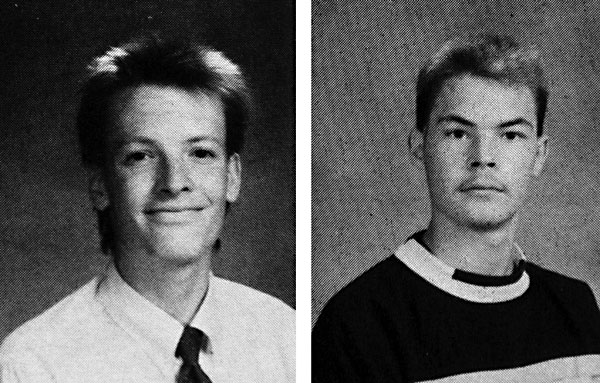
During the trials, prosecutors used Scott’s confession against Springsteen and Springsteen’s confession against Scott. (Only one of them implicated the other two, Maurice Pierce and Forrest Welborn. Welborn was never indicted. Pierce was indicted, but charges were dropped due to lack of evidence.) Beyond those confessions, the police had no other evidence. No fingerprints, DNA, murder weapon, or eyewitnesses linked any of the four men to the scene. Nevertheless, a jury convicted Springsteen in 2001 and Scott in 2002.
In 2006 and 2007, those convictions were overturned due to violations of the Confrontation Clause. The written and videotaped confessions were introduced at trial, but Scott didn’t testify against Springsteen, and Springsteen didn’t testify against Scott, likely because both had recanted. Neither man took the stand in the trial against the other, and the Confrontation Clause requires that defendants be able to cross-examine their accusers.
So yes, the convictions were overturned because of a legal technicality. However, it’s also clear that the confessions were not only coerced but also false. The confessions contradicted each other in key ways — they differed in where the girls were shot and how they were bound — and the physical evidence didn’t support them. For instance, one confessed that a victim was shot in the head with a revolver, which wouldn’t leave shell casings, yet casings were found at the scene. Moreover, the details the men offered in their confessions were all available to the public at the time.
It’s a fascinating appellate ruling that offers a lot of detail about the confessions. Three judges even dissented, acknowledging that there was a constitutional error but arguing that it wasn’t enough to outweigh the confessions. They said the confessions were detailed, damning, and corroborated by known facts.
So, you could argue — based on the dissent — that the confessions may have been accurate, and that they were tossed on a legal technicality, meaning Springsteen and Scott probably did it.
Except that the prosecution never retried the case, and that’s because newer technologies allowed investigators to test three different DNA samples from the crime scene. None of those samples matched any of the four men. The DNA evidence raised the very real possibility of a multi-perpetrator crime involving entirely different individuals. As a result, the prosecution rightfully dismissed all charges, and the crimes remain unsolved.


