
Old School. Biblically Independent.
By Kayleigh Donaldson | Miscellaneous | April 15, 2026
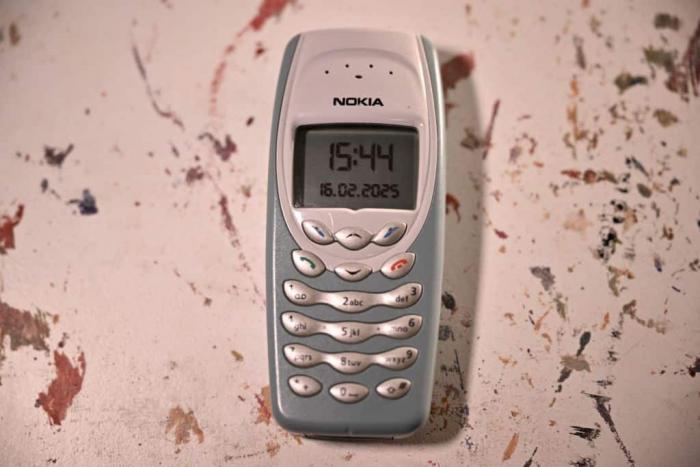
Does anyone truly enjoy being on their phones all the time? Unless you’re Taylor Lorenz or a tech bro incapable of basic human kindness, I cannot help but wonder if anyone achieves genuine joy and satisfaction from a life of endless scrolling. The internet has gotten exponentially worse over the past few years, thanks to a combination of conglomerate overrule, generative AI, crypto and gambling mechanisms, and good old-fashioned hate speech. Yet it’s been accepted whole-cloth that this is just how life is now, and that we should all accept it lest we be left behind by the ever-speedy locomotive of progress. Well, that was what we were sold. It’s a hard illusion to maintain when everyone hurtling down the rabbit hole of addiction and radicalisation seems so damn miserable in this timeline.
It does feel like people are finding ways to push back, be it through legislative change that keeps smartphones out of schools, Gen Z-ers embracing analogue hobbies in rebellion of the digital stranglehold, or the collective bullying of losers like Sam Altman. Another method being embraced by the masses young and old is the so-called dumb phone. The concept of the ‘boring phone’ has been around for a few years now bur has experienced a surge in popularity over the past few months. They’re essentially throwbacks to the pre-black-screen era, where phones were used primarily for calling and texting and had no easy internet access. These phones, many of which are styled to look like the late-90s and early-2000s phones that we grew up with, don’t have apps, Wi-Fi access, or even good cameras. They are simply phones you use for, shock horror, calling and texting people.
Companies like Punkt have seen success selling ‘minimalist phones’ that encourage people to move to a more offline life. The ideal is that users are able to wean themselves off the compulsive need to lose hours of their life to browsing apps and social media and whatever other form of brainrot one has easy access to. We’ve all been there, right? We just wanted to check an email before bed but suddenly an hour has passed, you’re lying in an uncomfortable position, and you’ve consumed endless content that has left no real impression on your mind beyond a sense of fatigue. The dopamine hits are powerful but they’re increasingly fleeting. It’s tough to escape the sensation that this involuntary hunger for more, more, more, has left us starving for something more tangible. The endless barrage of entertainment does not satisfy, but we’re afraid of FOMO and boredom.
But maybe we need to be bored more. Isn’t it a good thing to be alone with one’s thoughts once in a while? Surely there’s something nourishing to be found in, say, waiting for a doctor’s appointment for 10 minutes and enjoying the peace. I’m certainly not innocent of that instinct to open up Instagram whenever I’m in a queue for longer than 20 seconds. It’s infantilising to feel so unmoored without a hit of slop at every waking moment. Frankly, I’ve often found myself doing a simple task then reaching my hand out for my phone and not even knowing I’m doing it. It’s tiring to feel trapped in an endless gamified system of content that actively makes me feel worse whenever I engage with it. And I’m in my mid-30s. Imagine how it is for younger generations, those who grew up online and have bore witness to its ensh*ttification on all levels.
We are so used to the promised efficiency of the smartphone age, one where there’s an app for everything and waiting longer than a few seconds for a response constitutes an inconvenience. That, of course, ended up being a lie, but there’s a reason so many of us have proven hesitant to return to the slowness and deliberate boredom of only a few years prior. Whether we like it or not, everything is so dependent on online presence now: ordering food, looking up maps, scanning QR codes for the restaurant menu, booking a doctor’s appointment, paying your taxes, and so on. Many of these basic duties have been poisoned into a gamified nightmare, but we’ve also been robbed of any alternative. There are still millions of people who do not have the funds to afford even a basic mobile phone contract, thus denying access to essential services based on your earnings.
I’ve talked to a few people who use dumb phones, and they’ve all said it had an immediate calming effect on their minds. The inconveniences - the lack of maps access, for example - were present but not such a hindrance on their lives that they felt the need to revert to old ways. On a basic human level, it feels like we’re simply not designed to be online all the time and to be smothered by the ceaseless sound and fury of its current iteration. Perhaps returning to a full Luddite life isn’t desirable or feasible, but the hunt for balance is certainly more crucial than ever.
Of course, it needs to be a real movement and not a fad. As with many of the recent offline trends, one gets the sense that this is often used as an influencer’s excuse to brag about their latest haul of plastic tat rather than a commitment to a real lifestyle change. After I wrote my piece on the analogue bag, my feeds became flooded with posts of people hopping on the trend largely as an excuse to shill stuff on their Amazon storefronts. I wonder how long it’ll be before one of the bigger tech companies decides to get in on the dumb phone act and finds a way to neuter its entire concept.
Dumb phones are also a band-aid to a larger wound that requires real legislative action. Countries like Australia banning social media for under 16s seems like a great idea on the surface but is tough to implement and does nothing to tackle the heart of the matter: that governments keep handing these companies more and more power over our lives. We need to deal with stuff like the proliferation of online gambling and prediction markets, as well as the scourge of generative AI and its abuses. Where’s the action against sites like Twitter (and their owners) proudly hosting hate speech and revenge porn? A minority of people not having instant access to that via their own choices won’t fix that, but maybe the growing hunger for a life beyond the confines of corporate strangleholds and algorithmic addictions will.


