
Old School. Biblically Independent.
By Dustin Rowles | Film | August 13, 2026
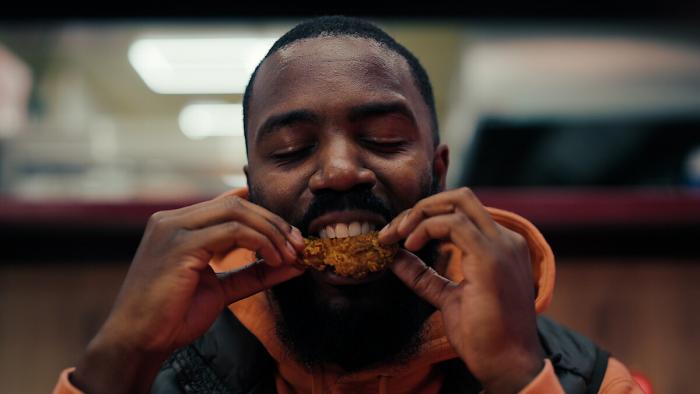
For reasons that I can’t get into right now (but hopefully as soon as next week), I spent a lot of time earlier this year on Fast Food Nation, Omnivore’s Dilemma, and Super-Size Me. They’re 20 years old and some of it feels dated thanks to new studies, certain advancements (like GLP-1s) and, well, Morgan Spurlock’s problematic history (RIP, sort of), but most of the investigations behind those projects still hold up. Our entire food industry is propped up by corn, ultra-processed foods are have created an obesity epidemic even more profound than it was in 2004, and our industrial food system is controlled by a very small number of giant conglomerates (an even smaller number now than in 2004).
So, when I heard about Big Chicken: A Fast Food Conspiracy, I mostly scoffed at the idea. A British comedian, Mo Gilligan, decided to eat only fast food fried chicken for 28 days to see what it would do to him while also investigating the industry. That is the exact same setup for Supersize Me, except with McDonalds and Spurlock covered the chicken industry in 2017 with his less-seen documentary, Super Size Me 2: Holy Chicken!. And at no point in Big Chicken does Mo Gilligan even acknowledge that he’s basically ripping off Spurlock.
But, after watching Big Chicken, I’m willing to let it slide because 1) Morgan Spurlock (again, RIP) was not a good guy, and 2) Mo Gilligan is not only likable, but he can bring this information to a new generation, and 2) a giant platform like Netflix makes Big Chicken far more accessible than Super Size Me ever was. Plus, Gilligan — who is Black — could also more easily explore the racial dynamics at play when you’re talking about fried chicken and a good portion of the documentary covers the chicken industry in Britain.
And I do think for a lot of the old-timers among us who grew up on Super Size Me and Omnivore’s Dilemma, we might have convinced ourselves that chicken is a better alternative for both our health, the environment, and for animal rights than beef. Big Chicken does a solid job of disabusing anyone of that notion, especially when it comes to fried chicken.
I’m neither a big fast food fan, nor of fast-food fried chicken (though, I am a Southerner, and I do make the best fried chicken in Maine, which is not a high bar!), but my daughters are. Chick-fil-A is almost as trendy as Starbucks to teenage girls who wear baggy sweatpants and have never met a shirt that covers their waistline. On a recent trip to Boston, of all the places available to eat, they forced me to go to Raising Caine’s because they don’t have them in Maine. And the only thing they’ll eat at McDonalds is chicken. I honestly hope they never watch this documentary because when they read Omnivore’s Dilemma last year, there was about a two-to-three week period in which they got no protein.
Anyway, Mo Gilligan does a great job of re-covering old material is a new, cooler, funnier package: Fast-food fried chicken is designed to be addictive; consuming a lot of it will not only put on pounds but increase rates of Type-2 Diabetes, but it also negatively affects mood and energy levels. Of course, it’s often the only choice in food deserts, it’s cheap enough to appeal to many of those who need it least; and, naturally, Colonel Sanders — the OG fried chicken guy — not only appropriated it from Black people, but exploited race in its marketing.
Oh, and the chickens themselves? Processed largely by exploiting undocumented workers; the amount of waste produced by industrial chicken farms is terrible for the environment; and those poor chickens not only live the worst kind of lives, but they breeds used in fast-food chicken are designed to basically be so huge that they can’t sustain their own weight, and the chicken from industrial chicken plants is largely tasteless — all the flavor comes from the chemicals used in cooking fried chicken.
It’s bad, but none of this is really new, although I will grant that Mo Gilligan does a better job than Omnivore’s in at least understanding that organic and farmer’s market might be better for you (and the chickens), but that it’s out of reach for a lot folks who can’t afford the healthier alternatives. Also, Mo Gilligan is a lot more personable than the drier Michael Pollan and the smug Morgan Spurlock, at least until about halfway through the documentary when the poor guy’s mood is so altered by his fried-chicken-only diet that he falls into a depressive funk.


