Old School. Biblically Independent.
By Dustin Rowles | Celebrity | November 5, 2026
It was, again, a huge night for Democrats in Tuesday’s midterms, and with the Alaska and Mississippi Senate races still being counted, it could get even bigger. There’s little point gnashing our teeth over the Senate seats Democrats could have won but didn’t (looking at you, Florida), but what happened in Montana is … fascinating.
I knew next to nothing about Montana’s Senate race until Monday, when I listened to this week’s This American Life. I suspect most people didn’t, either, because it’s Montana, and most of what folks know about Montana comes from the fictional Yellowstone universe. So here’s the gist:
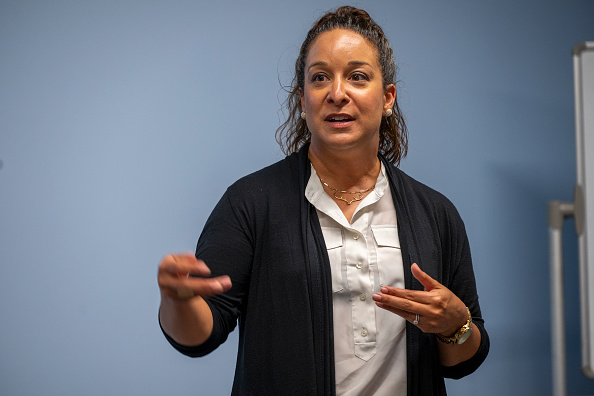
Alani Bankhead, a retired Air Force lieutenant colonel with no real political footprint, jumped into the Senate race as a Democrat in a deep-red state. Her campaign barely registered at first, but the primary field was weak. Then the ads started. Bankhead didn’t pay for them. She didn’t ask for them, either. They came from an outside super PAC, and they handed her enough exposure to win the primary. The Progressive Vet PAC poured more than $2.5 million into mailers, online ads, and texts on her behalf. Bankhead’s own campaign scraped together $23,884, and $5,000 of that was a loan.
But here’s the catch: The money that bankrolled her primary run vanished the moment she won it, and the PAC packed up and left Montana. Meanwhile, the state’s Democratic heavyweights had already lined up behind Seth Bodnar, the former University of Montana president and a far bigger name in the state, who skipped the Democratic primary entirely and ran as an independent because the party’s brand is so toxic in Montana. Jon Tester himself had reportedly nudged Bodnar into the race.
So the pressure campaign began. Twenty-two Democratic state legislators publicly urged Bankhead to drop out and throw her support behind Bodnar, the candidate with an actual fighting chance. Bankhead’s response, more or less: Absolutely not. She’d won the primary. She hadn’t asked for the outside money, and she didn’t owe anyone for it. Why should she step aside?
The This American Life piece tells the story largely from her side, and I admired the way she stood up for herself and against the idea that party power brokers and outside money should pick the nominee. Nor could she, or anyone else, have predicted the massive anti-Trump wave that swept the country on election night. But the results are in, and there’s at least a real possibility that, had Bankhead dropped out, the independent (who was really just another Democrat) would have won. Alme took about 48 percent, while Bodnar and Bankhead combined for roughly 50. Not every Bankhead voter would have switched to Bodnar, but in a race that close, it wouldn’t have taken many.
So, should Bankhead have dropped out? Or should a super PAC run by a Tester ally have done some actual vetting before spending $2.5 million to make a near-unknown the Democratic nominee?
If Democrats hadn’t won the majority, that question would feel a lot more nauseating this morning. As it stands, it’s more of a thought experiment, albeit one with real-world consequences.


