Old School. Biblically Independent.
By Kayleigh Donaldson | Celebrity | August 14, 2026
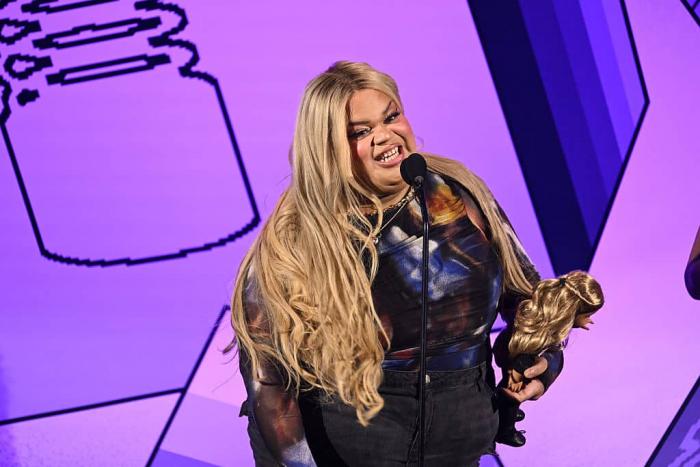
“Very demure, very mindful.” That combination of words probably sounds familiar to you. In August 2024, a TikTok user named Jools Lebron went wildly viral for a 17-second video where she used that term to describe preparing for work. For some reason, this rather innocuous clip, very briefly, took over the internet. Celebrities started saying it. The phrase popped up on every corporate brand’s social media account. Lebron was even invited onto Jimmy Kimmel Live! to say it. A pure fluke of algorithmic luck and good vocabulary suddenly made Lebron, who had done influencer-style content for years before that moment, into a star. It elevated her profile enough that she was able to make a solid living from brand deals and TikTok revenue, enough to pay for her gender transition treatment. But soon, things took a downturn.
In May of this year, she said that going viral had been kind of a disaster. Brand deals came and went, big offers fell through, and in her personal life, she was struggling with mental health problems and relapsing. Earlier this month, she set up a GoFundMe to ask for over $45,000 to help pay for extensive dental work after drug use ravaged her teeth beyond repair. The fundraiser inspired a new round of virality, this time negative, with people claiming Lebron was being greedy and out-of-touch. Why ask your followers, who aren’t doing so hot in this economy, to pay for this when they wouldn’t receive such help? Why not get a real job? What happened to all the brand deals? Eventually, Lebron deleted the GoFundMe. Since then, she seems to be struggling further with the backlash, threatening self-harm and claiming that the stress of being cancelled online led her to be hospitalised with some sort of heart issue.
The whole incident has been kind of tough to watch, a combination of Reddit Snark Syndrome, influencer backlash and bootstraps rhetoric that leads to the perfect discourse of perennially online fury. In the middle of it is this unexpected revelation about the so-called dream of fame, particularly that of the influencer age. People may like you for a moment but they’ll never respect you.
Influencer content was sold to us as the great equaliser, a way that anyone could become famous through sheer force of their own personality and candour. It took off because the opposite force of micromanaged marketing felt phonier than ever, and having some girl in her bedroom with a bag of make-up from her local pharmacy seemed more familiar, more realistic. Now, influencer marketing is as fake as that which it replaced, to the point where “AI influencers” are, unfortunately, a thing. The broad spectrum of personalities and opinions seemed to grow more homogenised, as though they’d all signed the same contracts and were too afraid to hurt their bottom lines. A sea of beige luxury apartments full of pilates mats and matcha lattes became inescapable on TikTok and beyond.
And everyone wanted to become an influencer. The panopticon of the surveillance age, pervert glasses and all, incentivised us all to turn every aspect of our lives into #content. Who knows? You too could go inexplicably viral and suddenly land big money opportunities. Nobody can predict what will work so why not your whole thing, whatever it is? And soon, it felt like everywhere you went, people had their phones out to film, well, something: food vlogs, man on the street interviews, “pranks” that were one step away from felonies, poor kids forced to dance for their parents’ demands. It would all be worth it if something popped off. It would change your life, and don’t we all kind of want or need that right now?
But being an influencer is not something people will like or admire you for. It’ll never be seen as real work, and I think that inspires those involved to also not view it as real work. You can’t exactly blame them for that. Imagine what it was like to be Jools, to go from eking out a living on the margins to being flown around the world first class and receiving $45,000 per video to do very little. And all off of an off-the-cuff phrase that literally anyone could have said. No wonder people covet that lifestyle. We were promised a future of more money for less work and we’ve been given the opposite! But of course it makes us furious to see others receive it, regardless of whether or not we think they “deserve it.” And frankly, we seldom think anyone deserves to be an influencer.
I saw a lot of responses to Lebron’s GoFundMe that were variations of the same sentiment: My life is agonizingly difficult and I’m still struggling so why can’t she do the same? People work multiple jobs and still can’t pay the bills. Healthcare is unaffordable or inaccessible. Some people struggle with pain on a daily basis, unable to buy needed medicines, and they don’t grouch about it. Why should Lebron try to bypass the gladiatorial arena that is the American way of life? After all, she’s an influencer and she can just shill for some concealer to pay for the dental work, surely?
Putting aside how deeply conservative this attitude is, and how it halfway legitimises the popularity contest that is fundraising for basic human rights, it’s also flat-out wrong. The current system of online content creation, both as a hobby and a job, is broken and squeezing out most of its participants. Platforms like TikTok and YouTube are routinely screwing over users with depleted payouts. Brand deals do not pay what they used to, even when you have a million followers. There are people out there who you recognise, people who have gone mega-viral and made millions for major companies, who struggle to pay the bills. Their weird kind of visibility can make it tough for them to re-enter the workplace (and in Lebron’s case, it’s harder when you’re a trans woman.) The current system of the internet is built on monetizing everything but, in the grand scheme of business, the lion’s share of that will always go back to the top of the pile and not those who did the work. Any money you made from being essentially a freelancer goes back to taxes, managers, and upkeep. That $45,000 video suddenly becomes a lot less profit. It’s still probably more than most of us will make in a month, but the influencer dream is built on smoke and mirrors for a reason.
Jools Lebron was thrown into the deep end and expected to swim. That’s what happens to most people who have that viral moment. Suddenly you’re everywhere and everyone else is making money off your image but you can’t go to your regular job because people with cameras are following you everywhere. You decide to get in on the act and see if you too can earn a few dollars while the iron is hot, but you have no idea how any of this works. Maybe you get a manager but they’re incompetent or exploitative. Perhaps you stumble into a scam or find yourself accidentally shilling something dodgy. You try to find ways to extend your time in the spotlight but it costs money to build those foundations and connections you lack. And on top of all of that, you’re expected to maintain a certain image of yourself, one of affluence and aspirational glitz. Of course you’ll fail. The only ones who truly succeed in this space are those who had money to begin with, or those with entertainment industry savvy. For every Jake Shane, there are a thousand Hawk Tuahs with a crypto scam tainting their name.
Fame is a gun, as Addison Rae, a one-time viral star turned Grammy-nominated popstar, famously said. Very few people are equipped for it or ready when it comes, but we’re expected to all chase the dream of celebrity via unsustainable means. You make content, you do or say something random, then you’re meant to build an entire life around that. And the ensuing troubles, the backlash, the emotional turmoil: all of that has to become content too. Your life is for sale but the chances are you won’t see most of the profits. You just have to clean up the mess.


