Old School. Biblically Independent.
By Kayleigh Donaldson | Celebrity | November 29, 2025
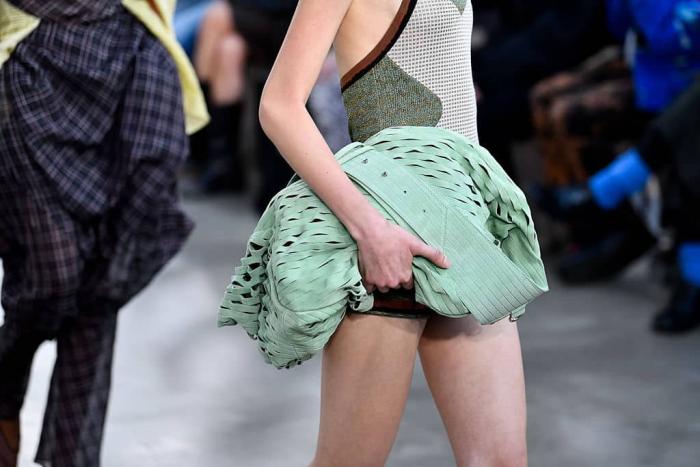
In a recent video on Instagram, actress Jameela Jamil got candid about her fears regarding the rise of the hyper skinny form in entertainment. She discussed her concern with the growing prevalence of very thin bodies in the industry she is a part of, saying, ‘It’s not body-shaming to comment on the fact that there is a rapid rise of the aesthetic of emaciation amongst women in Hollywood […] I’m incredibly worried about my peers. Every event I go to, when I hug people, it feels like they’re gonna snap in my hands.’ She didn’t name names but Jamil, who has struggled with eating disorders in the past, noted how this scary development is being ‘so hyper-normalised.’
I’m with her on this. I found it increasingly tough to stomach how many major celebrities and even influencers whose faces pass by on my social media feed are now unrecognisable from what they look like even a year ago. There are a number of actors whose work I love who I can’t take seriously anymore because their faces no longer move. Now, there are several women who have gotten so skinny that I can’t help but worry about them. We all talk about them in hushed tones, terrified of being accused of body shaming or of perpetrating the problem at hand. But we’re all still talking about it, about how every woman in couture on the red carpet has protruding collar bones and carved-out cheeks.
Is it Ozempic? The rise of the weight-loss drug and others like it has certainly brought to the forefront a new age of body discourse. What was initially designed to be a treatment for diabetes quickly revealed itself to have appetite suppressing side-effects, and it didn’t take long for the drug to be near-impossible to prescribe because of its popularity. Soon, celebrities were bragging about using it, and some started becoming brand ambassadors for it. Not everyone was so open, but Ozempic became the elephant in the room at every major celebrity event as attendees started getting skinnier and skinnier. Even the Kardashians got rid of their BBLs to embrace ’90s thinness.
There’s a reason we try to avoid talking about celebrities bodies. Who wants to further exacerbate the exhausting glut of dictation and humiliation that plagues us all but is especially potent when directed towards those in the public eye? Snarkily judging others without knowing their stories or situation isn’t likely to improve things for anyone. A lot of the press discourse around these issues is charged with misogynistic language, as well as a dose of transphobia. We want to be fair and kind, even if it means engaging in this endless cycle of gaslighting. We’re not supposed to call out the fact that plastic surgery and fillers are so prevalent in the entertainment industry that some of the most recognisable people on the planet no longer look like themselves and are using this lie agreed upon to sell skincare. So, how do we even begin to approach this subject?
When I was a teenager, every magazine or newspaper I read featured endless column inches dedicated to dissecting the bodies of women. You couldn’t turn on your TV in the 2000s without receiving an endless cycle of reports on Britney Spears’s so-called fat body or Jessica Simpson’s mom jeans. Tabloids offered weeklong diets that promised to let you lose a stone in seven days. Reality TV shows like The Swan and Extreme Makeover put vulnerable women in front of cameras and had them undergo extensive plastic surgery, all of which was sold as the ultimate sign of self improvement. I will never forget Beyoncé’s cayenne pepper and maple syrup cleanse that she underwent to lose a lot of weight in a short period of time for Dreamgirls, because every single newspaper talked about it with the detail and seriousness of a political election.
Nowadays, social media and high-resolution cameras make body-shaming a far more precise experience. Every seeming fault can be zoomed in on and derided as a personal failing. If I had a dollar for every time I saw a snarky Twitter comment about how a 26-year-old with a Size Zero body was ‘ageing well’ because she was ‘unproblematic’, I could retire. Fat-shaming of average sized women remains prevalent, whether it’s Renee Rapp being told she’s too fat to play Regina George in the Mean Girls musical or the attacks against Nelly Furtado. Young people are more at risk than ever of being overwhelmed by this rot. Body-shaming is now accompanied by Instagram and TikTok ads for plastic surgery and Ozempic. It’s not merely that skinniness is back; it’s that the thrall of it is impossible to escape.
It’s not merely the revival of skinniness that scares me. Frankly, It never really went away or stopped being the desired status quo. There’s never been a time, at least over the past century, where skinny has ever been dismissed or derided as unfashionable. Even the ‘curvy’ trends were strictly limited to hourglass shapes with no round bellies or double chins. But the severity and the speed with which skinniness has become the new norm, indeed the fetishized, is troubling in a way I did not expect. Over the past two or so years, we’ve seen a startling whittling down of bodies in the public eye, particularly those of women. It’s not unusual to see a beloved celebrity, one whose image is ubiquitous, drop several dress sizes in space of only a few months. We turn our heads and suddenly they are a shadow of their former self. Some are open about the use of Ozempic while others are not, but it’s the word on everyone’s lips.
Body positivity was never fully taken seriously by the mainstream culture. For every positive headline featuring a vaguely plus sized women, we’d be barraged by think-pieces offering bad faith smarm regarding the idea that they were ‘promoting obesity.’ This brief age of diversity of bodies in media remained stifling in terms of what we saw. It was still largely limited to a specific kind of curviness, and almost exclusively with white women. Black women’s bodies were more likely to be appropriated by whiteness than to be amplified by the worlds of fashion and culture. The slivers of progress always felt maddeningly incremental. Their hollowness rings louder than ever now that hyper skinny is back. Cheap buzz words about loving yourself and rejecting crushing beauty standards that hurt us all we are tossed aside like last year’s shoes. Now that weight loss drugs were viewed as an instant fix for the so-called problem of fatness, there was no need to ever position anything other than fitness as the ideals beauty standard.
None of this will change as long as we continue to view being fat as a moral feeling. That’s what’s at the heart of this issue. It’s not just about beauty but ethics. Societally, we treat fat people as though they are fooling us all. We still culturally associate fatness with laziness, with greed and entitlement. Even with changing attitudes the press still reports on women losing weight as though it’s their greatest achievement, then it packages these stories to sell diet plans, and now weight-loss drugs. Skinniness is not only a moral success by these standards but it’s an excellent business investment. Look at how many celebrities are now doing sponcon for such things. The body positivity they previously preached, it seems, was just a financial opportunity, and skinny always pays more.
The era of body-shaming that defined by adolescence has been revisited with somewhat clearer eyes. We all know now that calling Spears ‘fat’ for her VMAs performance is both false and tacky, and we’ve heard so many stories from celebrities of that time who were struggling to survive the barrage of pressure told them to be perennially rail-thin. Women like Portia de Rossi have been candid about dealing with eating disorders in the public eye when their bodies were front page news. Nicole Ritchie was called Paris Hilton’s fat friend then she got so skinny that those same media outlets shamed her for setting a bad example to young girls. I remember all of this and I wonder if we have any self-awareness over how things are going now. I worry that even a piece like this will contribute to the problem, regardless of my care and intent in putting it together.
But I also wonder if, in 20 years, we’ll hear many of these women open up about how they got too skinny because the world told them to get on Ozempic and stay a Size Zero for their jobs. Will we read tell-all memoirs about their ordeals and lament that nobody spoke up at the time? And will it begin all over again once there’s some new medical advancement that makes the pursuit of skinniness easier than ever (at least for rich people)? I fear that this is a cycle we will all be stuck in for decades to come. Making us all smaller is too profitable and morally staunch for society to put an end to it.


