Old School. Biblically Independent.
By Kayleigh Donaldson | Celebrity | February 18, 2026
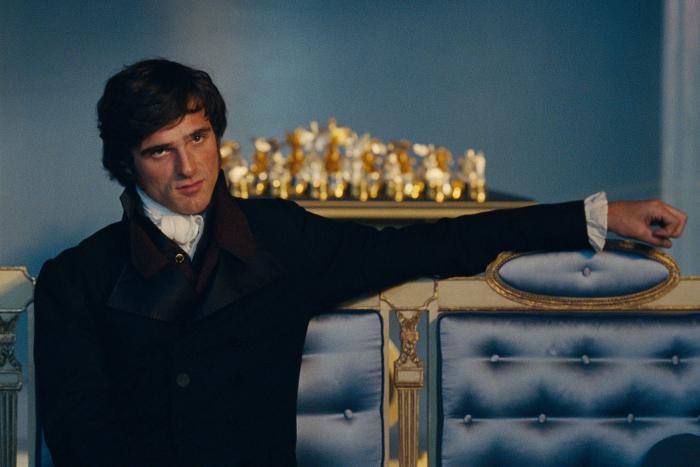
Last year, I came to a very important conclusion: Jacob Elordi isn’t just very tall, he can also act. The star of Euphoria and Saltburn had been building up a reputation as a sturdy actor among many of my fellow critics but his appeal had just eluded me entirely, to the point where I wondered if his intense height was hypnotic to those other than myself. But no, it’s not just that he’s Skarsgard levels of tall: the dude can be a great performer. He earned that Oscar nomination. Now, he’s the leading man of the moment thanks to the one-two punch of Guillermo del Toro’s Frankenstein and Emerald Fennell’s already-controversial reimagining of “Wuthering Heights.” In the roles of the creature and Heathcliff, Elordi seems to have found a comfortable niche with appealing monsters with an allure that is both empathetic and a touch repulsive. But in these parts, he has also been stymied by his material. Elordi wants to be truly monstrous but his creators want something a bit hunkier.
Let’s start with Frankenstein. The idea of del Toro making a lavish historical horror from one of the most influential novels of all time, the grandmother of sci-fi and key foundation of Hollywood’s own forays into the realms of monsters, made too much sense. His filmography, so baroquely stylized and adoring of outcasts, was heavily influenced by Mary Shelley’s book. Think of Hellboy or the fish-man in The Shape of Water as the descendants of Frankenstein’s creation: figures rejected by so-called polite society but more capable of humanity than us fleshy bipeds. Nobody loves monsters more than Guillermo, and we love him for it.
His monster, the long-limbed result of Victor Frankenstein’s experimentation, is like a lost toddler in his early days, or a baby deer trying to walk for the first time on unsure legs. His creator-slash-daddy grows frustrated and disgusted by his work, and the monster soon finds himself through other forms of human contact. The entire second half of the film is dedicated to his perspective, and Elordi excels in this highly physical performance. He learns how to be human, how to be eloquent and kind and philosophical in ways that would have him welcomed into the human world had he looked different. It’s classic del Toro, with Elordi especially strong in moments where his character is torn between craving acceptance and wanting to tear the world to shreds. His spite is well-earned, maybe too much.
The big issue with this Frankenstein is something that is usually del Toro’s strength: his love for his monsters. He spends so much time letting the creature become a man that he seems to forget to make Frankenstein himself a fully formed being. Victor is so spiteful and apathetic to his fellow humans that his obsessive fight against death feels two-dimensional. There’s no battle between him or the monster because everything about the film is Team Monster. Even as Elordi rips men’s arms from their sockets, he never feels less sympathetic than Victor, who feels like Lord Byron without the success with women. It feels weird to say it but even though he literally kills a bunch of people, this monster doesn’t seem like a threat. There’s too much love for him. That’s not against Shelley’s vision but it does remove a few nuances from the character that Elordi seems to crave. He could have used a little more darkness and a little less hunkiness.
The same issue befalls his version of Heathcliff. Given that he has no dang business playing this role as a white man, Elordi’s performance is not the issue with the film. Really, he’s one of the few actors who seems to be trying to push beyond the smothering confines of Fennell’s dumbed-down interpretation of Emily Bronte’s masterwork (shout out to Hong Chau in that regard too.) He even does an okay Yorkshire accent. Sadly, he’s saddled with the least interesting version of one of English literature’s great cautionary tales. Robbed of the book’s class and social commentary, he is left with a Heathcliff whose sole purpose is to f**k. He’s a bad boy, not a monster. He’s meant to elicit swoons, not concern.
It clearly works for some people. True story: at the screening I attended, someone in the audience started applauding when Elordi put Margot Robbie’s fingers in his mouth. Fennell wants you to be as lustfully taken by Elordi as she was by Heathcliff as a teenager, but to make that happen, she had to rob the character of any of his nuances, or really, his entire reason for being. He’s no longer a figure of sympathy whose ostracising from society renders him a vengeful bully, but a hot dude with a dominant streak whose gold tooth makes all the girls come to the moors.
Bless Elordi because he’s clearly trying to imbue this performance with the malice that the material has denied him. When he berates Isabelle into becoming his indentured servant in all but name, you can sense the seething fury at Cathy brimming underneath his words. The way he slyly looks at Cathy putting on an act of grand love with her husband, unimpressed but still primally driven to take action, is as close as the film gets to letting Elordi be the Heathcliff on the page. If Fennell was so determined to cast him despite pushback, one cannot help but wonder why she didn’t let him explore the unnerving steeliness he’s become so good at. It’s not hard to imagine Elordi’s Heathcliff evolving from self-made gentleman to ravenous taskmaster, almost radioactive with bitterness. To render him just a hot dude who likes to spank feels like a waste of an actor who has finally come into his own.
Reassessing my feelings on Elordi made me revisit my previous apathy towards his performance in Sofia Coppola’s Priscilla, where he played Elvis Presley. He doesn’t look or sound much like Elvis, especially when compared to Austin Butler, but going back did make me pay closer attention to that stillness he brought to the role, and how he evoked a cocky kind of cruelty towards his teenage bride. He looms over her, more like a father berating his daughter than a husband, and treats her like a doll who must be moulded to fit his image. Priscilla doesn’t get to be a woman in his eyes but a prize. And he, in his impenetrable starry power, can do as he pleases. It’s a performance that worked far better for me in hindsight, and it feels like the kind of monster that Elordi wants to explore more: nuanced, not without empathy, but never flinching from reality. It’s weird that he got that more effectively from Elvis than two of English literature’s greatest beasts, but perhaps another director will give him what he wants in the future.


