Old School. Biblically Independent.
By Dustin Rowles | Celebrity | July 31, 2026
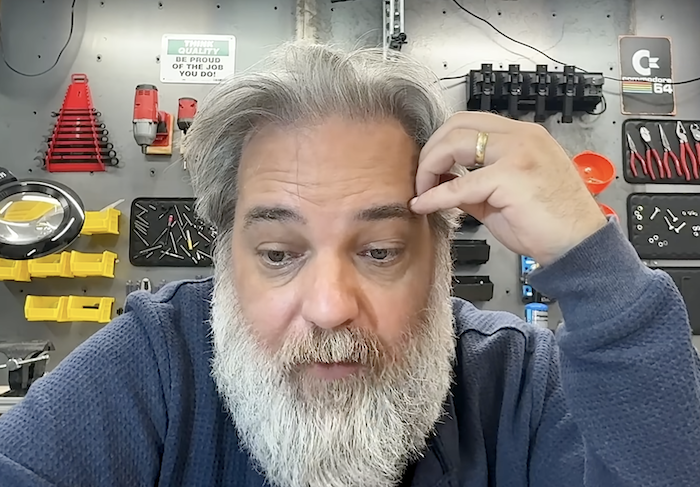
I listened to portions of Dan Harmon’s podcast interview with The Daily Beast a couple of days ago, and there’s a part of it that has really stuck with me. Recall that several years ago, Dan Harmon was maybe the only person during the height of #MeToo to proactively volunteer his misdeeds, admitting publicly that he had abused his position of power with a writer on Community, Megan Ganz (who would later co-run Mythic Quest with Rob Mac, while her husband, Humphrey Ker, had a sizable role in the front office of Wrexham AFC and Welcome to Wrexham). Harmon not only admitted his misconduct but used his own Harmontown podcast to detail his wrongdoings. He was so contrite and upfront that Megan Ganz not only forgave him but called what he did a “masterclass in how to apologize.”
I always remembered that as basically the textbook example of how to apologize — he was sincere, upfront, and took complete accountability for making advances on Ganz and sulking when she rejected him.
A few years later, of course, he partnered with Justin Roiland on Rick & Morty, where Roiland faced far more serious and extensive allegations. He discusses the aftermath of that in the podcast, saying that he basically thought the show was over after Roiland was fired. However, a number of writers on Rick & Morty found him in a bar — “I don’t want to blow people’s minds or rearrange perceptions of me, but I was in a bar” — and convinced him to keep doing the show.
Their argument was basically, “Why does it get to be Roiland’s bad actions that cost everyone else their job and the fans their show?” They asked Harmon to “be the adult in the room,” which Harmon thought was “an insane and ironic thing for it to fall to me.”
Harmon still initially thought it was “black magic” and “evil” and “bad sorcery” to replace someone with imitators, but he “rearranged” his thoughts and realized it was about “professionalism and family and accountability and being the grown up in the room.”
And even here, credit to Harmon for once again reckoning with his own role, saying that Roiland caused damage, “but I did, too. I did it at Community. I abused the power dynamic, and I was obviously not vigilant or conscious enough at the next show, and in so doing, created an unhealthy or unsafe workplace.” He didn’t have to fold himself into that sentence. It would have been easy — and expected — to let Roiland absorb all of it. Instead, he put his own name next to the harm, unprompted, years after he’d already been forgiven for it.
And yet the process to replace Roiland was so “functional,” which he found surprising because “given our infrastructure, the reason why we’re doing it, how do we have the pride left and the professionalism available … why do I deserve this great family if I’ve been a piece of garbage? Well, it’s called gratitude. Who knows if you deserve it, but keep asking yourself that. Why do I deserve this?”
Accountability doesn’t erase the harm. It doesn’t undo what happened to Ganz, and it doesn’t excuse Harmon failing to stay vigilant on Rick & Morty — the people hurt by that don’t owe him anything for naming it. But naming it still counts for something, and it’s worth acknowledging how rare it is. Most people in Harmon’s position reach for ignorance and scapegoating. He keeps doing the harder thing: saying out loud that he was part of the problem, and continuing to ask whether he’s earned what he has. That’s not absolution, and he isn’t asking for it. But it’s a lot more than most people are willing to offer.


