
Old School. Biblically Independent.
By Dustin Rowles | TV | May 27, 2026
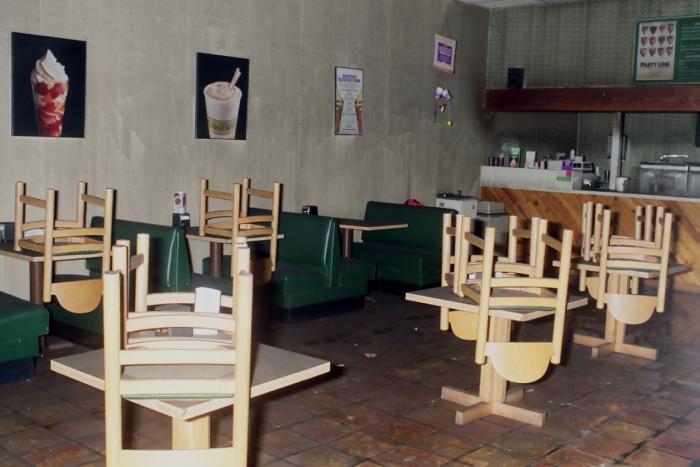
Last year’s four-part HBO docuseries The Yogurt Shop Murders was so dark that the filmmakers themselves needed therapy. It covered the unsolved murders of four teenagers in an Austin yogurt shop in 1991, and how that lack of closure continued to unsettle the families of the victims and the wider Austin community.
A month after it aired, an Austin investigator finally solved the murders. They were committed by a serial killer named Robert Eugene Brashers, who took his own life in 1999 after being surrounded by police. The families and the community finally got closure — but I’m not sure they felt the satisfaction of justice, if there even is such a thing after losing a child. The resolution wasn’t dramatic: the investigator cracked the case using DNA from skin found under one of the girls’ fingernails and matched it to Brashers’ other crime scenes. There was no manhunt. No dramatic reveal. There was a press conference. There was certainly relief — after 34 years, the families finally had an answer — but even one of the family members conceded it was anticlimactic.
Finding the actual killer also officially exonerated the four men who had been wrongfully accused of the crime, two of whom served prison sentences — one of whom was sentenced to death before their convictions were overturned. A cloud had hung over all four since their own teenage years. One had already died in a confrontation with police — a confrontation that might never have happened had the false accusation not set him down a certain path. And yet one of the original investigating officers, despite clear evidence that Brashers had acted alone, continued to insist the four men had somehow been involved — likely some combination of stubbornness and an inability to sit with the weight of his own catastrophic wrongness.
Meanwhile, the families of the victims — who had spent nearly three and a half decades directing their resentment at the four wrongfully accused men, Robert Springsteen, Michael Scott, Maurice Pierce, and Forrest Welborn — could barely acknowledge their own role in that. Not that I can blame them. They had nothing else to cling to beyond the false confessions the police had coerced out of those four men. In the absence of anywhere else to put their grief and hatred, they aimed it at the only available targets.
And now? Now that those four men have officially been cleared? How do the families feel about that? One mother gave perhaps the most honest answer she could: “I don’t want to take on the emotional trauma of what they went through. I’ve already been through a lot and I don’t want to take that on.” Another conceded that “they suffered” but that she has to deal “with her own suffering.” A father admitted they got a “raw deal,” but suggested that maybe they put themselves in that position by falsely confessing.
The uncomfortable truth is that grief doesn’t expand to make room for more grief. These parents have been treading water for 35 years. There is nothing left. You can’t ask someone whose child was murdered to also carry the weight of a secondary injustice they never asked to be part of — to absorb that guilt, to feel responsible for it — when every last bit of them was already consumed by a loss that never got easier. They held onto those false confessions because they had nothing else. In the absence of a real answer, those four names were the only place their hatred had anywhere to go. That’s not cruelty. That’s just what grief does when it has nowhere left to go.
Robert Brashers didn’t just take four girls’ lives. He took four more — and then died in 1999 and left everyone else to sort out the wreckage. The wrongfully accused men, yes. But also the parents of his victims, who are now expected to reckon with their role in someone else’s suffering that they never chose and can barely even see. I wouldn’t know what to do with that either. I’m not sure anyone would.


