
Old School. Biblically Independent.
By Dustin Rowles | TV | January 19, 2026
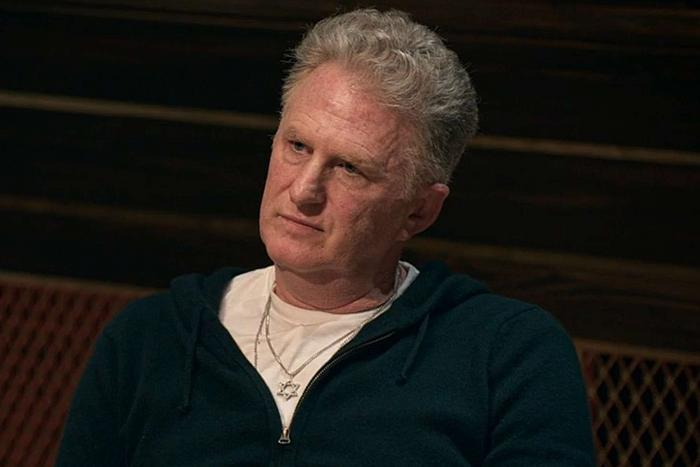
I want to say a few things about the most recent two episodes of The Traitors, but there is something I really need these players to understand. Something everyone needs to understand: Being a “traitor” does not make someone a bad person. Being a traitor means that producers arbitrarily chose you to play a role in a reality-competition series. People are not selected because they are “conniving,” “colluding,” or “conspiring” (or “commiserating,” to Michael Rapaport, who required a brief tutorial on the English language from someone on Love Island).
And this is the key distinction that the UK Celebrity Edition grasped — and that the American players very clearly do not: Being a traitor is often harder for humane, empathetic people, because they don’t necessarily want to be responsible for eliminating others from the game. A traitor has to lie and manipulate because that is the assignment, not because they are liars or manipulators in real life.
Watching this cast, it increasingly feels like a warped Milgram experiment — not one about obedience to authority, exactly, but about how easily people abandon their moral judgment when they’re told who the “bad person” is. The experimenters don’t need to provide evidence; they just need to point. Once players are told, implicitly or explicitly, that someone is a traitor, they accept it as fact and behave accordingly. Suspicion hardens into certainty. Certainty becomes justification.
Once that happens, the humanity drains out of the room. Suspected traitors aren’t merely opponents in a game; they’re treated like contaminants. Michael Rapaport even referred to traitors last week as filthy vermin — a grotesque act of dehumanization on its own, and particularly disturbing (and ironic) given that “vermin” is one of the oldest antisemitic slurs in existence. That kind of language doesn’t emerge from strategy; it comes from moral permission to stop seeing someone as fully human.
Why no one is talking about real-life parallels right now is shocking. The Administration labels someone an enemy — immigrants, trans people, Tim freakin’ Walz — and their followers take it as gospel. How easy this is to reproduce in a reality competition series with C-level celebrities is beyond disturbing.
No one seems capable of holding the nuance. “Playing hard” has come to mean taking everything personally and treating suspected traitors not just as adversaries in the game, but as enemies in life. And it cuts both ways. Faithfuls react with genuine outrage at the suggestion that they might be traitors, as though it’s a moral indictment rather than a strategic guess. The role has become indistinguishable from the person. Somewhere along the way, the cast lost the plot — and with it, their perspective.
That’s why it was genuinely refreshing this week when Dorinda called Ron Funches out for not trying to get to know anyone in the house. “One of the things that has been brought against me,” Funches explained, “is that I don’t want to get to know you guys much — that I’m not asking you about your family and your friends.”
Funches argued that getting personal would create bias and interfere with his investigation. And he’s not wrong. It mirrors the logic in TV shows where hostages share their names and backstories in hopes their captors will recognize their humanity and hesitate to pull the trigger. Refusing that intimacy can read as cold, even suspicious — exactly the behavior players expect from a traitor. But the sheer hostility directed at Funches simply because some players think he’s one (he’s not) is genuinely exhausting to watch. By all accounts, he seems like a kind, thoughtful human being — raised by a social worker and a pipefitter, a father to a son with autism.
Maybe if he shared more of his personal life, the others would soften toward him. But also — this is a game. Ron Funches does not owe anyone his vulnerability in exchange for basic human decency. The Traitors is not a psychological obedience experiment, and being labeled a traitor is not a referendum on someone’s character.
After all, the only truly awful person on this show — Michael Rapaport — is a faithful. And in this week’s fifth episode, the players finally stumbled into a rare moment of actual clarity and humanity by banishing him, not because they believed he was a traitor, but because he behaved like an objectively bad person. That distinction matters. One is a role assigned by producers. The other is a choice.


