
Old School. Biblically Independent.
By Chris Revelle | TV | May 29, 2026
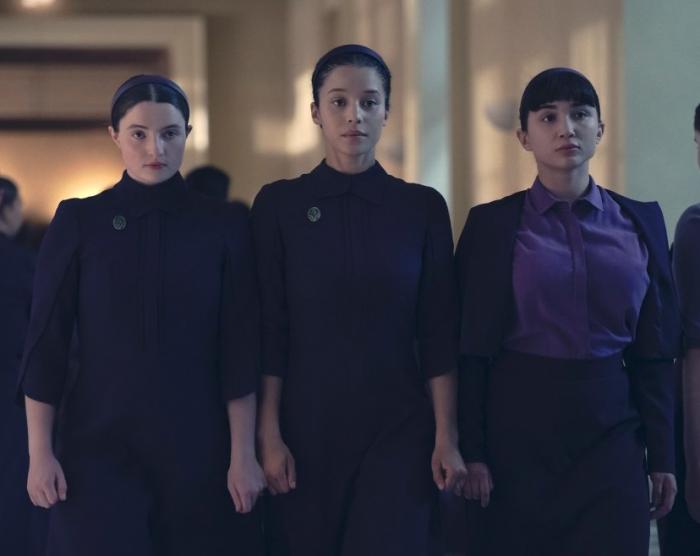
For all the revolutionary espionage, retributive justice, and institutionalized misogyny, The Testaments was not a very dynamic show in its first season, at least not in terms of action. Don’t get me wrong; the Hulu series was gripping and tense in its depiction of girlhood under a crushing theocracy where young women are raised to be submissive child-brides. It’s just that the show had a more internal journey: the slow-burn political awakening of Agnes (Chase Infiniti), Daisy (Lucy Halliday) Shu (Rowan Blanchard), and Becka (Mattea Conforti). It was a messy, if slow-moving, road to revolution. Though the finale (“Secateurs”) is as talky as any other episode of the series, it ends by promising a more energetic show to come.
Going into the finale, the most urgent storyline was Becka’s. Essentially, a relay race of conversations between Agnes, Vidala (Mabel Li), Daisy, Weston (Reed Diamond), and Lydia (Ann Dowd) ends with Becka’s mother taking the fall for the murder of Becka’s father, Dr. Grove. In the process, Agnes admits she was one of Grove’s victims. She also goes to Garth (Brad Alexander) and insists that he honor his engagement to Becka because only his protection as a Commander can save her from disgrace. It’s a two-tiered sacrifice Agnes makes: knowledge of Grove’s assault mars her prospects enough that Weston calls off their engagement and her secret romance with Garth is now over. These aren’t easy things for anyone to give up, especially when Agnes was raised to see marriage and the protection men offer as paramount.
As painful as that sacrifice may be, Agnes made it because she found something more important to her: the love, support, and agency of her friends. These are practically high crimes in a place like Gilead where a woman’s entire world is about her connection to a man. Agnes’ growth from pious devotee to willing rebel appropriately mirrors her mother June’s (Elizabeth Moss) journey to revolution. In a letter to June, Daisy lays out a plan to gather an army of teens within Gilead to break it down from the inside. Daisy is like June in their angry sense of justice and their sharp tongues, but Agnes is her mother’s real successor. Agnes learns of her true parentage from Daisy and it all snaps into place for her. She’s sought sisterhood, friendship, and the freedom to think for herself throughout the season; these drives mark her as June’s daughter through and through.
The ending moment of the finale feels a little trite, but the image of Daisy, Shu, and Agnes walking together with pinkies linked in solidarity is a potent one. The Testaments took its time getting to this point, but it’s thrilling to see these characters finally ready to burn it all down. The series gradually nudged the characters along this path and now they’re finally ready to fight back. That said, any thrills could easily deflate depending on what the series does in its second season. I admire how thoroughly The Testaments established the struggles and emotions of the lead characters, but I wish that the series had more of this fiery spirit over the course of the season instead of saving so much of it for the finale. The kids aren’t alright in Gilead, but hopefully they’ll start the revolution they deserve next season.


