Old School. Biblically Independent.
By Dustin Rowles | TV | October 8, 2026
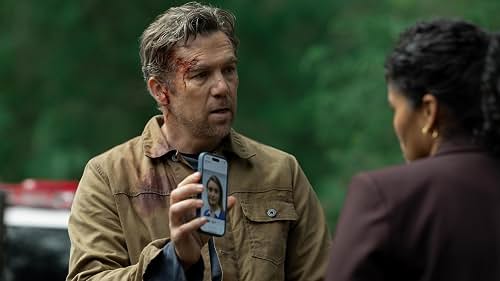
I watched Apple TV’s Last Seen because I’m a fan of Patrick Brammall (Colin from Accounts) and of a good, dark mystery. This one, however, might ultimately have been a little too despairing. It is not the father-daughter reunion viewers might have hoped for.
Here’s the short of it: Brammall plays Ian Ridley, who was a police officer nine years ago when his three-year-old daughter disappeared. It broke him. His marriage fell apart. He became an alcoholic. He now works as a 9-1-1 responder (or the Australian equivalent), still clinging to the hope that his daughter is out there somewhere, alive, though his ex-wife, Debbie, now remarried to another cop and pregnant, would very much like him to move on with his life.
Then the buried body of a three-year-old turns up. It mostly destroys Ian all over again, but at least it would finally give him some closure. Except the body isn’t his daughter’s. So he gets obsessed all over again, and that obsession eventually leads him to his daughter, now 14 and living with a Christian fundamentalist family. She’s homeschooled, works the farm, and, isolated as she is from the world, thinks of her kidnappers as her family. She loves them.
Ian figures this out about midway through the series, but he can’t convince the police. Meanwhile, his daughter, Sarah, begins piecing it together herself. Ian refuses to wait on the cops and basically goes full Liam Neeson. He brings Bill (Debbie’s husband) out to the property of Henry (the fundamentalist). There’s a shootout. Bill dies. Henry’s wife is shot. Henry flees with Sarah and his wife.
At this point, Debbie is more than done with Ian. His obsession got her husband killed. But Ian won’t let it go, despite all the damage he’s done. It turns out his AA sponsor is Henry’s brother, so Ian, at gunpoint, forces the sponsor to take him to Henry, who has fled with Sarah to his super fundamentalist cult-leader father for protection. Henry’s wife dies in the car along the way, and Sarah is devastated.
There’s another shootout, and eventually Ian gets the upper hand and holds Henry at gunpoint. But Sarah begs Ian — her biological father — not to kill Henry, the man who kidnapped and raised her. She’s already lost the mother who kidnapped and raised her; she can’t lose anyone else. Ian is like, “But I’m your father,” and Sarah is like, “But I don’t know you.” And, like, oof. His six-episode-long obsession ends with his daughter choosing her kidnapper over him.
Sarah and Henry leave, but by now the cops have the place surrounded. Henry has nowhere to go, so he … commits suicide by cop. A few days later, Sarah moves in with Debbie (her biological mother), but she’s wrecked by the deaths of the only parents she’s ever known. Neither she nor Debbie will have anything to do with Ian, who more or less ends up alone in all of this, though his son offers at least a glimmer of hope: “Just give it time, Dad.”
And that’s that. I’m not sure what the lesson is, except maybe: Don’t try to rescue your long-lost daughter from a fundamentalist family, because somehow it’s only going to make everything worse.


