Old School. Biblically Independent.
By Dustin Rowles | TV | October 29, 2026
Say what you will about Aaron Sorkin these days, but I adored The West Wing because it imagined a presidential administration that combined competence with aspiration, a White House staffed by people who were smarter than us and, more importantly, better than us. It would never fly in 2026. That’s not because the writing has aged. It’s because the country it depicted now feels like science fiction. America hasn’t merely lost its moral compass; it melted the thing down and pawned it. The better angels of our nature haven’t been ignored so much as deported. The nation we’ve become bears no resemblance to the one Sorkin’s characters were willing to stay up until 3 a.m. fighting for. If there is any way back for this country, it will take a leader who can earn the trust not only of a citizenry that has stopped believing in anything, but of a world that has stopped believing in us. Even then, it will take a generation, at minimum, to scrub off the reputational damage a decade of American politics has inflicted. Our allies won’t soon forget it, and our enemies won’t let them.
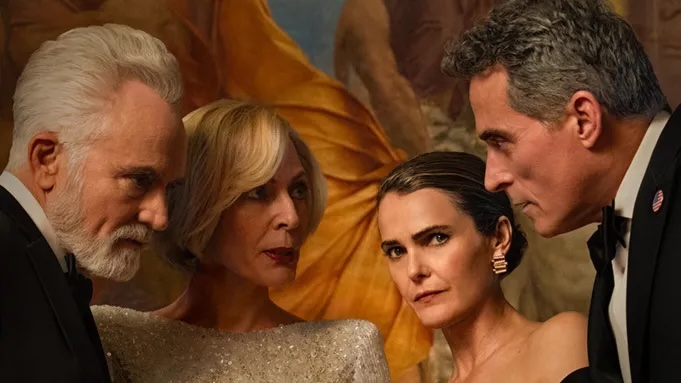
The reason I love The Diplomat, and the reason it still works in 2026, is that it imagines a United States that ends up somewhere uncomfortably close to where we are now, at least on the world stage. It just takes a different road to get there. It’s not paved with the corruption, incompetence, and gleeful indifference of the people running the country, but with the more traditional birth canal of authoritarianism: the ego-driven decisions of a smart, eminently qualified narcissist with a chip on her shoulder, a conviction that she knows better than the career diplomats who are paid to know better, and an all-consuming need to put the rest of the world in its place. That the narcissist in question is played by Allison Janney, C.J. Cregg herself, is either the show’s cruelest joke or its most honest one. It gets worse: The stooge standing idly by, watching it all happen and refusing to push back against his wife, is Bradley Whitford. Josh Lyman, the man who once would have walked through fire to stop it, now just holds her coat. Our fascists, it turns out, don’t have to be stupid. That’s just the version we got.
Imagine living in a universe where the President of the United States starts an endless, intractable war mostly on a whim, because she’s convinced the rest of the world will bend to her will. Because we’re the United goddamn States of America. Because who’s going to stop us? Oh, right.
The fourth season picks up where the third left off, and it revolves around a thorny MacGuffin of sorts. A Russian submarine carrying Poseidon, an apocalyptic underwater nuclear drone, has sunk off the British coast, taking its entire crew down with it. The United States quietly swiped the Poseidon to keep it out of Russian hands and then neglected to mention that to the British, its closest ally, whose waters the sub happened to be sitting in. The Russians say they want to recover their dead, but what they really want is their doomsday toy back. The Americans and the Brits, meanwhile, would very much like to entomb the whole thing in concrete and pretend none of this ever happened.
That standoff propels the entire season, and it’s complicated by the fact that nobody’s marriage is in great shape. Kate (Keri Russell) is still the U.S. Ambassador to the United Kingdom, but her husband, Hal (Rufus Sewell), is now the Vice President, serving under the new President, Grace Penn (Janney), who is shot in the season premiere. She survives, but determined not to look weak, and quite possibly still rattled by having taken a bullet, Grace wildly overcorrects. Then she keeps overcorrecting.
That’s what makes this season of The Diplomat so compelling. Grace Penn starts out as a seemingly decent president with one enormous blunder already under her belt, and then she inches, episode by episode, toward a foreign policy best summarized as: Speak loudly, carry a big stick, and beat anyone who dares to defy America with it. The only three people in a position to stop her are Kate, Hal, and Grace’s husband, Todd (Whitford). Two of them won’t. Hal is too terrified of losing the job he spent his whole life angling for to cross her. Todd won’t push back because she’s his wife, because he doesn’t want to undermine her, and because, frankly, she gets really pissy when he does. That leaves Kate, an ambassador with no real power over a president, gingerly trying to steer the most powerful woman in the world away from a cliff while also trying to keep her own marriage from going over one.
There is a lot going on in this show, and there is a lot of talking. But for a show that is mostly people arguing in rooms, it is strangely exhilarating. It is so satisfying to watch competent people work, even when one of the most competent people in the building is busy dismissing every piece of good advice on her way to a dictatorship. Grace Penn reads the briefings. She understands the stakes. She knows what Poseidon can do, and she knows what happens if she miscalculates. She just doesn’t care, because being right matters less to her than never being seen to blink.
It’s an insane thing to say, but I’ll say it anyway: If this is the kind of country we’re going to live in, I’d at least like it run by thin-skinned but ultimately competent people with a whole lot of hubris, rather than an absolute moron who believes that no matter what he breaks, the world will somehow clean it up. That’s the most damning thing about The Diplomat. Its nightmare scenario, a brilliant, vindictive president dragging the country toward catastrophe while the people who love her look the other way, now plays like wish fulfillment. We used to watch political dramas to see the government we deserved. Now we watch them to see a better class of fascist.


