Old School. Biblically Independent.
By Dustin Rowles | TV | May 12, 2026
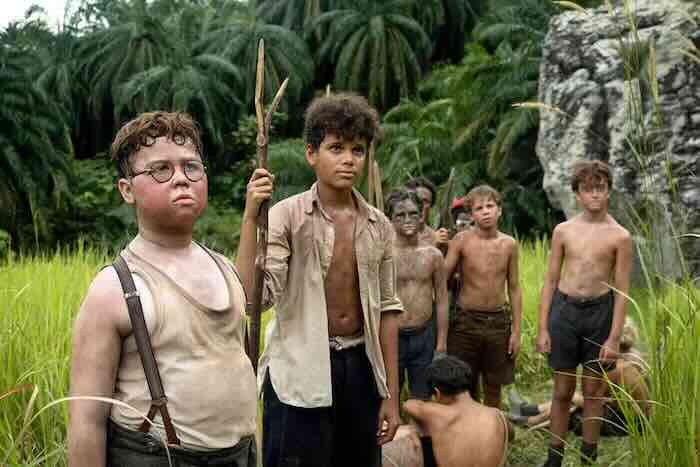
I haven’t read William Golding’s Lord of the Flies since probably ninth grade and managed to avoid the movie versions, so the new Netflix adaptation is the first time I’ve engaged with the material in years. On the surface, it’s a captivating, beautifully shot story about what happens to a group of 30 or so boys stranded on an island for weeks — months? — after a plane crash.
Dig a little deeper, and it’s a harrowing portrait of American politics over the last decade, written in 1954. It’s about a charming, well-liked person of color narrowly elected chief; his pragmatic right hand, who is disliked because he’s too smart to appeal to the masses; and a well-intentioned, weak, and somewhat batty kid — all of whom try to prevent a populist leader from using fear to whip the rest of the island into a corrupt and lawless frenzy. The people who stand between civilization and chaos aren’t powerful. They’re just right. That’s not enough.
It’s impossible to watch without seeing the parallels to modern America, which says something genuinely chilling about the durability of Golding’s thesis: this isn’t a cautionary tale. It was a goddamn crystal ball.
Ralph believes in the best in people. He believes that when they go low, we go high. He holds onto the conch like it still means something, like the rules of civil society are self-enforcing if you just keep faith with them long enough. Piggy wants to use knowledge and reason to establish structures that keep everyone safe — and is mocked for it, because expertise has always been the first casualty of mob rule. And Simon? He sees through Jack completely. He knows the beast isn’t real. He knows Jack is a fraud performing power for an audience that desperately wants to believe the performance. He’s right about all of it. And it doesn’t save him.
That’s the thing about Golding that stings the most right now: he wasn’t optimistic. He wrote this book in the shadow of World War II, at a moment when humanity had just demonstrated exactly what it was capable of when the social contract fell apart. The Lord of the Flies isn’t some external evil. It’s the boys themselves. The descent into tribalism and violence isn’t an abberation. In Golding’s view, it’s the default state, barely held in check by institutions that look a lot sturdier than they actually are.
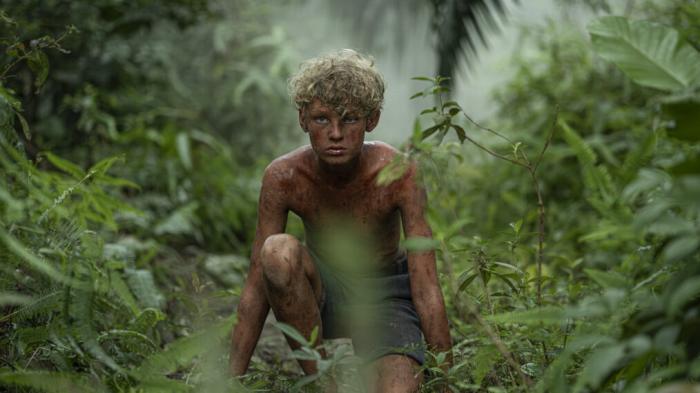
During the ’60s through the 2000s, when the foundations of our democracy at least felt stronger, it was more interesting to debate the themes of Lord of the Flies hypothetically — a literary exercise, a thought experiment, something you argued about in ninth-grade English before going home to watch MTV. But this isn’t hypothetical anymore. And watching Ralph try to hold it together while Jack’s followers paint their faces and abandon every rule that ever existed, you’re not thinking about allegory. You’re thinking about the last ten years. The crypto bros and the manosphere and the MAHA moms and the voters who knew better and fell in line anyway because it felt safer, because the alternative was being next. Jack doesn’t win by being right. He wins by making fear feel like freedom.
Watching Lord of the Flies now feels like if the original Star Wars trilogy had ended after Empire. Except the Netflix series at least provides some illusory hope — the adults show up eventually, civilization reasserts itself, and the island’s fever breaks. Whether that registers as comfort or cruelty probably depends on how you’re feeling about the country this week.
The point is: Netflix’s Lord of the Flies is a good story told well, and creator Jack Thorne and director Marc Munden do a bang-up job adapting Golding’s novel — the casting is sharp, the dread accumulates slowly and then all at once, and the island itself feels like a character. But its themes have always mattered more than the plot mechanics, and those themes are ringing at a frequency right now that they haven’t in decades. The death of Piggy — what it means, what it costs, who watches it happen and does nothing — is no less heartbreaking for being predictable.
It’s a good show. It’s also the kind of good show that makes you want to sit quietly for a while afterward and think about what exactly we’re still holding onto, whether it’s enough, and whether the adults will ever save us.


