
Old School. Biblically Independent.
By Dustin Rowles | TV | July 1, 2026
There’s not much point in debating whether a prequel to Legally Blonde should exist. It does. Everything eventually gets remade, rebooted, reborqueled, or prequelized. And whether we agree with it or not, if it’s good, we’ll usually watch it. If it’s bad, we’ll complain that the IP never should have been preborqueled in the first place.
As for Elle? It’s not great, but it doesn’t embarrass itself, either. Despite the original Legally Blonde being 25 years old (JFC, how is that possible), Elle isn’t really a series for the original viewers. It’s basically YA, aimed at people the age we were when we first watched Legally Blonde — a movie that has held up surprisingly well over the years and cultivated a new generation of audiences (my daughters among them, who’ve seen the original and the sequel several times).
Would they like Elle? To put it in the context of what their generation is watching: It’s not nearly as compelling as Off Campus, but considerably better than Every Year After. Since it takes place in the ’90s, there’s some modest nostalgic appeal for Millennials and Gen Xers, too. It’s light, frivolous, and goes down easy. It doesn’t quite live up to the spirit of the original, but it follows a similar fish-out-of-water template.
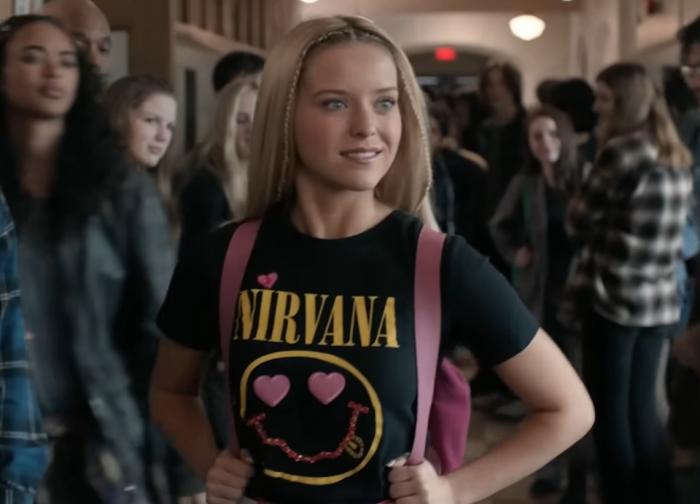
In Elle, Lexi Minetree — a decent stand-in for Reese Witherspoon — plays Elle Woods, a popular Los Angeles high schooler who has it all figured out: friends, a social life, and that signature Type A confidence.
Her life shifts, however, after her father, plastic surgeon Wyatt (a game Tom Everett Scott), relocates the family to Seattle to escape the fallout from a botched nose job. Elle’s Los Angeles sensibilities do not fit into the grunge world of ’90s Seattle: It’s rainy, the other students are apathetic about everything except social justice causes, and her fashion sense clashes hard with the Reality Bites vibe of the school. (Sadly, though the grunge aesthetic is frequently referenced, the soundtrack never actually dabbles in it.)
Initially, Elle hates it and enters a Cosmo essay competition in an effort to land an LA-based internship that will take her back to her comfort zone. But once she stops trying to be someone she’s not, owns her identity, and figures out how to make Seattle work for her, the place grows on her. It helps that she becomes best friends with the record-store goth, Liz (Gabrielle Policano), and finds herself torn between crushes on two guys: the more conventional Miles (Jacob Moskovitz) and a Seattle skater type, Dustin (Zac Looker).
She also takes up a season-long cause: trying to get Donna, the school secretary, her job back after Elle inadvertently gets her fired. There’s also the mean girl, Kimberly (Chandler Kinney), and the Seattle version of Elle, Shannon (Danielle Chand), who happens to be dating Elle’s conventional crush, Miles.
The parents do a lot of heavy lifting here, too, especially Elle’s mom, Eva, played to near perfection by June Diane Raphael. Eva struggles to fit in as well, which creates fractures in her marriage, and she keeps finding ways to angle for a return to Los Angeles even after Elle starts to find her stride.
Once you get over the fact that the fish-out-of-Los-Angeles premise creates a weird continuity error with the original Legally Blonde storyline, Elle is a breezy, almost sitcomish eight-episode binge. Each episode brings a setback, a love triangle, and some messy friendships, but there’s never any real concern that everything won’t eventually sort itself out.
Elle isn’t going to win any awards or become fodder for internet discourse, but it’s the kind of show that’s well-suited to streaming on your laptop during a July heatwave. There are worse ways to pass the time, particularly if you’re a ninth grader killing hours over the summer.


