
Old School. Biblically Independent.
By Dustin Rowles | TV | July 29, 2025
I read a lot of national news, but I don’t watch television news, local news, or Dateline, which I assume is where most true-crime stories are covered. So, when a new true-crime series drops on a streaming platform, I’m often going in cold. I literally learned about the Karen Read trial — one state away — because I saw a thumbnail for the documentary on HBO Max. I’d never heard of Amy Bradley before I covered the Netflix series.
And somehow, I’d never heard about the four Idaho college students who were murdered in November 2022, either. I saw a headline a few days ago about someone being convicted for killing college students, and didn’t even connect it to this case until the third episode. His name is Bryan Kohberger, and honestly, I don’t know much more about him now than I did before watching One Night in Idaho: The College Murders.
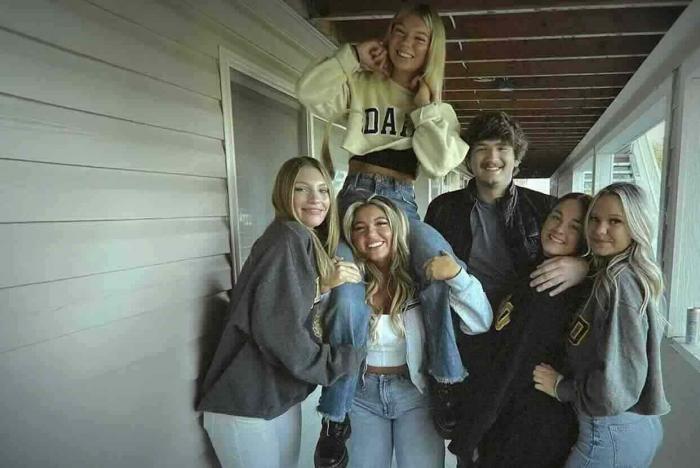
That’s a credit to directors Matthew Galkin and Liz Garbus, who spend most of the series centering the victims, their families and friends, and the community upended by what was essentially a random act of violence. The four-part series is told almost entirely from the perspective of those who loved Ethan Chapin, Xana Kernodle, Madison Mogen, and Kaylee Goncalves, the four students murdered in the small town of Moscow, Idaho.
We meet their parents and best friends, who recount the lives of the victims before the series even begins to address the murders. And when it does, One Night in Idaho follows the investigation through their eyes: the fear they felt, the hole their absence left, the grief that remains. As a parent, it’s devastating to hear others talk about the bittersweet pride of dropping their kids off at college, only to lose them a year later.
For nearly two months, the police kept the investigation mostly to themselves, leaving loved ones in the dark, except for what they could glean from Redditors, YouTubers, and TikTokkers who flooded the town with conspiracy theories. Many of those theories pointed fingers at the victims’ closest friends, and even now, their names remain entangled with baseless accusations in Google search results.
It’s only in the third episode that we start to learn a bit about Bryan Kohberger, although there’s not much to learn. He was a nobody. A nothing. An incel. And despite having a degree in criminology, he was remarkably sloppy. He returned to the scene of the crime. He overshared theories on Facebook. He posted information only the killer would know. He’s a bad man who murdered four innocent people, and aside from the fact that he’s inexplicably become a hero to some in the incel movement, there’s nothing else worth knowing.
Which is why it’s so refreshing that the fourth and final episode doesn’t linger on him. It shifts back to the families and friends — those left behind — who share more intimate stories about Ethan, Xana, Kaylee, and Madison. They talk about grief, resilience, and their growing disgust with amateur sleuths who perpetuate unfounded theories that retraumatize the survivors at best, and blame them at worst.
One Night in Idaho is the kind of true-crime series we ask for: one that humanizes the victims, explores the ripple effects of senseless violence, and never glorifies or romanticizes the murderer. I hate that this happened to four innocent students, but I appreciate that the documentary takes such care to honor their memories.


