
Old School. Biblically Independent.
By Dustin Rowles | TV | July 24, 2026
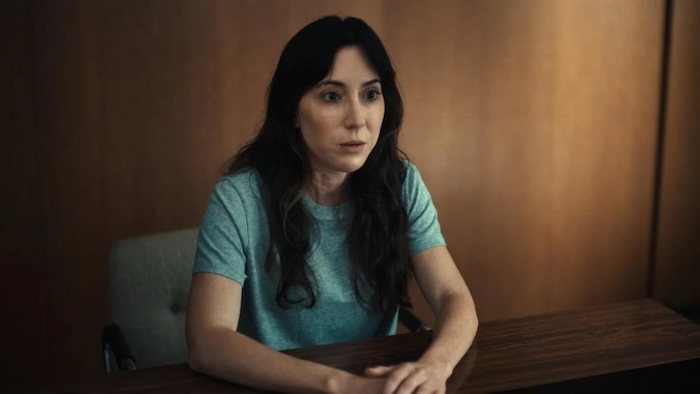
A Toxic Love Story is the latest true-crime documentary streaming on Netflix, and I have no doubt it will be huge, because most of theirs are. Some are thoughtfully put together and maybe even inspiring, and some succeed because they’re really salacious and involve really messed up stories. This one had every opportunity to be the second kind — the raw material is lurid enough — and it refuses.
What I want to commend A Toxic Love Story for is this: it’s a beautifully edited documentary that takes a tangled situation full of twists and smartly uses one subject’s interview to frame the whole thing. Whether we like it or not, a successful true-crime doc has to be compelling and well told, otherwise there’s no reason not to just read the Wikipedia entry. Here, director Alexandra Lacey nails the structure, and the structure is the argument. Told chronologically, the story would have shoved the salaciousness front and center and asked us to gawk. Instead, Lacey introduces a character we think is the villain, then flips it and reveals her as the hero — and in doing so turns a tabloid premise into a study of how easily a person can be constructed as a monster by someone with the right credentials.
A Toxic Love Story starts, really, in the middle. It concerns a couple named Ian and Angela Diaz. Ian — a U.S. Deputy Marshal — swept Angela off her feet, and within months they were married and Angela was pregnant with twins. Things were going great until Angela began receiving a flood of stalkery emails carrying death threats (and worse) from Ian’s ex-wife, Michelle Hadley. They’re really messed-up emails, in which Michelle purported to be Lilith, who — in folklore — was Adam’s first, rebellious wife, before the more submissive Eve came along.
Ian and Angela called the police repeatedly and took out a restraining order against Michelle, all to no avail. Michelle only escalated, eventually recruiting men off Craigslist and sending them to Angela’s house to assault her under the guise of rape fantasies. After one of those men actually attempted to rape Angela, the police finally arrested Michelle and jailed her.
And this is where it gets wild, because there’s a lot more to the story than that. Spoilers, obviously.
It turns out Angela is a pathological liar. In a previous relationship, she faked being a lawyer, and she also faked having cancer. Yes, she’s that kind of person. When her then-boyfriend figured it out and confronted her, she bolted. Then she met Ian, and they fell in love and married. Only Ian began to suspect Angela wasn’t being truthful either, and as he pulled on those threads, he discovered she’d been lying about the twins, too. From there, Ian concluded that Angela had been writing all those harassing emails to herself, and had been dispatching the Craigslist men to herself. Once Ian wised up, he alerted the authorities, Michelle was released, and Angela eventually pleaded guilty and was sentenced to something like five years.
But y’all: that ain’t the end of the story. Remember when I said Ian was a U.S. Deputy Marshal? When something like this happens with a U.S. Marshal, it triggers a DOJ investigation. And guess what? Ian was the really bad guy all along. He conspired with Angela and leveraged his position in law enforcement to build a fake case against Michelle — a terrible, terrible man who orchestrated the whole thing so he could keep the deposit he and Michelle had put on their condo, and because he was a vindictive a-hole who wanted revenge on his ex-wife for leaving him. That’s the film’s real subject, and it isn’t the emails or the Craigslist men. It’s how much damage a man can do when the institution meant to check him is the one handing him the tools.
So, in the end, Michelle — who we thought was sending all those emails, and who served three months in jail — was vindicated, while a long investigation ultimately landed Ian in prison for ten years.
And then there’s Leslie, the documentary’s framing device and misdirect. She’s Ian’s best friend, she believes he’s innocent the entire way through, and she exists in the doc to hype up her friend and keep us from entertaining the idea that he was the bad guy — right up until he’s revealed as the bad guy. Leslie isn’t a gotcha, though; she’s the closest thing the film has to a thesis. She’s a decent person who knew Ian for years and never saw it, which is the whole point: the version of him she describes is the version everyone believed, including a police department and a court. Really well structured, genuinely insightful about how conviction gets manufactured, and though Michelle endured enormous trauma and served three months for something she didn’t do, it’s at least refreshing that this true-crime doc doesn’t come with a body count — only a character study, which is the harder thing to pull off.


