
Old School. Biblically Independent.
By Alison Lanier | TV | August 17, 2023
We all know the calls: something along the lines of Hello, I’m calling on behalf of the So-and-So Policeman’s Association/Fraternal Order of Police/Vaguely Named Charity, and we’re relying on your help…Well, shocking no one, those shady calls were, actually, shady. Very, very, very shady. It was a massive scam, largely perpetrated by a New Jersey telemarketing company called Civil Development Group (CDG), which had cornered the market with their formula of charitable-sounding, police-organization demands for cash. When in actuality, CDG was pocketing more than ninety percent of all “donations.”
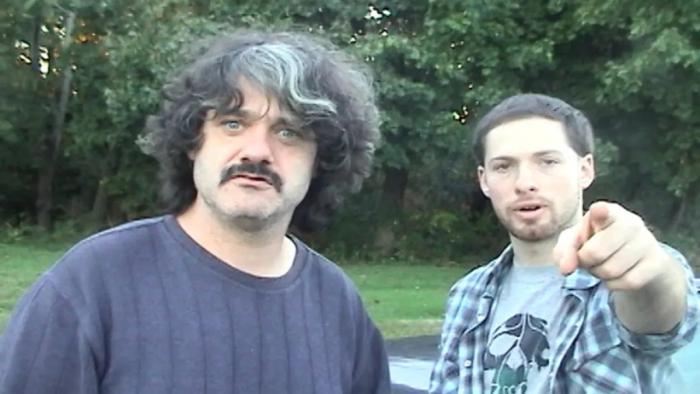
Telemarketers, the three-part documentary series from HBO that details the whole sordid scam, lays it all out—from the perspective of the employees. The minds behind this exhaustive and long-brewing takedown are Sam Lipman-Stern, a fourteen-year-old high school dropout when he began working for CDG, and his buddy Pat Pespas, a driven but troubled addict who feels like an earnest agent of chaos if ever there was one.
Together, the two assemble the information, via Sam’s camera and Pat’s attentive, tireless info-gathering, into a three-part documentary, the first episode of which is now streaming on Max.
Now, CDG’s illicit business practices are far from secret; the company has been slapped on the wrist over and over again over the years, leading to its eventual folding under legal pressures. But the phenomenon lives on, as Sam and Pat’s documentary teases at the end of its first episode. It’s high-stakes high-rewards plagued by secrets, fear, and danger.
And lordy, there are tapes. Literal boxes of tapes. This is a documentary twenty years in the making.
Sam, the documentary’s main narrator, had been recording the chaotic office environment for years—mostly because of the truly absurd level of extreme behavior that pervaded office life. The tapes were mainly for early YouTube laughs, where Sam uploaded them to an audience of maybe forty views per video. But it morphed into something much bigger, as the company evolved into even more deceptive and daring business practices that amounted to massive-scale fraud, with a side of collecting personal information on all the unlucky “donors.”
Part of the CDG model was to hire people who were desperate for work—ex-cons, dropouts, addicts, folks who had little recourse to support themselves in a legitimate job market. People such as a young teenage kid like Sam, who needed a job and couldn’t be hired anywhere else. CDG purposefully set up offices in neighborhoods where it would be easy to recruit the kind of employees they were looking for, employees who had to cling to the company for their livelihoods, with no other recourse, who would take their paychecks and not ask too many questions about the nature of the work they were doing.
Sam interviews many past CDG employees about the tactics of the company (“rebuttals” to donor concerns that were simply outright lies, for instance) and the employees’ own feelings about the experience of company life.
In the first episode alone, the heyday and demise of CDG itself arcs across the lives of the documentary makes, as they spiral deeper into their subject in the scam’s afterlife after CDG.
There’s a righteous, unfiltered energy to this documentary series. It feels like a rebellious artifact, realized in real-time and with a kind of earnestness and zeal that the endless stream of glossy true-crime docs peeling off the streaming-service presses lack. Sam and Pat’s drive is obvious from the word go, and the series they create is obviously not an industry product. It’s scrappy, intentional, and genuinely embedded in its content. While Telemarketers airs with a production value that matches its host services, the roots of the project are tangible.
This material landed at HBO through an organic spiral of connections: according to GQ, Sam showed his tapes to his cousin, Adam Bhala Lough at Rough House Pictures, who in turn brought the material to the likes of Danny McBride and Josh and Benny Safdie, who brought the project to fruition on the streaming giant.
I look forward to watching the twists and turns, as with all good true crime—which is what this is, in the end. It’s a massive, massive crime. But it also doesn’t deserve to be shoved into the glutted craze. For once, it’s the people at the heart of the story with the camera in their hands—which is an increasingly rare phenomenon.
Telemarketers is a three-part series, the first episode of which you can watch now on HBO Max. New episodes go live on Sundays.


