Old School. Biblically Independent.
By Kayleigh Donaldson | TV | January 8, 2026
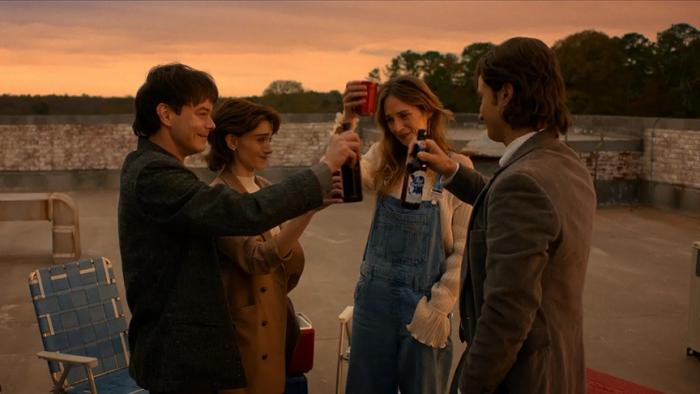
Stranger Things is over. The fifth and final season came to an end over the New Year, having been dragged out over a needlessly splintered release schedule and overlong episode lengths that tried the patience of even the most ardent fans. The crowning jewel of Netflix's original programming, and its biggest cash cow, had to conclude somehow, and the ending we got was... eh. It wasn't a Game of Thrones-style clunker but it was clearly weighed down by a bloated budget, actors who weren't up to the task, and multiple plot threads and ideas that the showrunners could never hope to tie up properly. A lot of fans seem okay with it, or at least not furious. But there were some who were convinced that this wasn't the real ending.
'Conformity Gate' was a quickly spreading conspiracy that posited the idea that the finale wasn't the true ending to this tale. These people believed that the concluding episodes were so bad, so staggering in their failure to finish the story, that they must have been deliberately inept. See, these episodes would actually be revealed to be visions by Vecna, the big baddie of Hawkins, and we'd see what truly happened in a ninth episode, which would drop sometime this week. It's genius! And it's also, obviously, not true. There's no secret episode. The ending we got was the only ending the Duffer brothers made. This was their intention.
Boy, if I had a nickel for every time a subset of a devoted fandom spun a conspiracy about there being a secret finale because the real one was so bad... okay, you know where this is going. Stranger Things wasn't our first time at this particular rodeo, and while the details of each conspiracy were different, they shared a lot of emotional and creative foundations that exposed how such theories form and why we get so invested in silly little TV shows.
The BBC modern-day reimagining of Sherlock had a notoriously devoted fandom. There was a period of time in the late-2000s and early-to-mid 2010s were you could not escape its vast online footprint. The fandom was big, enthusiastic, and talked about with the hushed anthropological insight of a David Attenborough voiceover. Part of what made the fans so well-known was their allegiance to JohnLock, the main ship between the two leads. It was an easy ship to appreciate: Sherlock/Watson stories are commonplace online and across the many adaptations of the Arthur Conan Doyle stories; Benedict Cumberbatch and Martin Freeman had good chemistry; and the show made enough little jokes about their dynamic that it didn't seem unreasonable, at least at first, for their relationship to turn romantic.
Every major series with two white dudes in the lead has its niche of fans who are committed to the belief that they'll 100% kiss at some point. Sherlock wasn't all that different from, say, Hannbal, in that regard. Where things shifted was in how the showrunners, Steven Moffat and Mark Gatiss, became increasingly vocal about there never being any plans to make JohnLock real and that fans who believed otherwise were sorely mistaken. But reality has never been a sturdy defence to a good old-fashioned conspiracy, and some JohnLock shippers began to cook. Enter TJLC: The JohnLock Conspiracy.
Documenting everything about TJLC would require Proust levels of word counts, so I'll try to keep this brief (here's a full rundown for those with the time.) After a two-year hiatus following the massive cliffhanger of Sherlock faking his death in the second season, fans were eager to see how the show would pay off this puzzle. It didn't. Mostly, the show mocked its own fans for caring too much. To make things worse, Watson got a girlfriend (briefly.) Many fans turned on the show while others doubled down. TJLC was born of the belief that, contrary to what the creators and actors of the show had said many times, Johnlock was endgame and had been written as such since the first episode.
TJLC was only a small subset of Sherlock fandom, one that many were creeped out by. It had cult-like tendencies, and its so-called leaders were prone to nasty fights that spilled into real life. In 2015, at a Sherlock convention, these 'fans' crashed a panel to berate one of the speakers for being 'problematic.' They also allegedly doxed people who called out their bullsh*t. Again, this is all over a TV show.
In 2017, the final season of Sherlock aired, largely to damning reviews. It was badly written, full of unresolved plot threads, and the actors looked bored. And JohnLock didn't happen. When your conspiracy has a built-in end-point, it's inevitable that you will lose your power once that moment comes. The TJLC-ers were bananas. After lashing out at the creators for not following through on a thing they said they'd never do, they figured out a new angle.
What if that terrible ending was just to throw off the scent? What if, in a move so genius that even Moriarty couldn't have predicted it, there was a secret finale? And it was going to screen on BBC One in the slot reserved for something called Apple Tree Yard? It was brilliant! Can you guess what happened? Apple Tree Yard was an adaptation of a popular crime novel, not a secret Sherlock episode. The BBC did not have grand plans to spend millions acquiring a book, casting Emily Watson, and building up a promotional campaign, only for it to be for something totally unrelated.
TJLC tinhatters were eventually forced to eat crow and they scattered to the wind to join and irritate other fandoms. When I heard about Conformity Gate, I did wonder if any of its major players were from the Sherlock subset but I've found no evidence of that. It's more that conspiratorial thinking and fandom hive mentality is the same regardless of the focus.
Both shows had heavy shipping elements. Many Stranger Things fans were rooting for Will Byers and Mike Wheeler, or Mike and Eleven. Some of the Conformity Gate theorising seems rooted in the hope that one or these respective ships would become canon. The fact that none of the shipping came true in Stranger Things or Sherlock left many of those fans feeling, for lack of a better term, betrayed. With the JohnLock shippers, they at least had some reason to be annoyed. Moffat and Gatiss hadn't been shy with the queerbaiting or snide little 'oh, are they gay for one another' gags with the pair. They may have quickly refuted shippers' desires, which tinhatters should have paid attention to, but their snideness over the matter added a bitter note to the show.
The secret finale theories offer a sliver of hope to the overtly invested. It sucks to have something you once loved and spent so much of your time dedicated to end so unsatisfyingly. Ask my dad about the finale of Lost and, all these years later, he'll still rant about how much it sucked. You often don't feel the full force of the drop in quality while watching it in real time. Remember how much of the final season of Game of Thrones had us all hoping that, yeah, it's not brilliant right now, but they'll pull it off in the last episode, right? A great finale can heal a lot of wounds. But it's not a miracle cure.
With both Stranger Things and Sherlock, there were these nuttier elements that didn't represent the majority of viewers. But there was also this overwhelming familiarity to proceedings, to that sense we've all felt that we've wasted our time and the showrunners did not fulfil the promise they made to their audience. The Duffer brothers had a killer idea for a nostalgic sci-fi horror series that became more popular than they ever foresaw, and it grew into a bloated and over-expensive cavalcade of bad CGI, infodumps, and Kate Bush needle-drops. It was never going to pull off the tightrope walk of a satisfying finale that lived up to the ambitious task they'd set for themselves.
Sherlock was similarly cursed. Moffat is big at coming up with dramatic and complicated plots that he has no skill or intention in pulling off cohesively. He's been doing this for decades now. He loves to show off his own intellect, stumble at the last hurdle, then berate his audience for not being smart enough to understand his genius. The tinhatters were obviously wrong and increasingly committed to a cult-like zealotry that was never in the cards, but for the average fan who wanted to believe in good old-fashioned storytelling, their disappointment was understandable. Why not hope there's a big secret just around the corner? Don't we all want to believe that these overpaid 'geniuses' are worth it? And that they don't actively hate their own audiences?
Besides, everything else in life is conspiratorial and fake-news dominated now, so why not TV. So much of Conformity Gate seemed defined by artful editing and AI generated images. Fandom is no longer contained to insular spaces so stuff like this spreads well beyond its intended audience. Conspiracies catch on because we all have this innate urge to believe that there's something bigger going on than the mundane reality we face. 'We've been hoodwinked by a layered secret of cultural experimentation' feels more optimistic than 'this thing sucked and there's nothing else to it.'
As Kaleena put it in her review of the Stranger Things finale, 'In trying to satisfy viewer curiosity, the Duffer Brothers only succeeded in choking off all that potential storytelling magic.' Maybe that's what makes these sorts of weird, low-stakes cultural conspiracies take root. To have your creative possibilities cut off is depressing. At least some classic tinhatting will keep you busy.


