Old School. Biblically Independent.
By Dustin Rowles | TV | April 16, 2026
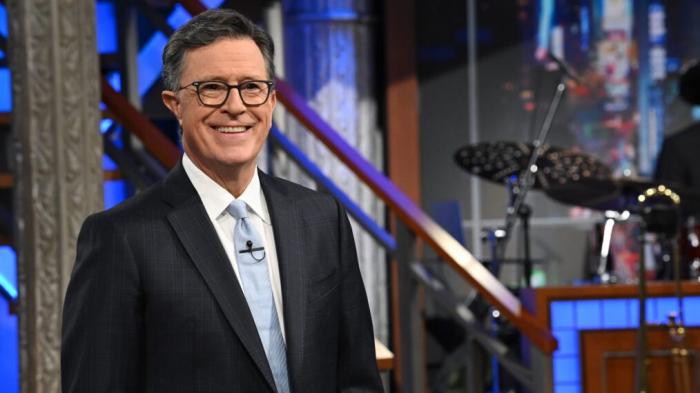
Stephen Colbert is set to wrap up The Late Show on May 21st, ending the late-night talk show franchise that began 33 years ago with David Letterman. It’s been a historic run, and the hell of it is, Colbert is still going out on top as late-night’s highest-rated show, averaging around 2.5 million nightly viewers. The Late Show gave us Letterman’s reinvention of late night as an art form, Colbert’s reinvention of it as a beloved political pressure valve, and 33 years of the most culturally significant real estate in American late-night television.
And on May 22nd, it’s being replaced by Comics Unleashed With Byron Allen, which is a bit like replacing prime rib with gristle and fat, except — and here’s the interesting wrinkle — the gristle and fat is paying CBS instead of the other way around. It’s a guaranteed money-maker for CBS, and the only thing they lose in the exchange is their soul. As David Letterman himself put it, “They don’t want to spend any money, so they’re going to make money.”
Here’s how the time-buy model works: Allen pays CBS “tens of millions of dollars” (his words) for the airtime, keeps all the commercial revenue for himself, and CBS collects a check for a slot it no longer has to program. It’s not new; it’s just that time-buy arrangements have historically been the domain of infomercials and evangelical programming that airs at 2 a.m. when no one is watching. CBS is handing the model prime(ish) real estate.
What makes it particularly galling is what Allen is putting in that slot. Comics Unleashed is a panel show in which Allen lobs generic prompts at four comedians — “have you ever had a parrot get caught in your hair?” type stuff — and each one delivers a pre-baked chunk of their stand-up routine as if it organically arose from the conversation. Allen deliberately designs the show to be completely edgeless: no topical content, no political material, nothing that might ruffle an advertiser or, frankly, a pulse. The upside for Allen is that he can air reruns indefinitely without anyone noticing, because a joke about airplane food does not have a timestamp.
It was one thing for David Ellison to pressure CBS into canceling Colbert for political reasons but what’s happening here is reminiscent of the way tech companies buy legacy media properties and sell them for spare parts. It’s not about building a reputable broadcast network. It’s about strip-mining whatever institutional credibility CBS has left until the stone runs dry (see also 60 Minutes). The same man doing this is in the process of acquiring Warner Bros.
There is, at least, already discussion about replacing Comics Unleashed after the one-year deal expires. George Cheeks, the chair of Paramount Television, says the network hasn’t given up on late night entirely — they’re just looking for a better financial model, one that is apparently more elusive than simply having the highest-rated late-night show on television. What that better model looks like is anyone’s guess. A video podcast, probably. Maybe an AI-generated host who doesn’t need a contract. A Substack with a desk. At this rate, the 11:35 slot in 2027 could be a screensaver and CBS would find a way to frame it as a strategic pivot.


