Old School. Biblically Independent.
By Dustin Rowles | News | October 10, 2025
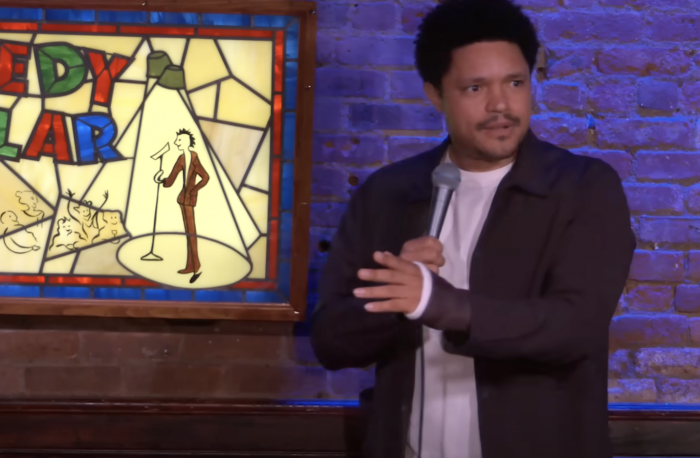
Someone in the audience at one of Trevor Noah’s stand-up shows asked what he thought about comedians performing in Saudi Arabia, and Noah - who often offers an insightful outside perspective as someone who grew up in South Africa - gave a typically nuanced answer.
It’s a 20-minute response, but the gist is this: Noah (who did not perform in Riyadh) said he would perform anywhere, yet found it troubling that a comedian would perform in Saudi Arabia - a country with serious human rights violations - and be paid by Saudi Arabia to do so. He drew a clear line between bringing comedy to Saudi Arabia and being paid by the Saudi royal family.
“When you know what Saudi Arabia is all about, it’s weird to go to a comedy festival that’s paid for by Saudi Arabia. When the government is paying you to come, that’s a direct relationship. That’s different.”
“You say the wrong thing, you get disappeared in a moment. One minute, your family knows where you are, and then they don’t. Women don’t have control over their own bodies. Free speech is limited. Violence is the order of the day,” Noah said, before joking, “I don’t know, man. I don’t think I’d ever perform in Saudi Arabia … I would only perform in the United States because that would never happen here.”
So, yes - he does understand the difference between telling jokes in Saudi Arabia and being paid by Saudi Arabia to tell them. But he also pointed out that America’s own moral authority is shaky right now. Jimmy Kimmel was pulled off the air for making a comment - not even a joke - about Charlie Kirk, people were fired en masse for being critical of Kirk, that people are being disappeared in the streets right now, and that women have lost control of their bodies in America. Noah also riffed on how comedians are warned not to joke about Kirk because “there’s nothing funny about it,” which only makes them want to find something funny about it. He quipped that it’s strange the first thing Americans did after Kirk’s death was to ban jokes about him instead of addressing the actual problem: Guns.
He’s not wrong - and he again stressed the distinction between performing in Saudi Arabia and being paid by it. (He even joked that he probably has a number - one high enough to offset the disappointment of his fans.)
Where Noah makes a particularly strong point — and where the comedians in Riyadh should pay attention — is in his discussion of comedy under dictatorships. He explained how comedy is often the first thing to go in oppressive regimes, citing a Russian puppet show that was canceled after mocking Putin, and the first film to satirize Hitler, which changed public perception and gave people hope.
Noah argued that censorship is inherently bad - comedy under restriction isn’t free speech — but introducing comedy in such environments can be a small first step toward it. You bring laughter first; over time, you might earn the space to make jokes about those in power.
Is that possible in Saudi Arabia? Probably not anytime soon. But Noah’s point stands: comedy has historically helped chip away at authoritarianism, even if the change comes slowly. He also noted the hypocrisy of criticizing comedians for working with the Saudis while politicians and golfers do the same without backlash.
Ultimately, I don’t think any of the American comedians who performed at the Riyadh Comedy Festival were motivated by anything more than the big paycheck. Most probably didn’t expect a backlash - there wasn’t much public outrage until a week before the event. But Noah — who said he wouldn’t perform there - makes a compelling historical case: even limited comedy in an authoritarian country can, eventually, plant the seeds of freer expression.
Also, it’s good to see Trevor Noah again.


