
Old School. Biblically Independent.
By Andrew Sanford | News | January 5, 2026
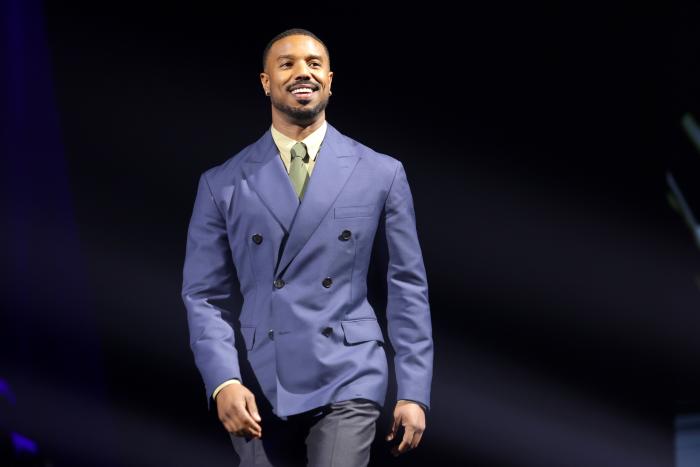
Michael B. Jordan is someone who felt like a movie star the moment I realized I laid my eyes on him. I’ve never seen The Wire or Friday Night Lights, so I didn’t see him in either of those. While I had certainly rented Hardball when it hit DVD, I had no idea that Jordan was in it until much later. The first time I really saw Michael B. Jordan was in the superhero film Chronicle.
There was a level of charisma to Jordan in that film that felt absolutely magnetic. It seemed strange to me that he wasn’t already a bigger star. Here was someone who seemed made for the big screen and who seemingly wasn’t getting enough attention as he should. The next time I would see him would be in Fruitvale Station, Ryan Coogler’s breakout film that ended with my roommates and me crying for fifteen minutes. I would have followed Jordan anywhere, and that was before he played Erik Killmonger.
Killmonger remains one of the best villains the MCU has ever produced. The former citizen of Wakanda feels robbed of his birthright and sets off on a mission to reclaim it. He’s someone whose mission not only makes sense, but you feel for him in a way other villains in that universe hadn’t achieved previously. Jordan and Coogler gave us someone who is truly iconic and helped make Black Panther one of the most memorable and impactful MCU films to date. So, of course, the role took its toll.
“After the movie, it kind of stuck with me for a bit,” Jordan recently revealed in an interview with CBS. “Went to therapy, talked about it, found a way to kind of just decompress. And I think at that point, I was still learning that I needed to decompress from a character. You know, there’s no blueprint to this.” Jordan certainly isn’t the first actor to get so deep into a part that he needs to take extra steps to move on, but, interestingly, that happened with an MCU film of all things.
The actor went on to explain that much of his process, and the process for actors in general, can be reclusive. In preparing for the movie, he didn’t reach out to his family. He remained isolated to get into Killmonger’s mindset. “Erik didn’t really know a lot of love. I think Erik didn’t experience that,” Jordan explained. “He had a lot of betrayal, a lot of failed systems around him that shaped him and his anger and his frustration. And looking at history and how it would seem to always repeat itself, and how was he going to break that cycle.”
Jordan is doing fine now, so it’s safe to say that it was worth it. The character is so good that I didn’t even mind him showing up for more or less no reason in the sequel (everyone was trying their best with that movie). Now, ideally, his star will continue to rise, and he’ll give us more memorable roles, sometimes two at a time, as we saw in Sinners. I’ll happily take it all.


