Old School. Biblically Independent.
By Andrew Sanford | News | December 10, 2025
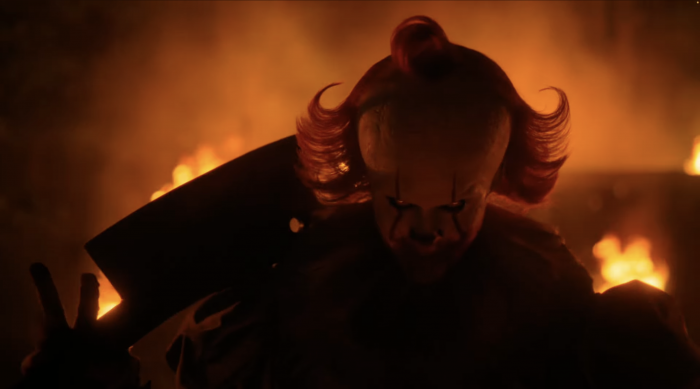
The fire at the Black Spot is one of the more terrifying segments to emerge from the novel IT. What had started as a DIY bar and club created by Derry’s African American residents turned into the talk of the town. Eventually, white residents got jealous, and the Maine Legion of White Decency burned it down while hundreds of people were inside. It’s a frightening part of the story that illustrates what horrors human beings are capable of, alludes to similar real-world acts of violence against African Americans, and weaves in the supernatural elements as more of an afterthought. It’s full of themes, nuance, and metaphor, all of which were stripped away in the newest episode of IT: Welcome to Derry.
I was asked to cover Welcome to Derry through the lens of someone familiar with the source material. I’m here to discuss the differences between the show and the book. That said, I do my best to keep an open mind. Changes are necessary when telling a story in another medium, and this show’s creative team has already changed plenty in their movie adaptations, most of which I liked. However, changes to the story are one thing; disregarding the subtext and metaphors that make the original story mean something is another.
Initially, I was excited that this show had the opportunity to correct one of the biggest mistakes from the films: an avoidance of racism. I don’t like watching people of color suffer, but Pennywise does, and that’s kind of the point. Sure, it’s an evil clown, but it’s more than that. The horrors of racism give IT its powers. That’s important. Regardless, the films seemed almost afraid to tackle this, sometimes going right up to the line without even touching it. The newest episode did that in a way that almost made racist characters look… less racist.
I’d like to say that the whole season has been building to the fire at the Black Spot, but that isn’t entirely true. They set it up. We have seen African American characters like Dick Hallorann building it throughout the season, but it’s felt more like a C or D plot in terms of importance to the overall story. The newest episode is called The Black Spot. I assumed, even hoped, that it would be the main focus. Instead, it became the D plot in its own episode.
After the newest chapter gives us an origin story for IT’s Pennywise persona, it picks up where the last episode left off. A gaggle of angry white men has arrived at the Black Spot looking for Hank Grogan, who has been falsely arrested for murder but escaped. That added detail already takes away from what makes this event so important. In the book, the naked, simple, racist hatred fuels these men to do what they did. Here, the show almost gives them a pass, providing them with a motivation that could be conceived as noble, and never really showing why it isn’t. There’s one moment when a man shames a white girl for being there, but even that feels more like an after-school special than a prestige drama (and he also ignores the other white girl who’s there).
Granted, the reasons for arresting Hank are steeped in bigotry, but these men are only shown to be doing what they think is righteous. Later on, the former sheriff, who started all this, claims he won’t leave until he knows Hank Grogan is dead. Even in his private moment, the show kind of lets him off the hook. It also doesn’t help that Pennywise, who should be absolutely tickled by these men, murders one with a clever! Like Jason! The man he decapitates is Ingrid Kirsch’s abusive husband, but Pennywise should love him. IT doesn’t even care about Ingrid, and ends her obsession with it moments later, also ending the most interesting thing the show had going for it in record time. What IT cares about is feeding on fear, and racists provide that in spades.
Pennywise feels almost cartoonish here. If there was more substance, I might be okay with it, but seeing IT eat the face of a woman we don’t know and bisect the head of a guy we don’t like makes the creature feel like a slasher villain, and it is far from that. Seeing it control the dead looked cool, as did its strolling through the smoky darkness, but it should be drunk off its teats on bigotry and hatred, and that is so poorly communicated that it feels like the monster just happened to be strolling by. It adds to one of the show’s biggest failings so far, giving IT and Derry an actual relationship, an issue in the films as well.
The events portrayed in this episode are certainly horrific, but they also lack any emotional connection to the people being slaughtered. Mostly nameless Black people are killed off brutally in what feels like a ridiculously paced sequence. What we are witnessing is bad, but the show doesn’t even seem interested in getting into it, so it just ends up feeling a bit exploitative. Especially because the scene, which centers around the senseless destruction of innocent African Americans, mostly ends up focusing on a young Cuban boy saving a young white girl.
Yes, Richy sacrificing himself to save Marge was sad, but that was a relationship that was hardly developed. So, the show took time away from a massive tragedy aimed specifically at Black people to kill off one of its leads, and that becomes the focus for the remainder of the episode. Marge and Ronnie witnessed devastation that should mess them up for life, while inhaling enough smoke to collapse eight sets of lungs, and all they can talk about the next day is how they can tell Lilly about Richy. Obviously, he was their friend, but they don’t even seem that sad about it, and it’s been less than 12 hours!
What could have been a look at the insidious nature of Derry and the abhorrent racism it’s capable of turned into a standard horror affair. It presented itself as if it had something to say, but it doesn’t. It’s far more concerned with setting up General Shaw’s nonsensical plans or explaining that Pennywise is going to sleep, only to reverse that decision minutes later because they remembered there’s one more episode. So, anything that could have been substantive or impactful has been cast aside. That’s a damn shame.


