Old School. Biblically Independent.
By Kayleigh Donaldson | Miscellaneous | September 2, 2026
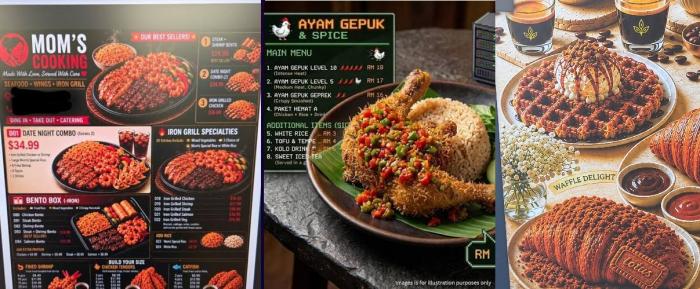
AI-generated images are getting better but that doesn’t necessarily make them good. The horrifying advancement of platforms like Midjourney and ChatGPT, based largely on the mass theft of our creations and data, has given us a veritable hellscape of so-called “art.” Don’t we all miss the people we were before our social media feeds were polluted with images of shrimp Jesus, crying sexy fruit, and Donald Trump’s entire Truth Social page? The proto-typical AI-generated image, regardless of content, is typically defined by its uncanny nature and just-too-sharp resolution. Smiles are a bit too large. Proportions are off. Every human is dead behind the eyes and some of the animals too. But all of that feels positively quaint compared to the barrage of images of food these AI platforms have forced us to behold.
I’ve seen it in person: places I know cook good food that have eschewed photographs of their offerings in favour of AI slop that makes their menus look as though they serve dishes for the seventh layer of hell. I’m talking about pasta dishes that induce a serious case of trypophobia, or slices of pie with indecipherable ingredients. It’s pizzas with oddly symmetrical toppings or crinkle-cut fries so neat that a robot must have sliced them up. Every grain of rice or strand of spaghetti is clearly rendered, way too much so. There’s a uniformity to these images that is nonetheless steeped in the chaotic horror of a Lovecraftian nature.
local takeaway has started doing chicken parmagiana and what the heck is going on here
— asciiwave.bsky.social (@asciiwave.bsky.social) August 7, 2026 at 1:40 AM
[image or embed]
Hey man, maybe just make the sandwiches and take a pic of them.
— 🔪🔪🔪bryan 🔪 🔪 🔪 (@murderxbryan.bsky.social) August 4, 2026 at 2:38 PM
[image or embed]
— Standplaats Kraków could really use some cash! (@standplaatskrk.pl) August 29, 2026 at 4:08 PM
AI’s attempts to replicate things like the texture of a beef burger or the layers of a lasagne often lead to an overtly-detailed cycle of repeating shapes and layers. We know that focaccia has air pockets and an everything bagel is covered in seeds, but via AI’s lens of plagiarism and algorithmically trained averages, these things become overtly prominent in a decidedly unnatural way.
We know food doesn’t look like this. The restaurant and café owners know that they’ve never cooked anything that remotely resembles the output of Midjourney. And yet we’re told this is the new normal. AI is here to stay so just order your dinner and avoid the queasiness these images induce.
No joke, these slop-pics really do make me feel sick. The principle of it all would be enough to induce queasiness but the visuals themselves are truly baffling in a way that my brain simply cannot process. One of the reasons that special effects aim for realism is because we instinctively reject that which looks off, unfamiliar yet not entirely alien somehow. Consider the era of motion-capture movies that Robert Zemeckis was convinced would be the future of Hollywood, and how it slumped in large part because the dead eyes and too-slick movements of the kinda-humans were so creepy. Cartoony styling can feel comforting. Trying to make a hyper-realistic cheeseburger where the very pores of the meat are staring us down like two cowboys in a desert shootout can only unnerve.
An article from National Geographic shared various theories as to why AI creations creep us out. One was that “these sensitivities may trigger an instinct to avoid a potential threat […] we may see imperfections in a human replica as a sign they might be physically ill or a potential source of contagious illness—and that triggers our disgust response.” That feels pretty accurate to me. We know the signs of food going off, like mould or discoloration. This is nature’s way of preventing us from sickness, and when AI-generated food images replicate those patterns or something like it, how could our instinctive response not be one of pure disgust? All those neat little holes in that slice of bread look more like maggots than fine baking. Our bodies know a red flag when they see one.
Food advertising has been lying to us for decades. Food stylists use mashed potatoes in lieu of scoops of ice cream. They spend hours making an achingly perfect Big Mac out of things you’d never find in a McDonald’s and then photograph it with the care of the crown jewels. It’s a running joke now to see the perfect looking pizza or gateau on TV and then buy the real thing, only for it to be flat, messy, or hastily thrown together. Those minimum wage workers do not get paid enough to craft your gourmet McNuggets, okay?
Pro-food styling and marketing is meant to make food look as sumptuous as possible, to the point of these slo-mo close-ups of dripping cheese and flame-grilled patties being, well, pornographic. Really, that’s a big reason why AI food slop feels so wrong. It’s trying to capture that deliciousness of professional advertising, that heightened reality of culinary perfection that we all strive to achieve. Everything looks just right. But even at its most artful, food advertising makes the food look, you know, edible.
I simply cannot go into cafes or restaurants that use AI slop to advertise, even if I know from prior experience that their food is good. As with the junk merchants polluting my local craft fairs and trying to take over all of my hobbies, I feel a visceral disrespect for those who think they can so flagrantly lie to me. Generative AI in this vein is an insult. It’s a sign that you do not care about others, be they your customers or the artists whose work was stolen by these platforms. If you can’t even show me a photograph of your menu, why would you ever expect me to eat your offerings? If it looks half as horrifying as the AI version, it’s best avoided.


