
Old School. Biblically Independent.
By Kayleigh Donaldson | Miscellaneous | March 10, 2026
The Girl on the Velvet Swing by Simon Baatz
In 1906, Harry Kendall Thaw, an heir to a railroad empire, shot and killed Stanford White, a prominent architect, in the middle of a theatrical performance at Madison Square Garden. He was arrested and put on trial for murder. His defence: that he had killed White as an act of husbandly duty because the other man had raped his wife several years prior. The case became known as 'The Trial of the Century', and the woman at the heart of it, Evelyn Nesbit, was forced to reveal her darkest traumas to save her husband's life.
I only had the most basic awareness of Evelyn Nesbit before reading The Girl on the Velvet Swing. I knew her name, that she was an artists' model who became something of a minor celebrity at the turn of the 20th century, and that she was a character in the book and musical Ragtime. Simon Baatz offers an empathetic portrait of a woman largely forgotten by history except for the infamy caused by the crappy men in her life. And boy, were all of the men in her life extremely crappy.
As a teenager, Nesbit became prized for her beauty but stifled by the expectations it put upon her to become the primary breadwinner for her family. As a bit-part actress where her talents were admittedly limited, she was viewed as lesser by high society yet still leered over by rich men who coveted a coterie of lovers. Baatz rejects the notion that Nesbit was a grand seductress who pitted these men against one another for her attention (again, she was a teenage girl at this time) and never doubts her accusations against White. He places a lot of focus on Thaw's entitlement and his misogynistic insistence that he was right to kill a man not because Nesbit asked it of him but because he felt she'd been "ruined." But eventually the book becomes more about Thaw than Nesbit, and she starts to feel like an afterthought in her own trauma. It's understandable why Baatz delves into the sheer weirdness of Thaw's story, but surely Nesbit deserved a denser analysis once she stopped being the focus of the press's gawking scorn?
It Girl: The Life and Legacy of Jane Birkin by Marisa Meltzer
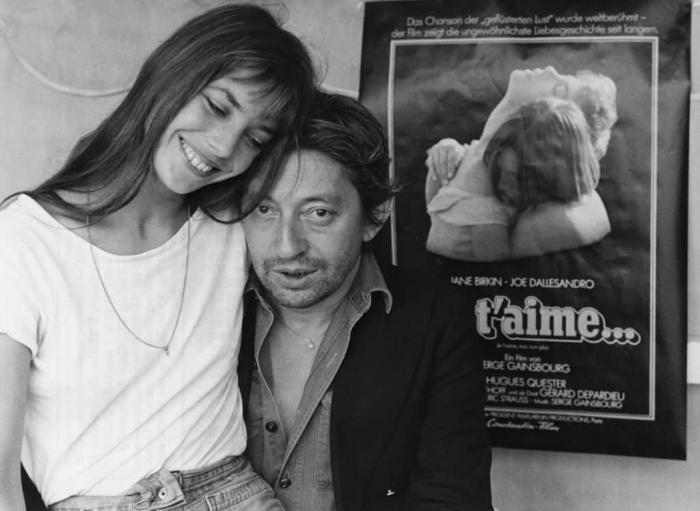
Speaking of women idolised and misunderstood by history... For a ton of people, the name Birkin is synonymous with a bag. The luxury Hermes handbag that the rich and famous are willing to kill for is the ultimate symbol of wealth and style. For Jane Birkin, the woman who it was first made for, it was just another instance of someone other than herself trying to define her life and contributions to it.
When Jane Birkin died in 2023 at the age of 76, she was mourned as a bona fide icon. She was the English girl who had become a symbol of style, sex, and unimpeachable cool in France, thanks to a few scandalous songs with her partner, Serge Gainsbourg, and an impeccable sense of fashion. She seemed to be the embodiment of a certain je ne sais quoi, the ultimate muse to one of France's most impactful and controversial musicians. As history has shown us, being a muse and an It Girl is often a thankless and dehumanising task, so writer Marisa Meltzer has taken it upon herself to flesh out Birkin's story and show her life as one of an artist as well as an inspiration.
It Girl is a brief read, barely over 200 pages, suggesting that Birkin's unknowability was more than just part of her persona. Taking heavily from her published diaries, Meltzer is empathetic in her take on Birkin's experiences, but she's not slavish in her adoration of her either. When Birkin talks dismissively about her often volatile and physically violent relationship with Gainsbourg, Meltzer does not sugar-coat the truth. She also offers some savvy analysis of Birkin's uneasy dynamic with the corporate forces that hijacked her name and image.
But in her eagerness to give Birkin her dues beyond her image as a muse, she somewhat exaggerates her artistic contributions. Birkin was a very good actress and had some great songs, but Meltzer often talks about her as a crucial cinematic and musical touchstone of the times when she simply wasn't. Meltzer's generosity is appreciated, if not necessarily accurate in its intentions. Still, as a Birkin fan, I enjoyed seeing a few extra layers added to her lore.
A Domestic Animal by Francis King
New arrivals from @mcnallyeditions.com #literatureintranslation @bookbeat.bsky.social
— Tom Bowden (@motnedwob.bsky.social) October 7, 2025 at 4:28 PM
[image or embed]
Dick Thompson is a writer living out his middle age in London with not much excitement. Things begin to change when Antonio Valli, a brilliant young Italian philosopher, moves into Dick's lodgings. Antonio is handsome, charismatic, and loves being the centre of attention. He craves an audience for every aspect of his life, and Dick soon becomes his front row devotee. It's not long before Dick realises that he's fallen head over heels for Antonio, just like everyone else. But longing for a straight man is doomed to end badly.
First published in 1970, only a few years after homosexuality was decriminalised in England, Francis King's A Domestic Animal feels radically ahead of its time. It's not just that it's a nervy novel about queer longing written at a time when it had only just stopped being illegal to be gay, although King is certainly excellent at capturing the crushing loneliness and aggravation of love from society's fringes. It's all too understandable why Dick would be enthralled by Antonio, even though he's a total f**kboi with a wife and kids at home in Italy while he gallivants through London as a free man. More than its content, it's in King's prose where A Domestic Animal feels so fresh. His writing style is so clear and concise. "It was difficult to think of a time when each hour had not been gorged with his presence or the memory of his presence or the expectation of his presence," Dick says of Antonio. His infatuation has pathetic elements to it but Dick himself is not a pitiable figure. He's just painfully human. This is a novel ripe for rediscovery.


