
Old School. Biblically Independent.
By Kayleigh Donaldson | Miscellaneous | May 4, 2026
Murderland by Caroline Fraser
True crime is built on seeking answers to the seemingly unanswerable. It fights to solve cold cases, to uncover culprits, and to offer reasoning to that which defies it. We're a messy species that wants neatness, seeking clean-cut narratives in even the bleakest of circumstances. Why did he kill her? What was their motivation? How could they do something so horrific? For Caroline Fraser, a native of the Pacific Northwest who grew up with a tyrannical father and in the shadows of a seeming epidemic of serial killers, she thinks she's cracked the code.
In the 1970s, America was overrun by serial killers: Ted Bundy, Randall Woodfield (a.k.a. the I-5 Killer), Gary Ridgeway (the Green River Killer), Richard Ramirez (the Night Stalker), Dennis Rader (the BTK Killer), and others. Many of these men had roots in Washington state, a place that Fraser depicts as the closest thing to the gates of hell that the nation had during this time. Thanks to the area's smelting and mining industries, the growing populace who moved to the state for work found themselves breathing in a medical and ecological nightmare. The rich grew richer from this corruption. Kids were poisoned. People were going crazy. Some killed with their bare hands. Others did it through business.
When Murderland focuses on painting this grand, all-encompassing state-of-the-nation portrait of the area she grew up in, it's often riveting. While overwrought in its prose, Fraser's style only adds to the heightened sense that we're neck-deep in something deeply wrong. The people feared Ted Bundy but what differentiated his contempt for humanity from those of the factory owners who fought tirelessly to be allowed to poison their workforce? There are moments in the book where you can practically taste the tainted air that Fraser grew up breathing.
This is all fascinating stuff. But then Fraser tries to make a definitive point from it. What if all those serial killers were, at least in part, influenced to murder through the lead poisoning that dominated the state? It would make for an intriguing profile, but Fraser's case is almost entirely conjecture. She'll make a connection then ask the reader if it's all a coincidence, and it probably is. There's little here in the way of hard evidence, certainly nothing that would convince a jury or medical board. She even tries to stretch her argument to include those killers who had no connection to the Pacific Northwest, like Dennis Rader, by theorising that he may have been driven to become a mutilating maniac by lead exposure from elsewhere in the country. But making that case undoes her entire site-specific argument.
It feels pretty offensive to assert that these disgusting men were somehow poisoned into meticulously planning their crimes and cover-ups. Call me naive but I question the notion that lead poisoning turns you into a necrophile. And why would it only turn men into killers? Weren't women breathing the same air? It's an almost hilariously flimsy argument that undoes what could otherwise have been a fascinating and sprawling portrait of a time and place that redefined what it meant to be American.
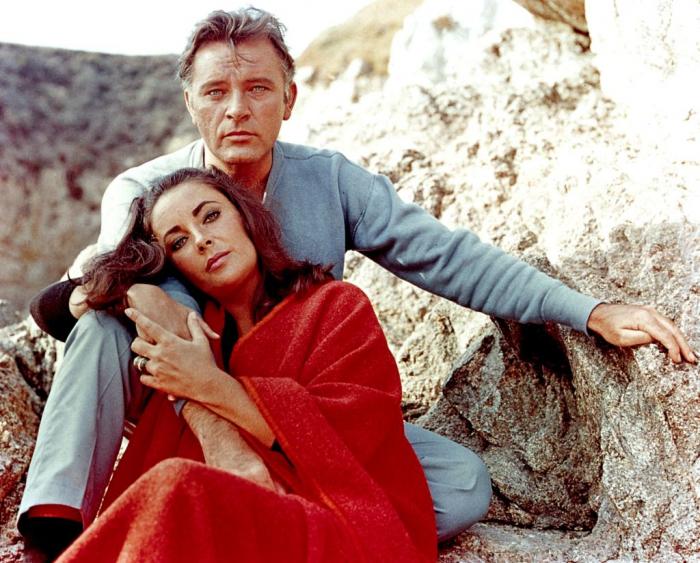
Furious Love: Elizabeth Taylor, Richard Burton, and the Marriage of the Century by Sam Kasher and Nancy Schoenberger
Liz and Dick. It's the celebrity marriage(s) of the century. When Elizabeth Taylor met Richard Burton, they were both married to other people and starring in a soon-to-be-legendary flop, Cleopatra. He was a working-class Welshman with a love of hard liquor and a near-prodigious talent for the theatrical classics. She was a former child star turned MGM sex symbol who was the most famous woman alive and on her fourth husband. Together, they were a power couple unlike any other, obsessed with one another but forever fighting, driven to ruin in the best ways possible.
Reading any book about people this famous can be tough. When your story has been retold dozens of times over the decades, making it seem fresh or bringing new details to the table is vital. But at least you'll never be short of material when your subjects are Burton and Taylor. Practically every minute of her life from childhood was front page news and their torrid romance helped to birth modern tabloid culture.
Sam Kashner and Nancy Schoenberger cover a lot of ground in Furious Love: Liz's many pre-Richard marriages; his first wife Sally, their on-screen collaborations, their public and private fights, and more. These were people who wore their hearts on their sleeves and were, emotionally, an open book. We get a good sense of the all-consuming passion the pair had for one another, one that could be cruel and violent and feel like they didn't really like one another. Burton's letters and diary entries feel especially revealing. The book is at its best when it lets its subjects do the talking, rather than have the authors try to indulge in some gossipy prose that hopes to evoke Liz and Dick's passion but instead suggests flat champagne.
The Journalist and the Murderer by Janet Malcolm
"Every journalist who is not too stupid or too full of himself to notice what is going on knows that what he does is morally indefensible." This is the infamous opening line to The Journalist and the Murderer, a piece of true crime theory that seeks to expose the ethical impossibility of the author's own profession.
Janet Malcolm uses, as her case study, the lawsuit by Jeffrey MacDonald, a convicted murderer, against Joe McGinnis, the journalist who wrote a book about him. MacDonald was convicted of killing his wife and children. He had agreed to let McGinniss into his inner circle to write what he hoped would be a supportive report that would exonerate him. Instead, McGinniss produced Fatal Vision, a scathing takedown of MacDonald that damned him as a pure unfettered psychopath. MacDonald sued McGinniss for fraud and breach of contract, alleging that McGinniss had pretended to believe MacDonald's pleas of innocence to get him to cooperate with the book. The case was settled out of court after the trial resulted in a hung jury.
Through Malcolm's eyes, the MacDonald-McGinniss case is proof that there is no morally reasonable way for a journalist to form a truly neutral relationship with their subject. It is always seedy, she believes, to cozy up to someone for a story and mine their life, trauma, or crimes for that killer hook. No matter how much you dress it up in ideas of free speech or journalistic integrity, this issue will forever hang overhead and influence your approach. Certainly, Joe McGinniss seems to have been an especially egregious example of someone who betrayed the core tenets of his profession. Writing letters of friendship to a guy you think is a killer, offering sympathies as you write screeds that do the exact opposite, is certainly, at the very least, pretty dodgy.
Malcolm offers a damning portrait of a man driven by self-interest and financial issues rather than the truth, although it still feels like overreach to decry the entirety of journalism with her argument. Is it really a "necessary evil?" It did leave me thinking about the quandaries she examines for a long time, particularly given the current state of journalism that frequently seems to prove her point.


