Old School. Biblically Independent.
By Kayleigh Donaldson | Miscellaneous | March 24, 2026
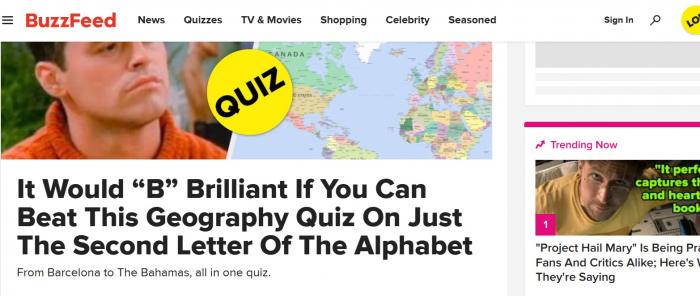
This month, it was reported that Buzzfeed was in trouble. n 2025, BuzzFeed had a net loss of $57.3 million, noting that it did not have enough resources to fund its cash obligations for this year. If things continue as they are, one of the stalwarts of the millennial internet could go bankrupt. The news barely made a dent online. Many joked that they thought Buzzfeed had been dead for years. One can hardly blame them for that. But it's an indignant fall for the site that helped to shape the modern internet. Perhaps it's fitting that its fate was to also represent how our online spaces have only gotten worse due to the same cycle of mistakes from people with more stocks than sense.
When I started writing professionally, Buzzfeed was the place to be. Their news department had snatched up a ton of beloved online voices and was seemingly letting them do whatever they wanted. The reporting was excellent and the cultural takes were dense, eloquent, and vibrant. Writers like Anne Helen Petersen and Bim Adewunmi were offering some of the sharpest pieces on celebrity culture online. The News department broke major stories, scooping establishment newspapers on things like the Steele Dossier and winning the Pulitzer Prize for international reporting in 2021 for their coverage of internment camps in China. Buzzfeed News had White House press corps access.
And then there were the podcasts and videos, which garnered millions of views and made stars of its hosts: the Try Guys, Thirst Aid Kit, Worth It, Another Round, Buzzfeed Unsolved, and Broke, to name but a few. It wasn't simply that these were well-polished, approachable, and highly enjoyable productions: it's that they felt like something anyone could be a part of. Before podcasts became the domain of bored A-Listers and incels with a grudge, shows like this felt scrappy in their relatability. Even when the video budgets increased, allowing their stars to see the world and eat at obscenely expensive restaurants, they never felt boastful or clickbaity. The content may not have always been original - getting bemused millennials to eat increasingly spicy ramen is a crucial bedrock of internet culture - but they remained highly appealing.
But, of course, when people talk about Buzzfeed, they largely remember the memes. This was the site that could make a meme go wildly viral. Take The Dress. Come on, you know which one. In 2015, a woman in Scotland shared a photo on Facebook of a dress she intended to wear to her daughter's wedding. Due to a strange neuro-visual glitch, some people thought the photo looked like that of a white and gold dress, rather than the black and blue it actually was. The woman in question asked Buzzfeed's Tumblr page to help solve the dispute. They shared it with a poll, and suddenly internet history was made. #dressgate went worldwide. In many ways, it was the perfect meme: utterly apolitical, low-stakes but shockingly divisive, and incredibly easy to mine for further content. The dress could have gone viral without Buzzfeed, but not to the extent that it did. If there was ever proof needed that Buzzfeed was the internet, this was it.
The big promise of Buzzfeed was that they would use the clicks mined from the fluff to fund the good stuff. All those listicles of the 18 cutest corgis or quizzes on which Friends character you were most like would get reporters on the ground and allow talented writers to deep dive into niche topics. It was a repeat of the old ways of newspapers, where advertising would bolster good work. But the internet has long been designed to screw over everyone aside from the top 1% with its business tactics. Facebook's fraudulent "pivot to video" was one notable example of how the monopolies in charge of our seemingly democratized online space pulled all the strings.
Eventually, the badness came for Buzzfeed: massive layoffs, the dismantling of multiple sections, and the shutdown of its newsroom in its entirety. Regional offices disappeared. The entire podcast division was suddenly gone. Good writers were sacked and the site started to focus more on 'community-created' content, meaning the stuff made for free by readers who just wanted to have some fun. They were never compensated, of course.
The site had been suffering from serious issues before they went public and were listed on Nasdaq in 2021, but it's tough to ignore how the new need to perpetually increase stock prices made things even worse. The tech bro need to bloat a perfectly good formula into something unrecognisable for the sole purpose of profit had reared its ugly head. It would culminate in 2024 with Vivek Ramaswamy acquiring a 7.7% stake in the company, leading many to fear that he would try to shift Buzzfeed rightward in the vein of Jeff Bezos's takeover of The Washington Post.
The year before, roughly two months after OpenAI revealed ChatGPT to the world, Peretti announced in a memo that the company would be going all in on the software to 'enhance' those quizzes they'd already sacked most paid humans from writing. AI would 'replace the majority of static content', he said. This came a month after the closure of Buzzfeed News. From Pulitzers to slop. Entire AI-generated articles began popping up, and readers avoided the site as a result. Peretti's response? More AI. At this year's SXSW, he introduced the company's newest project in a glitch-ridden presentation: and it was just a bunch of AI apps. The response was underwhelming and it did little to stop the haemorrhaging stock prices.
I've seen people joke that they can't tell the different between the Buzzfeed of the golden days and the site as it is now. It's still just listicles and articles that are more photos than words, right? But I can 100% tell the difference between the two. I know what humans sound like, and Buzzfeed is so pathetically devoid of real voices now that its offices might as well be abandoned. The AI slop is evident. There's no attempt at wit or originality. Every article is a retread of something from years prior. They no long even pretend to be human in their approach to something as basic as rewriting a story reported elsewhere. Half the time, scrolling is impossible because the site feels so janky and overwhelmed with ads. Once upon a time, you could spend hours on Buzzfeed, discovering something new and feeling like a part of the cheeky but substantive fun. Now? It's the dead internet theory come true.
insane that this piece fails to mention that buzzfeed is in danger of going out of business because peretti pivoted to AI in '23, and his proposed solution is to bet even more money on AI
— Ann Marie Awad (@anntastic.bsky.social) March 20, 2026 at 1:48 PM
[image or embed]
And it was all 100% preventable. Why did Buzzfeed need to go public? Why did they shut down their newsroom? Why did they try to undercut all their video talent, causing them to go independent to great success? Why sell off First We Feast, right as Hot Ones was becoming a benchmark for celebrity promotional tours? Why implement AI that nobody is asking for? It's enshittification times ten, a staggering example of sh*tting the bed then claiming the sh*t was always there.
Jonah Peretti's AI zealotry has the stench of flop-sweat desperation emanating from its very core. He's parroting the same lines that every tech bro uses in regards to this increasingly garbage concept and the flop-sweaty desperation to position it as both necessary and valuable. We could have had Buzzfeed in 2026, a blend of fizz and heft that elevated strong voices while enjoying the perks of leading the internet zeitgeist. But that would have required both a sturdy financial investment and the understanding that it's okay to make just a bit of money rather than all of it. A culturally corrosive black hole of rot is more profitable than giving a damn, and Peretti is determined to stumble ever further into that hole until he reaches the bottom. 'In a way,' he told SXSW audiences. 'Software is the new content.' Like every ensh*tiffying CEO, he turned Buzzfeed into a slop hole more concerned with what suits think people want than what they actually crave. We didn't need an AI quiz to tell us that.


