
Old School. Biblically Independent.
By Kayleigh Donaldson | Miscellaneous | August 25, 2026
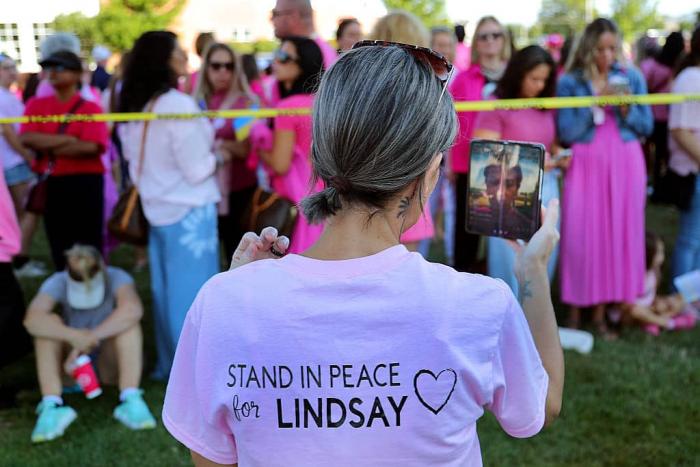
We know what happened that night in January of 2023. In her home in Duxbury, Massachusetts, Lindsay Clancy strangled her three children with exercise bands, and then she tried to die by suicide by cutting her wrists and throat, then jumping from the second floor of her home. Lindsay Clancy, currently paralysed from the waist down and on trial for murder, killed her three kids. The question that a courtroom is trying to ascertain is whether or not she did so with intent and of sound mind. Clancy has pleaded not guilty by reason of insanity, citing her history of severe postpartum depression and psychosis. Her now-ex-husband is on her side. So are countless others online, who have turned the trial into the must-see spectacle of 2026.
The true crime industrial complex has always loved a “bad mother,” from Diane Downs to Taylor Parker. But in the case of Clancy, the audience seems to be largely on her side, with many sharing their own experiences of postpartum trauma and not being taken seriously by doctors or loved ones. This is a story about motherhood, bodily autonomy, medical neglect, and the omnipresent spectre of mental health. Clancy has been afforded far more empathy than similar women in decades past, or a woman of colour from any time. The upside is that the trial isn’t a ceaseless barrage of hatred towards a troubled and grieving woman. The downside is, well, everything else, because once again, other people’s pain has become the binge-watch of the season.
Real-time coverage of the trial has been impossible to avoid on social media platforms, particularly TikTok. Everyone has turned into a detective, a psychologist, a priest. The usual suspects are mining the entire trial for content, but there are also a lot of new arrivals to the scene who seem to be enjoying this moment with relish. One woman who has provided regular updates on the case was caught posing with a manic smile during a live-stream, as though she were Norma Desmond getting her close-up. She lost her press credentials for that little stunt. Outside of the state, the smartphone justice cycle has entered tinhat territory, with many claiming he either had a direct involvement in the children’s deaths or that he was passively responsible through bad parenting.
View on Threads
Popular true crime cases often attract this kind of derangement, a ceaseless hunger to find easy solutions to difficult issues. It is, perhaps, easier to play heroes and villains with a case that so thoroughly reveals a broken system. The fight to defend Clancy is tough for many because it involves confronting that which many consider to be the ultimate evil: infanticide. It is seen as an act of spite, of pure unfettered selfishness, not of kindness or desperation. Nobody wants to defend that kind of person, nor do they really want to deal with the cold hard reality that pregnancy and its aftermath is a physical and mental hellscape for many. Postpartum depression is often dismissed, misdiagnosed, or derided. Just get over it, millions of other women do, right? The Team Clancy voices online claim to be pushing back against that, and much of the discourse has been nuanced and empathetic. But it’s still all framed as content. Regardless of intent, it’s packaged as meat for the grinder, something that everyone can gawk at with unashamed eagerness.
True crime enthusiasts often discuss their fandom in terms of integrity and justice. They spend days pouring over details not because they’re revelling in the disturbing nature of it all but because it’s their duty to do so. Subreddits full of armchair detectives write that they’re “just asking questions” as they throw out the most outlandish theories, and every moment of giddy consumption is spun as one of solemn commitment to the cause. They’re not trying to pin the deaths of three kids on someone else because it’s fun: they’re doing it because they have to.
A lot of people are invested in Clancy’s story because it’s too familiar for their liking, but also because they like to watch. Sometimes, it really is as simple as that. Much of the most ravenously consumed true crime are stories of delicious fury, of bloodshed and tangled backstories that play out more like soap than kitchen sink realism. One can distance themselves more thoroughly from a serial killer case than the woman on the street who was mugged or the spate of arsons in a low-income neighbourhood. But the goal of every case is still the same: to be entertained, and right now, three kids’ deaths are being treated like a game. They see it as something that needs to be jazzed up to keep their interest, so they add more red string to the corkboard. Let’s bring in an evil husband, his new wife, some shady doctors. Make the lawyers into cackling villains or glistening angels. Have fan meetings outside the courtroom in matching outfits. Smile for the camera because you’re a character in the story too.
The dignity that should be afforded to Clancy and her late children is at odds with the very nature of true crime as both an industry and a fandom. One cannot help but wonder how truly helpful all of the conversations around postpartum that the trial has inspired can be if they’re just another pile of fodder for the wagon of conspiracy. And when it’s all over, people will move onto the next trial, the next dead kid, and the next theory of fantasy.


