Old School. Biblically Independent.
By Kayleigh Donaldson | Miscellaneous | August 14, 2026
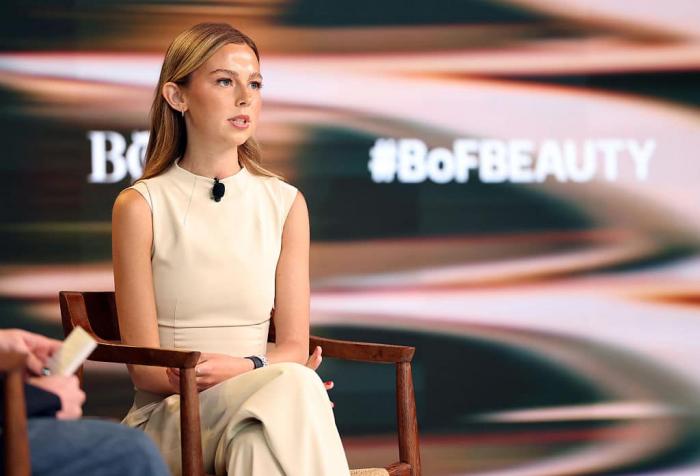
Last week, Sydney Towle, a social media content creator, died. She had used her TikTok account to document her diagnosis and treatment of late-stage cholangiocarcinoma, an aggressive and rare cancer of the bile duct. After many years of care and chemotherapy, which left her infertile, she eventually reached the end of the road and entered hospice care. She died the day after making that announcement, at the age of 26.
Towle had been candid and brave in sharing her experiences, from the many doctors' appointments to the trips she took with her family to the unseen costs of dying. Earlier this year, she admitted that she felt as though she was "slowly fading away from life and reality." Before her life could even begin, it was snatched away from her, and she fought hard to live in the moment without diminishing her pain. Unfortunately, daring to do so in the public eye led a depressingly large contingent of people to harass and abuse her because they decided, seemingly for no damn reason, that she was lying about her diagnosis.
Last year, a report from The New York Times detailed how a snark subreddit dedicated to mocking Towle fell into a bleak rabbit hole of cancer skeptic conspiracies. SydTowleSnark had more than 1,000 members, all of whom were committed to digging up any dirt they could find on a terminal cancer patient. They analysed photographs for "proof" that she was lying, criticised her family for not being publicly sad enough about Towle's health, and that public fundraising done in her name was all a scam so she could go on fancy holidays and live in an expensive New York apartment. "She lies about everything," said one commenter. "I literally feel like punching her in the face," wrote another.
That article in the New York Times details the ghoulish lengths that these bullies went to in order to fuel their fantasy of Towle being a scammer. Some suggested turning up at public events Towle was scheduled to attend. At least one person sent a complaint to the hospital Towle was being treated at to complain that she was receiving preferential treatment from nurses. The newspaper managed to track down some of the most virulent snarkers, all of whom, unsurprisingly, avoided accountability or apology. One even had the nerve to ask for their privacy to be respected. The paper's investigation led to the subreddit being deleted.
Internet snark is as commonplace as oxygen. If you dislike some random figure for whatever reason, it won't take you long to find a like-minded group of people. Snark communities are prevalent and frequently terrifying. You don't have to be an A-Lister to earn a devoted coterie of haters. Check out forums like Tattle Talk or Guru Gossip, or any number of places on Reddit, for thousands of words a day dedicated to people you've most likely never heard of. A lot of it is pretty pointless and largely benign, the kind of mean girl observations you swipe through on your phone while you pee. It's the slightly elevated version of mocking old Facebook friends' photos. What happened to Sydney Towle, though, is a symptom of a far more nefarious brand of online cruelty and entitlement, all done under an altruistic guise.
We know of people who have lied about having serious illnesses. Belle Gibson made a wellness empire out of her false claims that she was treating multiple forms of cancer with clean eating. Amanda Riley cheated her community out of thousands of dollars for fictitious medical bills after maintaining a years' long pretence of terminal cancer. Both women became main characters in the true crime boom, fascinating millions of viewers and listeners as their intricate webs of lies were uncovered by savvy reporters and sceptical locals. In the realm of scammers, the kinds who make up the lion's share of armchair investigations, cancer fakers are the lowest level of scum. It takes a certain kind of callousness and desperation to lie about your own impending demise, especially since you can only extend said lie for so long before the truth comes out.
As with all true crime vultures, the faux-cancer detectives justify their baseless claims by pointing to people like Gibson as proof that this kind of thing happens all the time. Such thinking overlooks how rare such cases truly are, but reason seldom comes into the equation with a good conspiracy. This ilk latched onto Towle because she dared to be young, pretty, and optimistic about life. Like many young people of her generation, she grew up online so was used to making the mundanities on her days into content. It was something she was doing before her diagnosis. Her refusal to play the role of the so-called "perfect" patient was unforgivable to the snarkers. If she's really dying, why doesn't she look more ill, more obviously in pain? That's a line that anti-disability rhetoric is fuelled by, and one used to legislate against their existence. It overlooks how illness impacts people differently and that, shock horror, you're still allowed to smile and have fun on the good days.
The most emotionally violent subreddits position themselves as journalistic crusaders fighting the ultimate cackling villain who has the rest of the world fooled. They compile "receipts" as though they were Woodward and Bernstein in the middle of Watergate. It can be easy to fall down these rabbit holes. If you've ever had a "bitch eating crackers" moment with someone and couldn't understand why everyone else didn't agree, meeting people with "proof" of every minor indiscretion can be affirming. There's nothing intrinsically weird with disliking someone or something. Everyone has their own examples. It becomes unnerving when you need to attack a moral or ethical reasoning to it and have to lie to find one. And what better lie to assert your own superiority other another than by claiming they're faking a terminal illness?
Parasocial relationships are, on some level, built on the understanding that one side of the equation is "better" than the other. When that promise is broken through the most basic displays of humanness (getting a partner, saying the wrong thing, not being a fictional character), the dynamic switches and the fan suddenly feels as though they should be in charge. A lot of resentment towards others comes from the notion that they do not "deserve" the good things that happen to them. So, you find "evidence" to back that up, or simply spin a dramatic yarn that can justify your increasing delusions. The point is not to uncover truth but to position oneself as its ultimate arbiter.
The sad thing is that I doubt Towle's pain or her passing will encourage penitence in those who spent months of their lives smearing her as a liar. I'm sure they'll claim that she is still the real baddie of this story and that they were just "holding her accountable." It won't end here. They'll find a new target. Maybe an influencer wore the wrong dress to a wedding and now she's the next antichrist in their minds. Perhaps they're the ones claiming that Anne Hathaway is faking her pregnancy. I think it takes a very cold person to see someone in need of support and immediately believe they're a liar. Call it naivety but I'd rather risk looking a fool in the name of empathy than cloister myself in bitter paranoia in fear of an already cruel world.
Katherine Rosman, the writer of that New York Times piece, revealed that one bully had reached out to Towle, via their lawyer, to offer an apology, but only if Towle agreed to sign an NDA and never publicly talk about it. They didn't really feel sorry for what they did, of course. They just wanted to feel less guilty when they opened up a new anonymous Reddit account.


