Old School. Biblically Independent.
By Kayleigh Donaldson | Miscellaneous | February 4, 2026
The first month of a new year is over, so we’re back on our book stuff!
The Safekeep by Yael van der Wouden
First book of 2026.
— Kayleigh Donaldson (@ceilidhann.bsky.social) January 1, 2026 at 8:37 PM
[image or embed]
Isn’t it wonderful when that highly hyped book that dominated awards lists actually lives up to its grand reputation? Last year, The Safekeep appeared on seemingly every Best Books of 2025 list, winning the Women’s Prize for Fiction in the process. It seemed like a good book to start off 2026 with, and it more than surpassed my expectations.
In the Netherlands, at the dawn of the 1960s, Isabel lives alone in the beautiful country house where she spent her adolescence. Her mother has passed, leaving her alone to look after the place and obsess over its contents. It’s not much of a life, but she resents having it interrupted when her flighty brother Louis, who will one day own the house, asks her to look after his latest girlfriend, a flighty and annoyingly chipper woman named Eva.
I don’t want to say too much about The Safekeep because it’s a book best appreciated when you go into it knowing as little as possible about its plot. But there’s so much here to relish. Van der Wouden creates a prickly portrait of a woman crushed by her own loneliness but still too stubborn to acknowledge it. She finds barely a sliver of satisfaction from her home, which isn’t even hers, and even that is tempered by her hoarding-like attitude towards furniture, crockery, and spoons. When Eva comes to visit, Isa views every move with suspicion. But Eva is also warm, open, and undeniably alluring in her seeming freedom.
Again, I’ll keep things vague so that you can read it yourself and see what I mean, but this is really something special: a portrait of identity across several personal and cultural layers that contends with notions of guilt and legacy that move well beyond the walls of Isa’s mausoleum-like house. By the time we got to the third act, I was truly stunned. Do yourself a favour and check this one out.
The Birds and Other Storiesby Daphne du Maurier
Cozy Sunday read.
— Kayleigh Donaldson (@ceilidhann.bsky.social) January 4, 2026 at 3:26 PM
[image or embed]
Daphne du Maurier is best known for her gothic classic Rebecca but she was also a highly prolific writer across several genres. Still, when I turn to her work, I do so when I’m craving something unnerving. This short story collection contains one of the author’s most famous works, but it was another title I’d never heard of that enthralled me.
But yeah, have you heard of these things called birds? Nasty little things, some of them (I live in a city where seagulls are our unofficial kings and we do not mess around with those monsters.) Aldred Hitchcock famously adapted du Maurier’s ‘The Birds’ into his 1963 classic, where he terrorised Tippi Hedren with a murderous aviary. The story, however, is quite different. It’s British, for one, but it’s also far more intimate, focusing on one family as they try to keep a seemingly endless wave of birds from breaking into their home. A possible explanation for the phenomenon is given but the menace lies in that ambiguity that made the film so beloved. In the battle of man versus nature, we know who wins.
This collection is solid, but there’s one story that truly fascinated me: ‘Monte Verita.’ I’d never heard of it before I picked this book up. It focuses on an unnamed gentleman who recounts his past as a mountain climber. His best friend Victor falls madly in love with the otherworldly Anna. She fears the mountains her new husband adores, but agrees to accompany him on an expedition to the mysterious Monte Verita, and when she gets there, she disappears into the peaks. Nestled among the mountains, so claim the suspicious locals, is an ancient monastery populated by strange figures who lure unsuspecting young women into their realm and never let them leave. Reader, I was enthralled.
Seriously, how had I never heard of ‘Monte Verita’ before? It’s part Black Narcissus, part Lost Horizon, part Victorian ghost story. But it’s also a fascinating portrait of gender and the rejection of a stifling binary in favour of a life outside of society. So much of this story feels decades ahead of its time in this regard, especially as it outright condemns men’s objectification of women and their impossible fantasies of untouchable and healing beauty. Since reading ‘Monte Verita’, all I want to do is talk about ‘Monte Verita.’ Please help me in this endeavour!
My Cousin Marie Schneider by Vanessa Schneider
Saturday night read.
— Kayleigh Donaldson (@ceilidhann.bsky.social) January 24, 2026 at 6:44 PM
[image or embed]
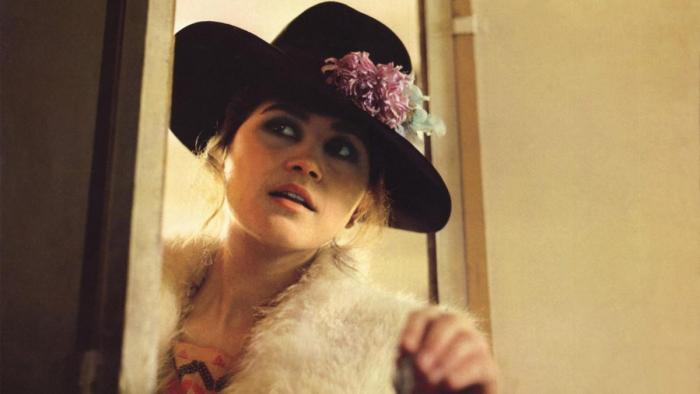
In 1972, at the age of 19, French actress Maria Schneider became a star. Appearing alongside Marlon Brando in Bernardo Bertolucci’s Last Tango in Paris, she became a symbol of cinematic and sexual transgressions thanks to her performance as a young man who begins an anonymous affair with an older American man. But the film that turned Schneider into a star also left her feeling brutalised and, in her own words, ‘a little raped.’ Bertolucci and Brando had deceived her when shooting an intimate scene involving, without her prior knowledge or consent, butter. The film defined her life, and exacerbated her troubles well into adulthood. It wasn’t until the years preceding her death in 2011, at the age of 58, that the world got to hear her side of the story. Now, her cousin has stepped in to offer a deeper insight.
French journalist Vanessa Schneider has written an ode to her beloved cousin through a second person perspective, giving details of her childhood and life away from the cameras. This is a portrait of a woman who had the odds stacked against her from a young age, thanks to her tempestuous relationship with her mother and an unconventional one with her father, the actor Daniel Gélin. Vanessa talks of loving her cousin and adoring her unique charisma, but also of being occasionally scared of her when she struggled with drug addiction. She is warm but stark in her assessments, honest about the toll that heroin and mental health issues had on not only Maria but those who tried to help her through the years.
So much of the book feels wearily familiar: abusive men in power, so-called geniuses able to act with impunity, the fetishising of young women’s sexuality followed by their demonizing once the women talk back, and an industry that consistently justified trauma as a means to an end. Vanessa Schneider is unsentimental in her assessment of how the world screwed over her cousin, and how deep the scars went (shout out to Molly Ringwald — yes, that Molly Ringwald — for providing an elegant translation to English.) This feels like the story that Maria deserved. If only she was able to tell it for herself.


