Old School. Biblically Independent.
By Kayleigh Donaldson | Miscellaneous | June 30, 2026
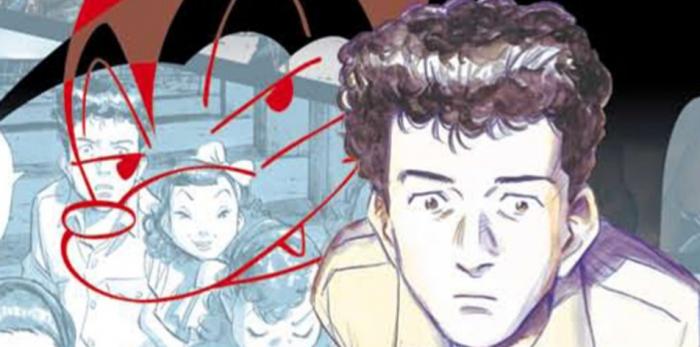
Billy Bat: Volume 1 by Naoki Urasawa and Takashi Nagasaki
In the aftermath of the Second World War, Kevin Yamagata, a Japanese-American comic book artist has found success with his latest creation, an anthropomorphic gumshoe detective named Billy Bat. But when a stranger says he recognises the character from someplace else, he fears he may have accidentally plagiarised the bat from his time in Japan during the war. He decides to return to the country and seek permission from the original creator. It does not go as expected.
Naoki Urasawa is my favourite mangaka. I devoured the entirety of 20th Century Boys in the space of about nine days, and read Monster (which was adapted into one of my favourite anime series) with similar fervour. For some reason, Billy Bat has gone without an official English translation for a long time, despite concluding its run in 2016. Did English translators think it would be too hard a sell? I can see why. Like other Urasawa works, it has an intriguing set-up that quickly reveals a far more ambitious and sprawling narrative that goes to some truly barmy places. With Billy Bat, the central hook evolves into a conspiracy thriller involving murder, cover-ups, and a millennia-old prophecy that could tear the planet apart. To sum it up as succinctly as possible: what if Mickey Mouse was God? Hell yes, sign me up for all of it.
As always, Urasawa's artwork is lived-in and distinct. The asides of the Billy Bat cartoon are styled like an old Dick Tracy special (and in gorgeous colour in this edition.) It's early days but this is a writer I have a lot of trust in. The English translations can't come soon enough.
Cultish: The Language of Fanaticism by Amanda Montell
What draws people into cults? What is it about these organisations that proves so alluring and hooks even the most hardened sceptics? And at what point does your perfectly innocent local wellness centre or MLM seller evolve into total whack job material? Amanda Montell argues that it's language based, and it can be found in every corner of life. The key to manufacturing an ideology, from Jonestown to SoulCycle, is the rhetoric you foster. Get people to rally around a common cause and imbue them with the language that defines them as an insider, and suddenly you've got real influence on your hands.
I'm naturally anti-conspiracy, but I cannot help but be fascinated by how such things take root. I mean, have you seen the timeline we live in and how much of it is defined by the most overheated and dangerous conspiracies imaginable? Evil Dale Gribble is in charge and it sucks. So, Cultish felt like a helpful book to read given the current state of the world and the ways in which we are lied to every single day by those in power.
Montell does better with the less heavy topics, like exercise groups, weight-loss brands, and MLMs utilizing toxic positivity and grindset rhetoric to encourage compliance from their customer bases. What is it about the crossover between capitalistic self-improvement and near-indecipherable jargon? Montell asks some interesting questions about the tipping point when marketing language falls into fanatical code, but her specific agenda with this book means she's intrinsically limited in her perspectives on lofty matters. You can't just talk about language when it comes to Jonestown, although it is certainly important to note how the "take the Kool-Aid" line is rooted in a deeply traumatic instance of mass murder, not blind loyalty to Jim Jones.
Many of her points, however, felt unfinished. She tells some fun anecdotes, including one on the time she checked out a Scientology centre, but they don't connect to her central thesis. This is an ambitious topic and she seems ill-equipped to delve beyond the surface, nor can she make topics as sprawling as Jonestown, MLMs, and social media lingo into a cohesive whole. What there is to chew on here is stimulating, but I craved a more satisfying three course meal over an appetiser.
Chaos: The Truth Behind the Manson Murders by Tom O'Neill
We will probably never stop being fascinated by the Manson murders. The Tate-LaBianca deaths came to signal the end of the 1960s, the bloody conclusion of the decade's idealism and the poisoning of the hippie dream thanks to a group of drugged-out teens and their wannabe rockstar leader. I've read a lot of stuff on the Manson case and I can't say it's one I've ever had a lot of unanswered questions over. It's not the Donner Party massacre or the Black Dahlia case, where conspiracists and armchair detectives have spent decades trying to solve it. The idea of there being something deeper and far more nefarious going on with the Manson family was certainly an intriguing one. But boy, this book did not work at all.
In 1999, journalist Tom O'Neill was commissioned to write a piece on the 30th anniversary of the Manson murders and their impact on Hollywood. He expected it to be a reasonably straightforward profile. Certainly, he didn't think it would consume his life for decades and lead him to financial ruin as he fell further and further down an impossible rabbit hole. What if, he theorizes, the entire case against Manson was loaded with shady involvement from the CIA, COINTELPRO, LSD experiments, and a cabal of Hollywood power players who wanted to distract from their sordid deviance?
If Chaos does one thing well, it's show the many holes in the case of Vincent Bugliosi, the prosecutor who put forward the Helter Skelter case that made Manson into a demonic figure for decades. He's not the only one to posit this, and Bugliosi definitely comes across as a fame-seeking weirdo in his interactions with O'Neill. Given the discrepancies in the case that O'Neill uncovers, I was hoping to see him present an alternative case (for the record, he never doubts that the murders took place or that Manson's family committed them. He's more unsure about all of the big names, like Terry Melcher, who claim to have not known what was going on.)
Alas, O'Neill's self-confessed obsession becomes an all-consuming mish-mash of conjecture and fever dream. He goes on long tangents about the CIA and COINTELPRO that come to nothing but he believes he's making grand conclusions that blow the case wide open. His hard evidence is simply non-existent. As a portrait of a man falling into zealotry, there is something interesting here, but by the end, I was just aggravated. Nobody likes listening to the tinfoil hat-wearing guy in the basement, and reading it for over 500 pages was too much.
Dekonstructing the Kardashians: A New Media Manifesto by M.J. Corey
The Kardashians are everywhere. The family went from the offspring of a former O.J. Simpson lawyer to reality TV royalty to an indomitable worldwide commercial force in the space of 20 years. Along the way, there was a sex tape, an afternoon of jailtime, weddings, divorces, brand deals, lip fillers, and lots of cultural appropriation. With Kim Kardashian now a respectable businesswoman and sometime actress, and the family palling around with Jeff Bezos, they have been wholly legitimized in the cultural sphere, a far cry from the days of E! and shilling toilet paper. How do you even begin to unpack all of this? M.J. Corey, who has explored the Kardashian Kulture through her TikTok account for several years now, offers a crash course in media studies for all things K.
She's certainly made an ambitious claim here, to use the first family of modern reality TV as the vessel for a new era of media studies. But really, this is old-school media studies with a fresh pair of Skims. Corey has a wide breadth of references and resources, and she's aiming for a vast canvas of history, from Marie Antoinette to Gloria Steinem. She makes some intriguing parallels and offers an intriguing portrait of the Kardashian-Jenner clan's rise in a reasonably chronological order. A lot of this simply doesn't hang together. Corey will make some interesting connections but fall short of a sturdy conclusion. You get the sense that her arguments work best in short-form content like Instagram, and the expansion to a full book has left her more reliant on secondary quotes to do the heavy lifting. It's not without merit. I do think she's right in noting the importance of taking the KarJenners seriously and in detailing the ways they appropriated matters of race, beauty, paparazzi, etc. But the full media studies manifesto of Kardashian rule has yet to be penned.
Trial by Ambush: Murder, Injustice, and the Truth about the Case of Barbara Graham by Marcia Clark
In 1955, Barbara Graham was executed by gas chamber after being convicted of murdering a widow named Mabel Monohan in a burglary gone wrong. The case made Graham a press star, as the media gawked over this pretty but troubled woman who they nicknamed "Bloody Babs." Following her execution, Graham became a symbol of the perils of the death penalty. Marcia Clark, a former district attorney who is best known as the lead prosecutor in the O.J. Simpson murder trial, knows a thing or two about a controversial case and the ways that sexism can impact a case. After becoming fascinated by Graham's case and uncovering the transcripts of the trial, she decided to find out the truth and whether or not Graham was killed for a crime she didn't commit.
Trial by Ambush makes a convincing case that Graham was not solely responsible for Monohan's death, and that the men who committed the robbery with her most likely did all of the dirty work. Clark's biggest motivator is clearly the misogyny that dominated the trial, turning Graham into both a femme fatale and a scumbag of the lower classes who deserved everything that happened to her. There were moments that left me slack-jawed, particularly when it was revealed that the prosecution put Graham into a lesbian honeytrap mode while she was behind bars. Clark had a rather prominent experience with being under the microscope during a high-profile trial and discovering how misogyny shifted perceptions of her efficacy and attitude. That drives her to rally around Graham and dissect the often brutal ways the prosecution and tabloids bashed her. A lady murderer always makes for good copy.
The best moments come when Clark utilises her own experiences in the courtroom to explain the pros and cons behind certain legal decisions. In one chapter, she recounts how using the "surprise witness" tactic backfired on her while dealing with a true scumbag, drawing parallels with how Graham's defence struggled with its own witnesses. This is not a particularly dense book, but Clark is efficient in making her point and presenting the evidence in an easily digestible manner. You can see her prosecutor skills at play. I know she mostly writes novels now but this would be a savvy career shift should she choose to explore more classic cases. She's way less annoying about it than Vincent Bugliosi.


