Old School. Biblically Independent.
By Kayleigh Donaldson | Miscellaneous | September 4, 2025
When I was a teenager, puberty hit me hard. One way it disrupted my adolescence was in how much it made me sweat. Being spotty, sweaty, and scaly from psoriasis makes you an easy target for bullies. The insults were predictable and I got over it, but the one that forever lingers is being told that I was dirty and smelly. If you’ve ever been told that you smell bad, you know how much that insult sticks with you. I’m now 35 and I’m still paranoid about my body odour or the prospect that the smell that’s making everyone on the bus squirm is coming from me. So, perhaps it was inevitable that the almighty algorithm would track me down and decide to shove a new-to-me influencer trend in my acne-scarred face: Hygiene content.
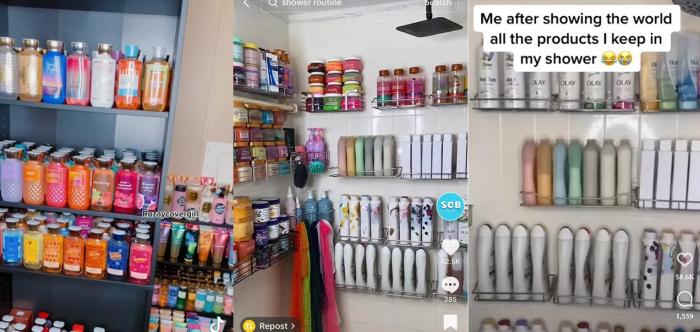
We’re not just talking about soap and water here. The best way to be clean online is to turn your daily wash into an endless assembly line of products that you can show off as part of a collection. TikTok and Instagram influencers are eagerly showing off their shelves full of body scrubs, shower gels, and soaps. They offer ‘routines’ that will allow you to smell your very best, usually by layering product after product on your skin after you’ve scrubbed it red raw with the ‘in’ method of the moment. It’s not enough to have your favourite body wash or a bath bomb: you must have the entire set of scented goods and spend as long as possible applying, washing, reapplying, and rinsing them off. And don’t forget the masks: face masks, neck masks, butt masks, boob masks. Yes, they are things that exist in this realm of reality.
The whole thing is perhaps the inevitable expansion of the hyper-capitalistic hijacking of skincare. Three steps went to 12 and advertisers became more and more consumed with making a basic part of our everyday routines into a total money drain. A hyped-up fear of ageing in all its visible forms led to an influx of new microplastic tat, shilled by so-called experts and Temu ads, all promising 21-year-olds they’ll never see a wrinkle in their lifetime. But there’s something especially galling about hygiene influencer content. Never mind that all of these items have a shelf life and none of these influencers will ever use up dozens of tubs of exfoliator in that narrow time frame. Daily exfoliation is also ill-advised, as is using scented products in more sensitive areas. It’s the grand illusion of elevated cleanliness in the guise of self-care, the shaming of bodies and their functions, that seems like an old trick made new.
So much of online influencing is built on aspiration. Even if we know it’s all shameless sponcon, there’s meant to be the illusion of a better life just in your reach. Encouraging your followers to invest in hygiene is probably a more grounded financial possibility than showboating in a hired private jet, but it’s also so disheartening to see how nothing is exempt from capitalism’s parasitic thrall. What, my drugstore toothpaste and basic shower gel aren’t good enough? I still smell, you say? How many hours a day do I need to waste trying to adhere to this standard you just made up, hijacked from an age-old form of embarrassment often inflicted upon the working classes?
There’s the evident classism of hygiene-shaming that drives much of the engagement in these influencer spheres. Historically speaking, working-class people have long been smeared as unclean or slovenly in their appearance. Misogyny plays its part too. These hygiene influencers are not appealing to men or teenage boys, many of whom suffer from the same puberty-related issues that plague young girls. When men are marketed to in this department, it’s with hilariously overcompensating macho branding. Oh, wipes for men, you say?
We’ve talked before about how consumerism and the corporate takeover of everything have transformed every single part of our lives into something that can be bought and sold. If it exists, then it can be spun into a problem in need of an Amazon storefront. You can’t have just one: you need 60. Make people feel lousy for not having the thing and it’s a hell of a lot easier to sell them it. Hygiene has been part of this system for a long time. Female body hair wasn’t derided or deemed as unsightly until the early 1910s, when Gillette started selling razors to women. Toothpaste ads in the ’50s told women to avoid morning breath because ‘there’s another woman waiting for every man’ if you don’t remain attractive 24/7. The past decade, driven by social media algorithms and recycled trends, has pushed more and more ludicrous ‘problems’ with our bodies to the forefront, from cankles to buccal fat to veneers.
Much of this also takes the form of single-use products, like mini sponges that expand when exposed to water or the various one-use towel companies that sell an increasing build-up of non-recyclable waste as the best way to stay germ-free. The implication is clear: you’ll be dirty if you just use a common towel to dry yourself, and you don’t want that, do you? You don’t want to be the pleb who makes foam in their hands rather than with a pointless plastic cup that all of these influencers use? Hell, why not go all out and use bottles of Saratoga water to get that truly elevated clean experience? Tap water is for the poor.
The pride some display over what they label ‘overconsumption core’ is tough to take. A lot of this proud hoarding of products that are designed to be used quickly is treated as ‘self-care’ or justified as with the easy defence of, ‘well, you don’t have to buy it.’ I’m sure some people do truly love having lots of body sprays and Dove beauty bars in various scents. The high of a great self-care routine cannot be beaten. I won’t pretend I haven’t indulged in a few Lush shower steamers now and then. None of this influencing, however, has anything to do with personal joy.
It’s about selling a harmful lie that your audience is ignoring their basic cleanliness unless they pay thousands of dollars a year for brand-name multi-part routines they don’t need. Anti-ageing beauty marketing gets you by selling a lifetime of products, and hygiene influencers are doing the same thing, only they’re taking mundanity and forcing us to view it as an aspirational luxury. And it works. These videos made me mad over the obvious rage-baiting and sponcon, but it also made me wonder if I needed to up my hygiene game just in case. I’ll never fully be rid of that anxiety-rotten teenage self who wanted to avoid crowded situations for fear of being scolded. I suppose it was helpful to be reminded that nobody is immune to marketing. But at least I never bought a butt mask.


