
Old School. Biblically Independent.
By Chris Revelle | Miscellaneous | October 4, 2023
When you look at the American cultural landscape we live in, one that papers over vast yawning inequities with willful ignorance and a smile, you’ll notice no end to the sources of anxiety and disappointment. We could’ve had a world where we didn’t stratify ourselves in a hierarchy according to our identities, but instead, we chose pyramidic structures for everything. We left very few ways for us to feel happy in this jagged construct built to service rich white men at the expense of all others, and we’ve lived in it so long that we’ve internalized it. We curl around these barbs of double standards and inequality until they feel like they’re part of us, as if they are natural and immutable. In a culture that applies arbitrary weight to gender identity and oppresses those who do not conform to the traditional binary, it can be so easy to forget that gender is a social construct.
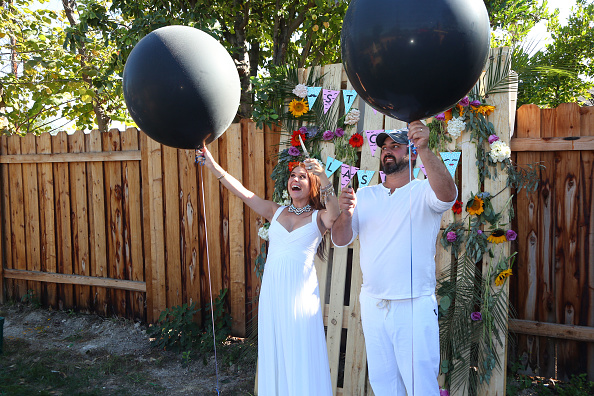
You may have seen Kendra Evans on TikTok, where a video of her “gender reveal” party has gone viral. When it’s revealed she’s carrying a fetus with female sexual characteristics who has no way to conceive of or communicate gender identity, she cries unhappily. Giving birth to a girl is not what she imagined and, as she explained to an uncritical People magazine, she experienced “gender disappointment.”
“Going into the gender reveal, I was hesitant on doing anything because I didn’t want to be disappointed in front of people if it wasn’t a boy, but then I was reminded it was my last pregnancy and I didn’t want to have any regrets,” she said. “All of my emotions immediately hit me, I couldn’t help but cry. There was no control of my emotions at that point, especially being pregnant. And all of these thoughts came flooding, thoughts that I’ll never have a son, never be able to experience what it’s like to have a mother-son bond, to have a ‘mama’s boy,’ or anything like that.”
To be clear, it is entirely understandable for a pregnant person or an expectant parent of any gender to feel many intense and conflicting emotions. It must be impossible to avoid expectations or fantasies about who your child will become. Hopes get built up, even when we try not to build them, and it hurts when they are not met. And definitely, as a card-carrying queer cis-man in a DINK relationship (Dual-Income No Kids), I have no space to tell a pregnant person or expectant parent what they should feel. All of that being true, I would like to suggest that telling a national media outlet that your unborn child’s sexual characteristics were a disappointment was not the right move.
That child will grow up someday. TikTok itself might not last forever, but the internet does not forget. Should that child hear that their parent was disappointed in them for something they cannot control? Evans noted that her disappointment doesn’t subtract from the love her child will receive and I believe her, but that sentiment is complicated by her waxing melancholic about never getting to have a “mama’s boy.” It’s additionally difficult to ignore how this value of having a “mama’s boy” was so self-evident and seemingly uninterrogated. It feels as though our cultural fixation on and adherence to the gender binary has created a sort of trap in which pregnant people are led to feel joy or disappointment over the sexual characteristics of their child, something that should not matter in this way. It feels like another symptom of how we project warped ideas of gender onto pre-sexual children and pre-birth fetuses like how we gender toys or colors or refer to actual infants as “flirts” or “future heartbreakers.” It feels as though we can’t wait to douse our offspring in our deep insecurities, as if the sense of powerlessness we experience from our gender constructs can only be balmed by inflicting them on others.
And while I’m at it: no more gender reveal parties. It’s creepy, it’s archaic, and it starts this vicious cycle of insecurity for a human before they take their first breath.


