Old School. Biblically Independent.
By Kayleigh Donaldson | Film | February 12, 2026
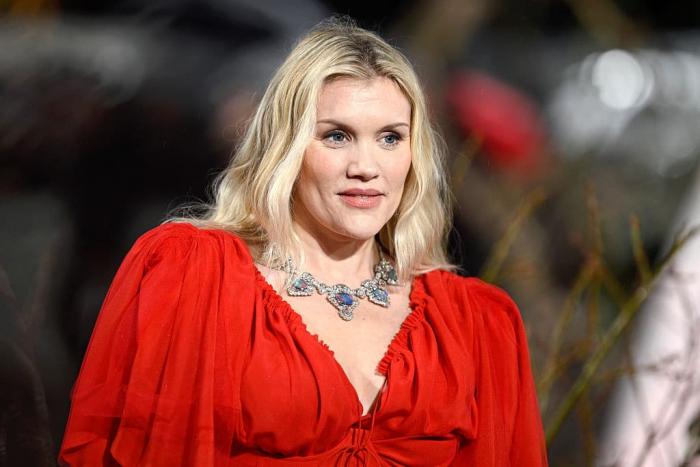
The chances are you already know how you’re going to feel about “Wuthering Heights”, the latest adaptation of the beloved Emily Bronte novel. You likely haven’t seen it yet, but all of those horny trailers, anachronistic fashion choices, and lit student discourses have helped to form a response. Indeed, we’re only two months into 2026 and it feels like we’ve already found our top contender for the most controversial film of the year. Reviews have been divisive, predictably, and social media is awry over white Heathcliff and Cathy’s pleather skirt. It’s all going as planned for the director, Emerald Fennell.
Fennell only has three features to her name but her career as a director, writer, actor, and showrunner has made her a familiar face in a surprisingly short amount of time. Maybe you recognize her from Call the Midwife or The Crown (she played Camilla Parker-Bowles in the latter.) Or you had strong opinions on her work in the second season of Killing Eve. She won an Oscar for her debut, then made a viral hit with some bathwater scandals, and now she’s taking on one of the foundations of Victorian literature. And a lot of people hate her. She has her defenders too, ones who are very taken by her giddy combination of garish aesthetics, posh hijinks humour, and abject horniness. But in the grand world of directors whose work makes people outside of Letterboxd cliques heated, Fennell is a recurring name.
My opinions on Fennell are mixed. I’m never mad at a woman director getting the money and clout to do whatever the hell she wants, especially at a time where studios are getting lazier and rolling back on the incremental diversity promises they made over the past decade. It’s pretty cool that Fennell got a major studio to commit to a Bronte adaptation in 2026, and one where sex is at the forefront of the marketing despite endless claims that nobody wants to see such scurrilous things on-screen.
I was a big fan of Promising Young Woman. A lot of critics seem to have changed their opinions on Fennell’s cinematic debut since its 2020 release, perhaps influenced by their reactions to Saltburn and “Wuthering Heights,” but I’ll continue to defend it. The movie was falsely sold as a sly feminist redo of the rape revenge fantasy, but really, it’s the story of a woman so traumatized by patriarchy that she martyrs herself for a futile cause. Carey Mulligan’s plan to play drunk for “nice” guys and see how long it takes them to prey on her is obviously ridiculous, and she never truly gets revenge on anyone who hurt her or her late friend. I don’t think that was ever the point though. She knew nobody would ever side with her nihilistic viewpoint, and so she allowed herself to sink into oblivion and hopefully leave a few people feeling as broken as she was. Promising Young Woman remains Fennell’s nerviest work because of that. It embodies a famous quote from writer Decca Mitford that I think of often: You may not be able to change the world but at least you can embarrass the guilty.
But the potential in Promising Young Woman never came to fruition for me. Saltburn, her follow-up, became a streaming smash that helped to make “Murder on the Dancefloor” a worldwide hit and pushed both Barry Keoghan and Jacob Elordi into a new level of fame. It has its moments, mostly through the hilarious performance of Rosamund Pike as the endearingly cringe mother who is so out of touch with the real world that she’s practically orbiting the planet. Yet whenever I tried to reach out for more from the film, it felt like I was grasping at nothing, like smoke through my fingers.
Here was a film that kept telling me it was provocative and challenging, and yet it was weighed down by its own timidity. It wore its influences on its frilly sleeve but lacked the daring and razor-sharp wit of, for example, Brideshead Revisited and The Talented Mr. Ripley. None of it felt all that scandalous. Any of its promise was diluted to nothingness with a “but both sides suck” approach to class, via a poorly executed narrative twist, that left me baffled. Fennell herself is notoriously posh, but plenty of private school kids and well-to-do storytellers have displayed a keen eye towards modern social dynamics in Britain. Fennell, however, has always seemed stymied by a need to “balance” that which has no need for it.
Such is a crucial issue with “Wuthering Heights”. Fennell has faced criticism for months over her choice to cast a white Australian in the role of Heathcliff, which she has defended as her interpretation of the material. She’s also talked frequently of wanting her film to capture the heady feeling of reading the book for the first time as an eager if somewhat sheltered teenage girl. That’s a great angle, and yet it also exposes her own blinders as a storyteller. It’s what made Saltburn so aggravating: Fennell’s own vision is smothered by her declarations of daring with none of the actions to back it up. These are simulacrums of provocation, as deep as a puddle, albeit with a welcome aesthetic flair. If you’re going to take on the sacred cow of Emily Bronte then you need the courage of your convictions. Fennell flinches.
Not everything about Promising Young Woman works but it is refreshing in its bleakness and truly heart-wrenching with its depictions of “nice” men who relish the arrogance of patriarchy. Fennell is capable of tackling lofty topics, and ones with real stakes, but they need a defter hand than she’s shown with her most recent projects. We need more than tightened bodices and finger sucking to truly shock us in 2026, and we need a sturdy foundation to support it.


