
Old School. Biblically Independent.
By Kayleigh Donaldson | Film | February 6, 2026
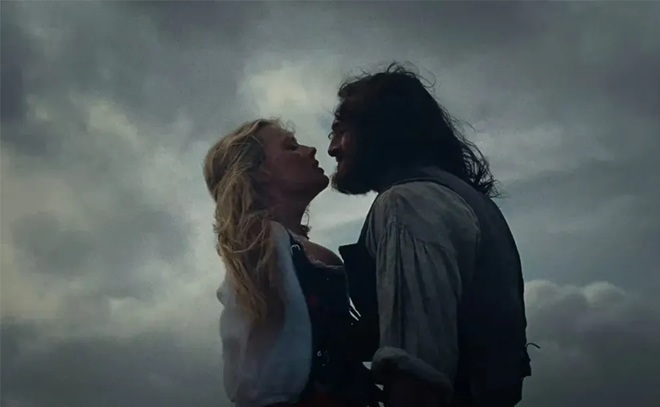
The discourse surrounding Wuthering Heights, Emerald Fennell’s adaptation of the Emily Bronte classic, has been feverish from the moment the project was announced. This is a beloved book being adapted by a divisive director, with a white man playing a non-white character, and the stylized and anachronistic trailer had readers crying ‘historically inaccurate’ from the rooftops. With the film finally opening next week, Fennell and her actors, including Jacob Elordi and Margot Robbie, and on the promotional trail. Fennell, whose last film Saltburn inspired similarly divisive responses, is eager to provoke.
Speaking at an event at the BFI in London this week, Fennell said, ‘Wuthering Heights needs to provoke a sort of primal response.’ She’s not wrong. This is a very heated book that’s all about anger, lust, abuse, class, resentment, and isolation. It’s pure gothic melodrama, as baroque as it is unhinged. Sometimes, it’s unbearable to read (sorry, I always liked Jane Eyre more.) For Fennell, she wanted to tap into those emotions. ‘I can’t adapt the book as it is but I can approximate the way it made me feel.’ That seems to mean lots of indulgences from a creative perspective, if those trailers are anything to go by, but hey, go all out. It’s a public domain book that’s been adapted countless times over, and we could use a few more feral period dramas.
But ‘I can’t adapt the book as it is’ feels like a weak defence when we confront the whitewashing of it all. Almost every adaptation of wuthering Heights chooses to ignore the fact that Heathcliff is not white. Andrea Arnold’s version, which is wonderful, is one exception. To make a movie about class divides and the resentment that festers inside someone forced to the margins of life with exclusively white people can be done, but that’s not what Bronte’s book is about. Fennell has defended her decision to cast Elordi over an actor of colour, telling The Hollywood Reporter:
“I think the thing is everyone who loves this book has such a personal connection to it, and so you can only ever make the movie that you sort of imagined yourself when you read it. I don’t know, I think I was focusing on the pseudo-masochistic elements of it. The great thing about this movie is that it could be made every year and it would still be so moving and so interesting. There are so many different takes. I think every year we should have a new one.”
Okay, but this does make it sound like you’re saying, ‘I imagine Heathcliff as white’, which is just a straight-up error. Also, the optics of that? Not good, right? Fennell’s now at that point in her career where, with the aid of regular producer Margot Robbie, she can really do what she wants. She could have cast, say, Assad Zaman or Sacha Dhawan and gotten it made. But she chose her Saltburn star. Sure. Okay.
Look, I don’t dislike Fennell’s work. I loved Promising Young Woman but thought Saltburn was a let-down. It kept telling me it was provocative and shocking, all while doing stuff that felt predictable, then saddling it with a ‘twist’ that felt a bit too ‘think of the poor wealthy people’ for my liking. Does she have the juice for Wuthering Heights? In theory, I’m all in on her going balls to the wall with this book and indulging in her most feverish excesses. It makes thematic sense. But the casting of Elordi is a reminder of why I often find myself struggling with her work: it’s grand promises of ambition and provocation but with an overreliance on the status quo as its foundation. It’s hard to spin your work as button-pushing and challenging audiences’ expectations when you’re too incurious to do accurate casting.
‘Wuthering Heights’ will be released in theatres on February 13.


