Old School. Biblically Independent.
By Kayleigh Donaldson | Film | January 27, 2026
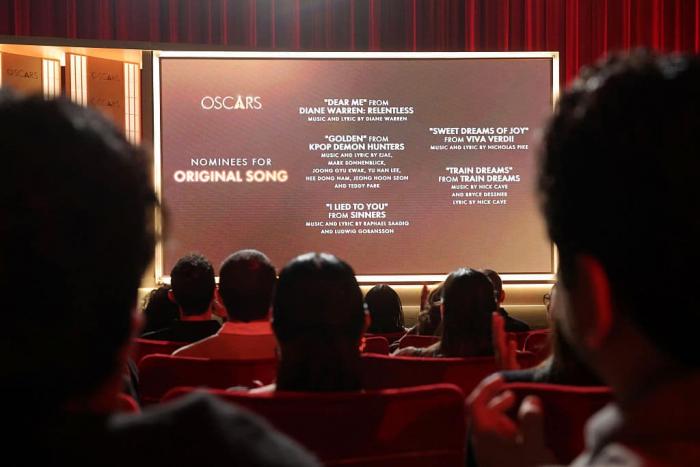
It’s a rare occasion when we watch the Oscar nominations and see films we’ve never heard of. The Academy is studiously middlebrow and mainstream, and they don’t tend to wade into the deeper waters of arthouse cinema, international fare (bar the chosen few with big name actors or undeniable critical credentials), and outright oddities. This is not a group with a penchant for surprises. One category where we can typically see exceptions to this rule of Best Original Song. How else is Diane Warren able to continue her tyrannical reign over the industry?
But it wasn’t the token Warren nod that baffled us (although getting one for a documentary based on your own life is objectively hilarious). It was something called “Sweet Dreams of Joy” from the film Viva Verdi! What? Who? This movie doesn’t have a Wikipedia page. It has only 135 watches on Letterboxd. There are only six listed reviews on Rotten Tomatoes from critics, and none from the major publications or trades. It also doesn’t seem to be screening or streaming anywhere. And yet it made it into the Best Original Song shortlist over numbers from F1, Wicked: For Good, and Avatar: Fire and Ash. How did this get nominated alongside KPop Demon Hunters and Sinners?
“Sweet Dreams of Joy” is composed by Nicholas Pike, a film and TV composer whose Wikipedia page reads like he wrote it himself. His most famous work seems to have been in music videos. He composed extra music for the videos of “Ghost” by Michael Jackson and “Wild Wild West” by Will Smith. He also headed the live band on The Bonnie Hunt Show and did the score for movies like Star Kid, FeardotCom, and C.H.U.D. II: Bud the C.H.U.D.
The film, Viva Verdi!, is a documentary about retired opera singers. Directed by Yvonne Russo, the film, according to its official website, ‘offers an intimate glimpse into the lives of the celebrated opera singers and musicians living out their “third act” at Milan’s Casa Verdi retirement home built in 1896 by the most influential Italian opera composer of the 19th century, Giuseppe Verdi. With aging bodies and timeless passion, these distinguished “guests of Verdi,” ranging in age from 77 to 103, prove age hasn’t dulled their love of music or relentless drive to create.’
As of 2019, the Academy’s rules stipulate that “an original song consists of words and music, both of which are original and written specifically for the motion picture. It must be clearly audible, intelligible, substantive rendition (not necessarily visually presented) of both lyric and melody, used in the body of the motion picture or as the first music cue in the end credits.” Interestingly, this song was first recorded in 2017. Pike posted it to Vimeo with the caption, an original composition created for an upcoming feature documentary.’ This raised a few eyebrows in the awards prognosticating community. How long has this song been on the shelf for? Songs have been disqualified from consideration for not obeying this rule. But films also take a long time to get made, and some nominated songs end up on albums or in live performances before anyone sees it in its original context. “Falling Slowly” from Once was almost disqualified because of this.
Some categories are easier to game than others. Diane Warren keeps getting nominated in Best Original Song because she’s a titan of the field but also because the songwriters branch of the Academy is one of its smaller groups. Campaigners have to appeal to way fewer voters than, say, actors, to get nominated. Original songs for movies are also something of a dying art. A few recent exceptions aside - consider the mega-success of “Shallow” or “Let it Go” - movies really make these kinds of chart-topping songs anymore. It used to be commonplace for a major release to have a tie-in song that would play well on the charts. Look at the songs that were winning or being nominated in the ’80s — “Eye of the Tiger”, “Endless Love,” “Flashdance… What a Feeling”, “Footloose”, “Ghostbusters”, “The Power of Love”, “(I’ve Had) The Time of My Life”… Bangers and enduring hits that have lasted well beyond the movies’ successes.
By the ’90s, however, Disney songs start to take over Best Original Song. Heading into the 2010s, the nominees start to get a big more obscure: Racing Extinction, Jim: The James Foley Story, Breakthrough, The Life Ahead, Tell It Like a Woman, The Six Triple Eight. Yes, most of these are for Diane Warren. So, if you’re, say, Sting or Bono, and you want to get a Best Original Song nomination, the easiest way to get there would be to attach yourself to any movie, big or small, write a number for the closing credits, then let the songwriters branch know that there’s a mega-star in its midst. Or if you’re someone who’s been in the business a long time and has a lot of friends and industry contemporaries rooting for you, you show them that obscure documentary you wrote a new song for and let them know it’s eligible. Do you really want to give Tate McRae a nod over your pal?
The funniest example of this came in 2014 when a song from a Christian movie called Alone Yet Not Alone got nominated. Nobody had heard of this film about a group of teenage settlers who were kidnapped by indigenous Americans that sounded super sus. It was a box office bomb. So, how the hell did the songwriter’s branch of all groups become its key fandom? Well, it turned out that one of the song’s composers, Bruce Broughton, was the former governor and then current executive committee member of the academy’s music branch, and he’d contacted other members to coax them into listening to his song! Eventually, his nomination was rescinded, the first time that had ever happened. Broughton claimed he was being treated unfairly and that sending out a few dozen emails to his colleagues who also answered to him wasn’t dodgy. Frankly, the Academy got rid of it because the nomination was so patently ridiculous that even they had to walk it back.
Sometimes, it’s fun to see a weird out-there nomination appear in this category, but it is also undeniably tedious to see Diane Warren’s name over and over, especially when the songs suck. At what point does this category just descend into self-parody, an endless cycle of back-scratching among industry pals? Then again, isn’t that what every category in the Oscars is? There are good arguments to be made for scrapping the Best Original Song category altogether, or limiting it to three nominations instead of five. I’d personally keep the category but perhaps open up its voter base, and I’d just not so silently hope for more original musicals in cinema outside of Disney movies. As for the Viva Verdi! song? Eh, it’s pretty bland. I would have gone for Miley Cyrus instead.


