Old School. Biblically Independent.
By Kayleigh Donaldson | Film | June 9, 2026
It’s been a season of reckoning at the box office. Traditional IP-driven blockbusters have floundered, facing backlash and audience tedium over stories designed to pander to boomer and Gen X nostalgia. The latest Star Wars movie, The Mandalorian & Grogu, opened to record lows for the franchise in its Disney era, and a costly remake of Masters of the Universe made significantly less in its opening weekend than the reboot of Scary Movie. But it’s not been entirely hopeless. Younger audiences have made their choices, turning horrors like Obsession and Backrooms, created by filmmakers who got their start on YouTube, into major word-of-mouth hits. Joining the pack over the weekend was another unexpected internet tale whose massive fanbase somehow flew under the radar and created a box office success that nobody saw coming.
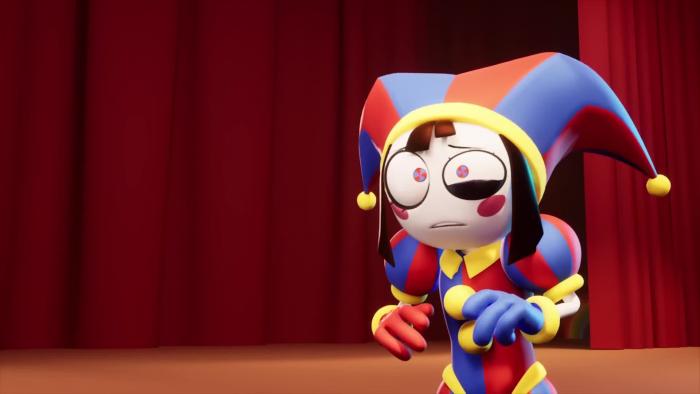
The Amazing Digital Circus: The Last Act came out of nowhere and earned over $20.2 million domestically, placing it ahead of Star Wars: The Mandalorian and Grogu. That number is made all the more impressive by the fact that the film is technically not a film: it’s two episodes of a web-series that have been given a theatrical release. Fans of the show were encouraged to contact theatres and cinema chains directly to request that they screen the film, and that helped Fathom Entertainment, the distributor, to get it into over 2,200 locations. But what is it, I hear all of you over the age of 25 ask?
Created, written, and directed by an animator known as Gooseworx, The Amazing Digital Circus is an Australian series produced by the Sydney-based Glitch Productions. It began life in 2022 as a pilot episode, which premiered on YouTube and quickly became a viral smash. The series follows a group of people who find themselves trapped in a cartoonish virtual reality world overseen by a weirdo AI ringmaster who has a set of comic fake teeth for a head. The latest arrival to the group is Pomni (not her real name), who has no memory of her life before she entered the circus and is desperate to get out. The problem? There’s no exit. Everyone is trapped in an endless cycle of nonsensical antics and existential woe that leaves them forever on the verge of losing their sanity.
The pilot for the series has over 439 million views on YouTube, making it far and away the platform’s most successful original animation on the platform (with apologies to all the Helluva Boss fans out there.) Including the two episodes that form the film, there are only nine parts to this show, and yet it’s accrued a dedicated worldwide fanbase that has hung on its every glitch for years.
This is certainly a show born of a certain generation of the internet, not unlike the backrooms lore. It’s a blend of that uncanny pre-2000s rendered CGI and rainbow spectrum aesthetic that feels familiar to anyone who grew up with kids’ TV in that era. Watching it reminded me a lot of PlayStation 1 graphics, albeit with more polish but that same sense of the uncanny. The characters are jaunty, like PC mascots, but imbued with immense sadness, which made me think of early Flash animation’s love of blending cute and grotesque.
And make no mistake: this show can he dark. Gooseworx said one of their biggest influences was the notorious Harlan Ellison short story, “I Have No Mouth and I Must Scream”, about a tyrannical super-computer who tortures five humans in an endless cycle of pain and humiliation simply because it hates. The Amazing Digital Circus is much peppier than that — most things in our realm of existence are — but it also takes seriously its sense of dread and the emotional weight of these characters. Sure, these people look like jesters and chess pieces, but that only makes their nightmare worse. Imagine being trapped for eternity in a form you loathe, with an unhinged AI dictating your existence. How fantastical.
I’m not in the least bit surprised by the success of The Amazing Digital Circus. Its rise reminded me of the days of Homestuck but also the ever-growing mythos of the modern internet that gave us creepypastas and TikTok masterpieces. Here is a show driven by a singular vision, free of traditional industry micromanaging, that tells a story most platforms would probably avoid, and is rooted in the sensibilities of the perennially online. Like Backrooms, it wears its influences on its sleeve but it’s also about something hefty, in this case identity and autonomy in the digital realm. It’s no shock to me that Gen-Z is so focused on horror fiction. If we turn to the genre to reflect back our contemporary unease, they’ve certainly got a vast canvas on which to do so.
This box office success will probably bother Hollywood more than those of Backrooms and Obsession, which still had major studio backings and lined a few CEOs’ pockets. The Amazing Digital Circus is such an obvious labour of love that I doubt its creators ever thought would make this kind of money, and the film biz is seeing almost none of it come to them. The film will soon premiere on YouTube, allowing access to the fans who helped make it a success and who couldn’t access a theatrical screening (it’s been a divisive issue among the fandom that the movie was going to cinemas rather than remaining on the platform that made it famous.) How do you latch onto something like this? Maybe you don’t, and isn’t that a terrifying prospect for the powers that be?


